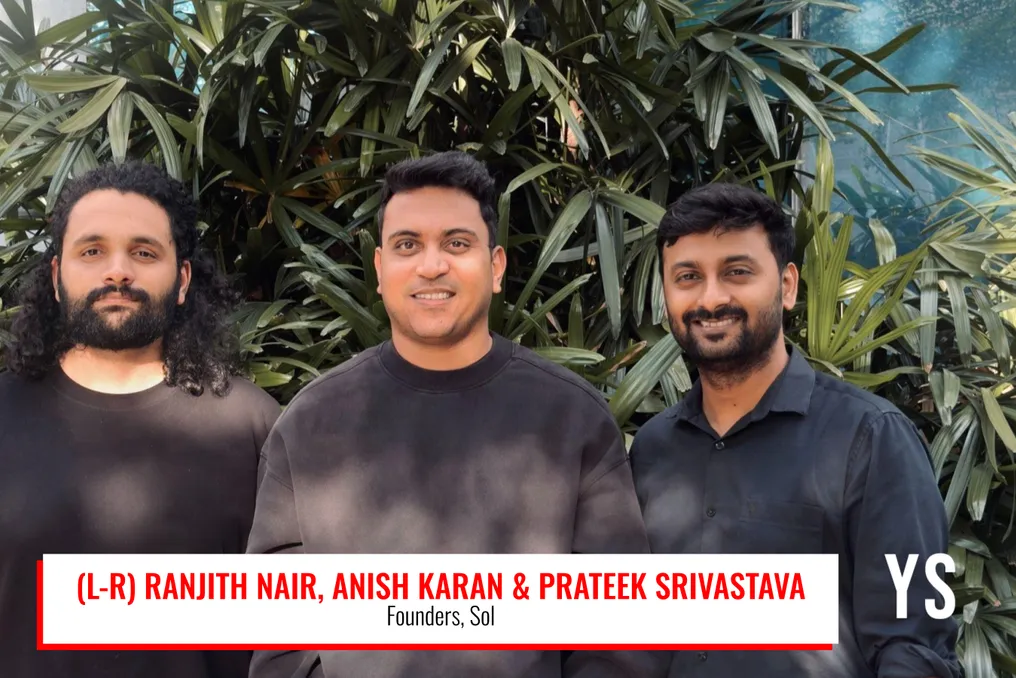
The artificial intelligence (AI) startup Sol, founded by former Cred executives, has successfully raised $4 million in funding. Investors include General Catalyst, Nexus Venture Partners, DeVC, Peercheque, and Kunal Shah.
Sol plans to allocate the received funds primarily to research and development (R&D) initiatives and market entry.
Sol was established in August 2025 by Anish Karan, Pratik Shrivastava, and Ranjit Nair. The startup's core function is to automate the entire email management process. This process can involve researching information, creating documents, preparing presentations, scheduling time, and drafting responses.
The company also stated that its technological platform is not limited to simply drafting replies. Once the system identifies an obligation and its context, it is capable of generating all necessary supporting work, such as documents, presentations, research findings, and meeting coordination. The startup noted that the product is designed to eliminate the gap between an unanswered email and the achieved result, with the final approval always remaining with the user.
Sol's CEO, Anish Karan, highlighted the problem of redundant effort: 'People whose jobs involve email are often forced to repeat themselves: first in the email, and then again when they ask the AI tool to act. There is no need for this. AI should learn to use the necessary tools and skills behind the scenes so that people can focus on the work they are uniquely good at, while Sol does the heavy lifting and provides them with a simple way to approve or edit the work.'
Sol indicated that its technological platform is intended for individuals whose activities involve a high volume of email, including founders, executives, and specialists in sales, marketing, consulting, recruiting, and agencies. The company operates within its own computing environment, where users can work through a browser and rely on a growing library of over 100 specialized skills. Currently, access to the platform is provided selectively via a waiting list, but the company plans to expand general availability soon.