
Government provides financial assistance to farmers for the purchase of tractors and agricultural machinery
Read more
Aaj Tak
www.aajtak.in

Government provides financial assistance to farmers for the purchase of tractors and agricultural machinery

For farmers engaged in agriculture who currently rely on others for field cultivation, important news has emerged: they can now acquire their own tractor and other agricultural equipment with state support.

The government aims to stimulate farmers to purchase tractors and other agricultural equipment by making expensive machinery more accessible through the provision of significant subsidies.

This state-implemented program is called the Sub-Mission on Agricultural Mechanization or SMAM. Its main objective is to provide financial support to farmers when purchasing expensive agricultural machinery and to increase the use of machinery in the agrarian sector.

Under this scheme, the state provides subsidies for the purchase of agricultural tools such as tractors, cultivators, rotators, seeders, harvesters, crushers, sprayers, and others. This program has been operational since 2014-15 and remains one of the key government initiatives in the field of agricultural mechanization.

As of July 2026, 21.61 million agricultural machines have been distributed to private farmers across the country under this program, with a total support amount of ₹9.404.47 billion rupees.

The subsidy can significantly reduce the cost of the equipment. For example, if a farmer chooses a tractor worth 6 million rupees, its price could drop to 3 million rupees after receiving the state subsidy, as the government provides a 50% subsidy for this purchase.

Subsidies are available for a wide range of equipment, including tractors, cultivators, rotators, seeders, zero till seeders, multi-crop seeders, harvesters, harvester combines, crushers, multi-crop crushers, straw choppers, bush cutters, manual sprayers, harvesters, supports, crop collection machines, as well as gardening equipment.

To apply, required documents include an Aadhaar identity card, passport photo, land ownership document, bank passbook copy, additional identification, and a certificate of expenditure.

It is crucial to follow the correct sequence of actions: one cannot first purchase the machine and then apply for a subsidy. The standard DBT workflow requires registration on the portal and application for the machine, followed by selecting an available dealer, and finally verifying the purchase and the machine invoice.
Similar stories

State offers subsidies up to 100,000 rubles for installing solar panels in UP
Read more
www.aajtak.in

State offers subsidies up to 100,000 rubles for installing solar panels in UP

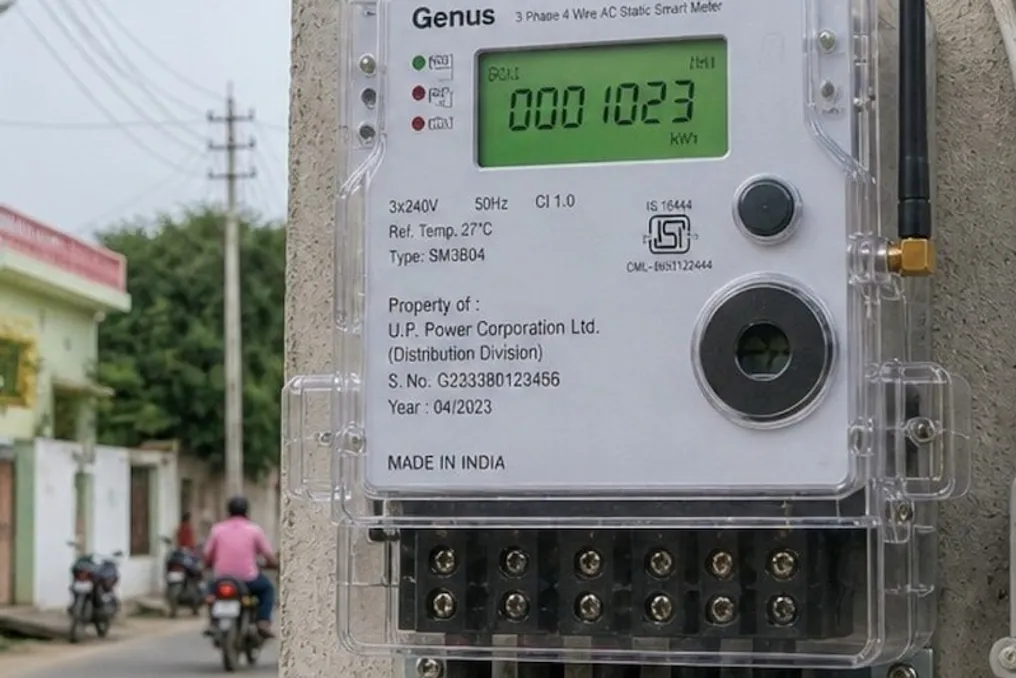
Residents of the state of UP, concerned about high electricity bills, can take advantage of a program that will allow them to significantly reduce costs by utilizing state assistance in the form of a large subsidy. With this support, unlimited amounts of electricity can be used while keeping the electricity bill at zero.

The middle class often faces difficulties managing monthly budgets, and an increase in the electricity bill can create serious financial problems. However, there is a solution that can help eliminate this problem, as the state provides substantial financial support.

The main area of state support is encouraging the installation of solar panels. For this, the 'PM Surya Ghar' scheme, overseen by the central government, has been launched, and similar programs are also active at the state level, such as the UPNEDA scheme from the UP government, which provides a subsidy of 15,000 rupees per kilowatt.

When receiving benefits under both the 'PM Surya Ghar' scheme and the UPNEDA program, the subsidy amount is distributed as follows:

  • For 1 kW: 30,000 rupees from the central government and 15,000 rupees from the UP government, totaling 45,000 rupees.
  • For 2 kW: 60,000 rupees from the central government and 30,000 rupees from the UP government, resulting in a total subsidy of 90,000 rupees.
  • For 3 kW: 78,000 rupees from the central government and 30,000 rupees from the UP government, totaling 180,000 rupees.

Panel installation can be expanded depending on electricity consumption; if consumption exceeds 300 units, a panel of 4 kW or more can be installed, but the subsidy will only be paid for the first 3 kW.

The process of obtaining assistance begins by visiting the 'PM Surya Ghar' portal and clicking the 'Apply for Rooftop Solar' button. Next, you must fill out a registration form, specifying your state (Uttar Pradesh), the electricity distribution company (e.g., UPPCL, DVVNL, MVVNL, etc.), consumer number, mobile number, and email address.

After registration, you need to log into the system using your mobile number and consumer number to fill out the application for the 'Rooftop Solar' system, indicating the desired power in kilowatts. You are also required to upload a new electricity bill and necessary documents.

After submitting the application, the local electricity distribution company (DISCOM) will conduct a home or connection inspection to ensure that the sectional power reserve is sufficient for the solar system. Further steps are only possible after receiving approval from the DISCOM.

Upon receiving approval from the DISCOM, you must select a contractor from the list registered on the portal. It is important to note that the subsidy is provided only when the solar station is installed by an officially registered contractor. The contractor organizes the delivery and installation of solar panels, the inverter, and the energy metering system (net metering).

After the system is installed, the contractor uploads the relevant information to the portal. Then, DISCOM staff conduct an inspection and install the metering devices. Upon confirmation of the correctness of all data on the portal, a commissioning certificate is generated.

After issuing the certificate, you must upload information about your bank account and a certified chequebook to the portal. If the documents pass verification, the central subsidy of up to 78,000 rupees and the regional subsidy from the UP government of up to 30,000 rupees will be transferred directly to your bank account via the DBT system within 30–45 days.

The following documents are required for the application: an electricity bill clearly stating the consumer number and sectional reserve, issued in the applicant's name; citizen's passport (Aadhaar Card); PAN Card; voter ID; certified chequebook and bank details; documents proving ownership of the applicant's residence; a passport-sized photograph; and a mobile number.

The cost of installing a 1 kW solar panel ranges from 55,000 to 75,000 rupees. A 2 kW system will cost between 110,000 and 140,000 rupees. Installing a 3 kW solar panel may require costs ranging from 160,000 to 2,000,000 rupees.

Popular