Brahma AI raises $150 million with a $2 billion valuation
Read more
Business Standard
business-standard.com

Brahma AI raises $150 million with a $2 billion valuation

AI startup Brahma AI has raised $150 million through a share issuance led by Multiples, setting the post-money valuation at $2 billion, according to Prime Focus Limited, which supports the company, on Wednesday.

Additionally, the company received further investor interest of $100 million and is considering increasing the round size to satisfy some or all of this demand.

Brahma AI is an artificial intelligence technology company specializing in audiovisual content across media and entertainment, sports, healthcare, and advertising sectors. Its technologies encompass enterprise intelligent content, visual AI, and digital humans. The company collaborates with global enterprises such as Warner Bros., NBA, and Mayo Clinic, and maintains strategic partnerships with Google, Hakuhodo, and DNEG.

Following the fundraising, Prime Focus stated that it will retain its status as the largest economic shareholder of Brahma AI, owning approximately 66 percent of its economic stake through its subsidiary DNEG, after dilution due to the funding, ESOP pool, and founders' equity.

Brahma AI will continue to operate as an independent company under the leadership of Founder and CEO Prabhu Narasimhan, maintaining its own governance structure, board of directors, and management.

Narasimhan noted: 'We will soon launch interactive digital humans; we are building Brahma to be model-agnostic, and we are implementing our technology into entirely new use cases in sports, healthcare, and advertising. Now we have the resources for aggressive investment in all of this, expanding our presence in the Bay Area, and significantly growing our global go-to-market organization.'

Founder and CEO of Prime Focus, Namit Malhotra, stated that the company now has two growth engines: DNEG in visual effects and animation, and Brahma AI as an enterprise AI platform.

According to Narasimhan, Brahma AI plans to use the new capital to invest in its technologies, expand its presence in the Bay Area, and scale its global go-to-market organization.


Similar stories

Ande raises $52 million to scale its AI-powered corporate entertainment network
Read more
ventureburn.com

Ande raises $52 million to scale its AI-powered corporate entertainment network

Ande, which has emerged from stealth mode, announced the raising of over $52 million in funding, combining seed and Series A rounds. Leaders of this round included Lightspeed Venture Partners, Redpoint Ventures, Duration Ventures, and Sierra Ventures; Bain Capital Ventures also participated in the financing.

The company's main goal is to service large enterprises' expenses for corporate events. These expenses include client dinners, team outings, sporting events, catering, and corporate gifts. Enterprises are estimated to spend around $325 billion annually on such activities.

Despite significant spending, the booking process remains fragmented across various systems. Ande solves this problem by integrating all these activities into a single corporate platform. Employees can book experiences while finance and legal departments maintain control over expenditures. The company spent two and a half years digitizing venue data.

The platform uses agent workflows to automate administrative tasks. These workflows can identify suitable venues, route requests for approval, and manage contracts. Furthermore, they support payments and expense reconciliation, significantly reducing manual work for teams managing corporate entertainment programs.

Ande provides a shared workspace for employees involved in corporate entertainment. Executive assistants and office managers can handle requests alongside marketing teams. Managers can also participate in approval processes through the same platform. Then, AI agents advance requests through stages of approval, signing, and payment.

Currently, the platform is used by over 60 enterprises. Among Ande's clients are Cloudflare, Salesforce, McGraw Hill, and Netskope. Other clients include Navan, Sigma Computing, Monday.com, Workato, and Semgrep. These clients account for over $400 million in annual entertainment spending through Ande, with clients reporting savings of 12% to 15%.

The platform also provides teams with better transparency regarding their entertainment programs. Ande's model addresses both sides of each transaction: companies gain procurement infrastructure, and venues gain access to corporate buyers. The company has also trained its AI model for enterprise-specific entertainment workflows.

Ande's network includes over 93,000 entertainment venues, and currently, more than 1,600 hotel properties are direct partners of the platform. Partners include Altamarea Group, Che Fico, and Gracious Hospitality. Other partners include JKS and The Mina Group. Tao Group Hospitality and Wolfgang Puck are also among its hospitality sector partners. Ande provides these companies access to corporate clients through a single distribution channel, as venues traditionally lacked specialized corporate sales networks.

Ande aims to fill this gap through its marketplace. The platform allows venues to offer their services to corporate buyers and interact with companies and manage transactions through the network. This forms a two-sided model for Ande.

Enterprises gain easier access to venues, and the hospitality industry gains corporate demand. Ande's new funding will be directed towards further developing its native AI platform, as well as expanding its network among corporate buyers and venues.

CEO Lohit Sarma emphasized that entertainment plays an important role in business relationships, highlighting its significance for culture, sales, and client interaction. Venture investors also see opportunities in this fragmented market.

Arif Janmohamed from Lightspeed Venture Partners described Ande as a bridge between companies and venues. Alex Bard, Managing Director at Redpoint Ventures, noted Sarma's experience in the enterprise space and the founder's ambition. Ande positions itself as the infrastructure for corporate entertainment, and its AI agents are designed to reduce the administrative burden across the entire booking process. The company's growth will depend on expanding both sides of its network.

}))
Factory raises $200 million at $5 billion valuation to scale AI software development
Read more
ventureburn.com

Factory raises $200 million at $5 billion valuation to scale AI software development

Factory has successfully raised $200 million in a new funding round, achieving a valuation of $5 billion. Investors in this round include Blackstone, Khosla Ventures, and Sequoia Capital. Insight Partners, Evantic Capital, and Sound Ventures also participated.

Factory was founded in 2023 by Matan Greenberg and Eno Reyes. Other investors included NEA, Mantis VC, and Clearlake. The round also attracted angel investors, including Nico Rosberg, Brad Gerstner, and Mark Benioff.

The new funding increases the company's total capital raised to over $400 million. This represents significant growth compared to the $1.5 billion valuation set in April. Thus, in five months, Factory's valuation has more than tripled; previously, the company had raised $150 million at that same valuation.

The latest capital raise reflects growing enterprise demand for autonomous software development tools. The San Francisco-based company aims to increase the degree of autonomy in software development. Its platform enables large enterprises to create, test, and maintain software using artificial intelligence agents throughout the entire development lifecycle.

Factory differs from platforms focused on individual coding agents because it provides enterprises with a unified system for managing software development. The platform allows companies to control the training process of their 'software factory,' as well as manage models and system deployment. Factory can operate through its managed cloud infrastructure, or clients can deploy it on-premises or in fully isolated environments, giving enterprises greater control over AI-driven development.

The company reports that its platform is used by hundreds of thousands of developers. Factory's clients include Nvidia, Blackstone, Royal Bank of Canada, Palo Alto Networks, and Adobe. This growing client portfolio underscores the increased interest from the corporate sector in AI-powered software development.

Enterprises are increasingly using AI to boost engineering productivity. Factory believes that companies are moving from using individual coding assistants to building broader software factories around autonomous systems. Matan Greenberg noted: 'Major enterprises worldwide are transitioning from individual coding agents to software factories,' adding that clients confirm the potential for rearchitecting software development systems, although the company is still in the early stages of this transition.

Factory's strategy is focused on creating autonomous software factories that operate continuously under human supervision. Enterprises can regulate measurable outcomes while AI performs development tasks. The company competes in the rapidly growing AI coding market. Factory plans to use the new capital to support further growth, focusing particularly on platform expansion and adoption within the corporate sector.

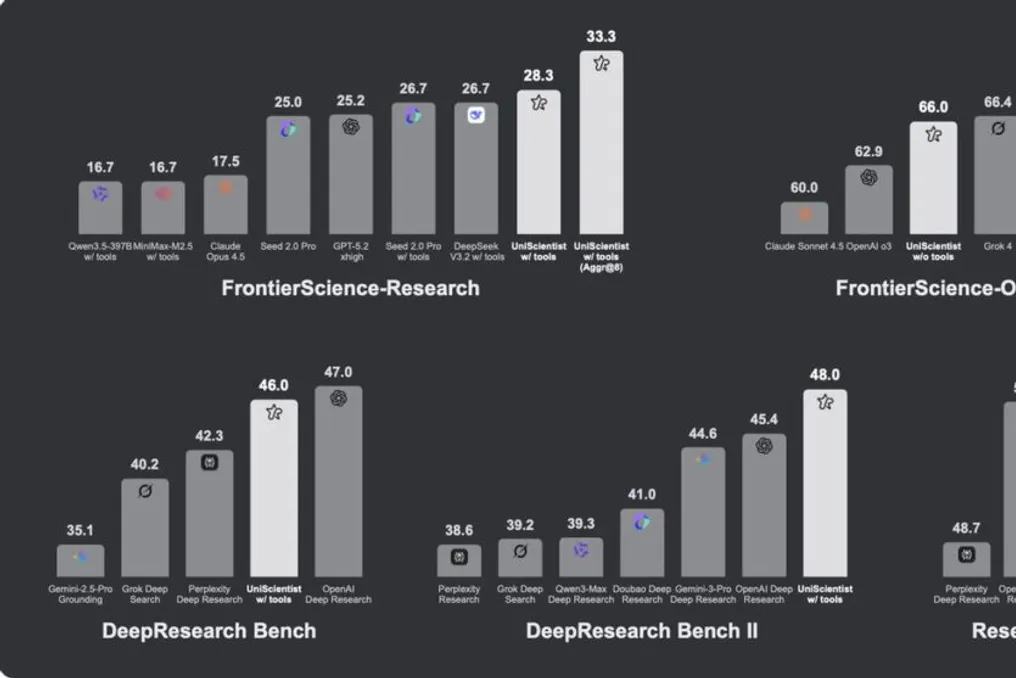
UniPat raises $300 million with Alibaba support to expand AI testing and benchmarking
Read more
ventureburn.com

UniPat raises $300 million with Alibaba support to expand AI testing and benchmarking

As artificial intelligence develops, the problem of testing has emerged. While many focus on creating impressive large language models to attract investors, there are only a small number of verified platforms to check the functionality of these complex systems after training is complete.

AI models are prone to hallucinations and can drift from the norm over time. To solve this significant operational problem, which constantly deters large corporate users, UniPat has raised $300 million. UniPat actively conducts stress tests on these complex systems to ensure a full level of trust.

UniPat differs from other AI companies; they do not just create new algorithms to demonstrate at expensive tech conferences. Instead, the startup specifically tests models based on real-world scenarios, rather than sterile laboratory conditions.

This can be compared to a rigorous training camp for artificial intelligence. Before a model gains access to real consumer data or begins performing automated financial operations, UniPat subjects it to intensive trials. This allows for the generation of high-quality system performance data that developers need to eliminate critical flaws, as what hasn't been thoroughly broken first cannot be fixed.

The tech giant Alibaba led this major funding round, causing a stir in the industry. The financial details of this round are quite impressive: the new influx of capital boosted the startup's valuation to an impressive $2.5 billion post-investment. It is also interesting that this specialized center is headed by a former company employee.

It is clear that Alibaba is interested in retaining its top talent. Significant funds continue to flow despite the caution of the broader venture capital market. Moreover, this specific deal ranks among the top three percent of all registered late-stage venture capital rounds.

The high cost of the testing platform is due to basic corporate economics and the need for competitive survival. Early investors included representatives from Sequoia China. This demonstrates that leading financial players are looking for infrastructure-related enterprises amid the current AI race. We have moved past the phase of simply admiring smart chatbots.

Now, large international corporations demand flawless analytics. They need solid proof that implementing multi-million dollar AI will not lead to public embarrassment. UniPat provides this necessary insurance policy. This is not just another routine technology investment. It is a calculated move. As global powers fiercely compete for dominance in artificial intelligence, the basic infrastructure for evaluating these tools becomes infinitely valuable.

Alibaba's massive bet signals a clear shift in market priorities. The future belongs not only to those who can build the largest model but also to those who can prove their model is the safest, fastest, and most reliable in real-world conditions.

Popular