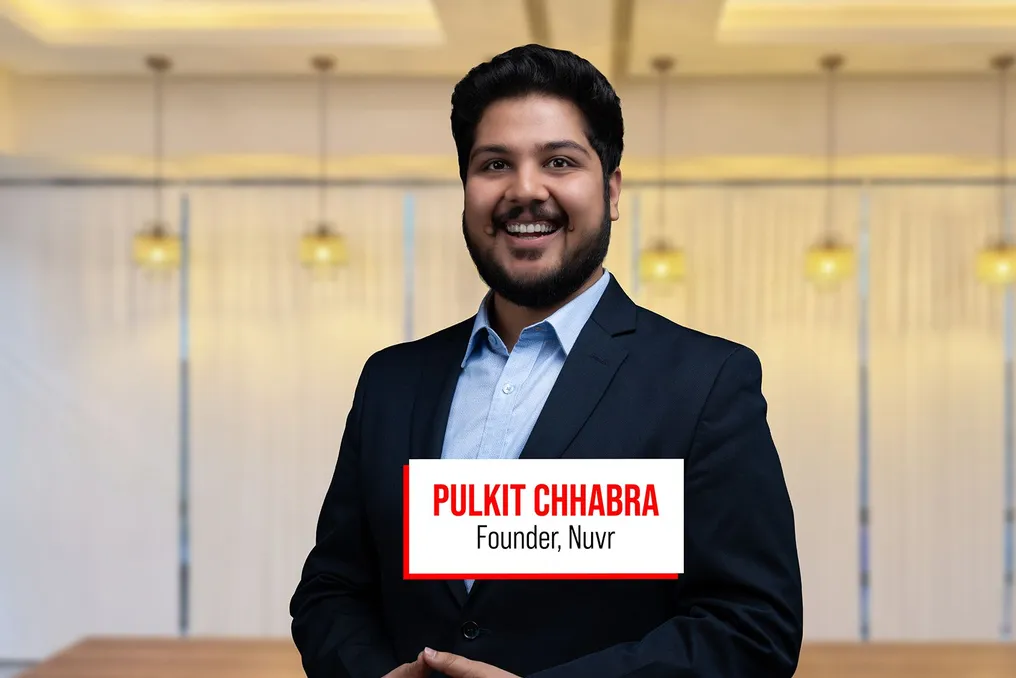
In 2023, Pulkit Chhabra presented an e-commerce analytics product to the founder of a consumer brand. During the conversation, an unexpected turn occurred: the founder asked why Chhabra's team was not running the business directly if Nuvr's software could identify problems. Chhabra could not provide a satisfactory answer.
This discussion prompted Nuvr to shift away from selling software and focus on managing e-commerce and express delivery operations for various brands. The Bengaluru-based company positions itself as an 'e-commerce and express delivery growth accelerator,' covering aspects such as pricing, advertising, inventory planning, catalogs, supply chains, and online platform interactions.
After more than three years, Nuvr claims to manage partner online sales worth over 1200 crore rupees. It is important to note that this is not the company's revenue; it refers to Revenue Under Management (RUM), following asset management industry terminology.
The company reports that its RUM has grown from approximately 125 crore rupees in the first year and aims to reach around 1800 crore rupees by the end of fiscal year '27. According to Chhabra, Nuvr itself exceeded $1 million in revenue in fiscal year '26 and plans to roughly double that amount in fiscal year '27. He also emphasizes that Nuvr is self-funded and profitable, although it does not publicly disclose margins.
Before founding Nuvr, Chhabra spent several years building consumer businesses and managing marketplaces. Initially, he intended to monetize this experience through software and applied to the Antler residency program. However, conversations with brands changed his decision.
Many established consumer companies were adept at manufacturing and offline distribution, but e-commerce required them to manage constantly changing prices, advertising, and inventory in distribution centers and dark stores. Analytics only solved part of this problem; they also needed specialists to interpret data, make decisions, and act upon that data.
Nuvr's first major partner was the tissue and hygiene product manufacturer Origami. Chhabra's team began by visiting the Origami factory to study the products, production capacity, and determine which product lines could be scaled online. Nuvr notes that Origami's online business doubled within the first 12 months of collaboration.
According to Chhabra, Origami's monthly turnover is now nearly ten times higher than when the partnership began about three and a half years ago. Currently, Nuvr works with brands such as Origami, Medimix, Nilon’s, and CLEAR.
Unlike traditional agencies, Chhabra states that Nuvr takes responsibility for managing most of the brand's online profits and losses, rather than just consulting on marketing or advertising. The company charges a management fee, part of which is tied to revenue targets achieved.
A significant portion of Nuvr's growth has been driven by referrals and 'word-of-mouth,' rather than traditional outbound sales, as noted by Chhabra. The company has about 65 employees, with approximately 35–40 based in Bengaluru, about 20 in Kolkata, and a smaller number working remotely.
Within the Nuvr system, a product sold on Blinkit in one part of Bengaluru is treated as a separate business unit. The same SKU sold on another platform or in a different location becomes a separate unit, allowing the company to track performance at a finer level.
The internal Nuvr OS platform monitors pricing, inventory availability, competitor activity, and marketing metrics. If a competitor changes a price or runs a sale, the system can flag the event and suggest a response. Human judgment remains necessary where discretion is required.
The goal is not merely to increase sales. Price reductions and additional advertising must make sense after accounting for margins. Nuvr describes its platform as a proprietary, AI-powered operational system developed in-house using data from the e-commerce businesses it manages.
Nuvr OS is primarily used by the company's own teams and existing clients, although Nuvr has begun selectively offering it as a SaaS product. Companies like Upriver and Assiduus Global share similarities with part of the Nuvr model, including marketplace management, advertising, inventory planning, and cross-border operations. Nuvr aims to differentiate itself by taking on daily operations and tying part of its compensation to revenue results.
Working with diverse brands can give Nuvr deeper category knowledge, but it can also create conflicts. Chhabra acknowledges limitations on the number of competing brands the company can manage in categories dominated by only a few large players.
The company is also looking beyond India. It has a pilot client in the US whose Amazon activities it manages entirely. Initial focus is planned for the US and the Middle East. Its international expansion may also change the business model.
In India, Nuvr typically manages online businesses without owning or physically moving inventory. Abroad, the company is considering whether it makes sense to hold inventory. Such a step would give it greater operational control but would also make the business more capital-intensive.
Chhabra states that Nuvr does not plan to raise funds in the current fiscal year. If external funding is sought later, he prefers a strategic investor over a traditional venture capital round. He believes the existing business can exceed an annual revenue of 100 crore rupees within the next three years.
The long-term goal is to build a global digital commerce company from India, combining Nuvr's operational capabilities with its technology. Ultimately, Chhabra intends to take the company public.