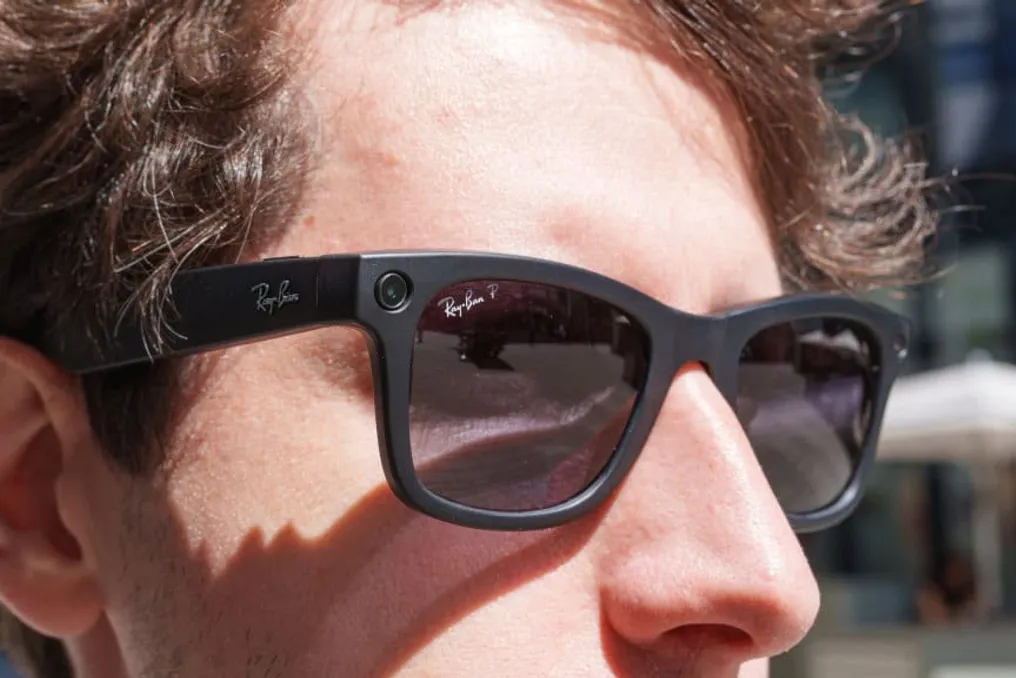
AI-equipped glasses with cameras and microphones raise global concerns about privacy and the future of smart technology
Read more
Olhar Digital
olhardigital.com.br

AI-equipped glasses with cameras and microphones raise global concerns about privacy and the future of smart technology

Technology companies view smart glasses and other artificial intelligence (AI) devices as potential replacements for smartphones, but the issue of privacy represents a significant obstacle to this shift. These devices have the ability to monitor, listen to, and react to the user's surroundings, which increases their utility but also raises the risk of capturing images or voices of individuals without permission.

Negative resistance was notably intense regarding Meta's smart glasses, which combine EssilorLuxottica's traditional design with AI functionalities. Such products have begun facing lawsuits, user complaints about non-consensual recordings, and usage restrictions in certain places in the United Kingdom.

According to Reuters, companies like Samsung, OpenAI, and various startups are developing different approaches to overcome this hurdle. Proposed solutions include camera-less glasses, recorders requiring manual activation, and data processing performed directly on the device itself.

Samsung also plans to enter the smart glasses market, albeit with a strategy distinct from completely replacing the smartphone. The company expects to launch its glasses this year, in collaboration with the brands Gentle Monster and Warby Parker.

Jay Kim, Executive Vice President of Samsung's mobile division, told Reuters that successful models will be those that make interaction with technology more reliable, useful, and natural. He emphasized that as AI takes on more functions, users will demand systems that remain secure and under their control.

OpenAI is also exploring the feasibility of devices that continuously monitor the user's environment. In conversations with journalists in December, Sam Altman, the company's CEO, outlined a vision of a device capable of understanding the user's context, knowing when to intervene and when to remain inactive.

For Altman, these devices should, at some point, process data locally rather than constantly transmitting information to the cloud. He stressed: 'You want a device you can trust... that has all the context and knows when to be useful and when not to be.' Furthermore, he argued that most people would not want information from a device that listens and observes their entire life to be processed on a cloud server.

Altman also mentioned that implementing this local processing could take several additional years, depending on OpenAI's processing expansion capacity.

While large corporations seek solutions to the dilemma, some startups opt for products that simply eliminate cameras. Even Realities, founded in Shenzhen (China) by Will Wang, a former Apple engineer, launched the camera-less G1 glasses in 2024, followed by the G2 model in November 2025. Wang told Reuters that consumers are increasingly associating smart glasses with the possibility of hidden surveillance, arguing that cameras should wait until companies offer more robust protections.

The company, valued at US$1 billion (R$5.12 billion) in July, projects reaching hundreds of thousands of users by the end of the year, with about 90% of these sales directed to the end consumer. Another alternative comes from the American startup Pocket, which created a cell phone-connected recorder that requires the user to press a button to start recording conversations, aiming to make recording more intentional and visible, similar to using a smartphone camera.

Plaud markets AI recorders in card format and wearable devices, placing privacy at the core of its products. The Plaud One Explorer Edition model, priced at US$249.99 (R$1,279.95), integrates headphones and a case and only records upon activation, while also alerting nearby people through lights or sound notifications. The company reports having 2.5 million users and over US$100 million (R$512 million) in annual recurring revenue.

Experts interviewed by Reuters indicate that the debate does not necessarily imply a rejection of devices capable of recording audio or video; the primary challenge lies in ensuring that users know when they are being recorded and have clear consent mechanisms. Jitesh Ubrani, director of the consultancy IDC, compared the situation to the apprehensions arising from the popularization of cameras and microphones in smartphones, stating that society must ensure awareness and consent during any recording, which differs from being against recording itself.

The battle for public trust may be decisive for a market that tech companies consider the next major computing platform. Although more useful AI devices require greater environmental data collection, the same features that make them functional—such as always-on cameras and microphones and environmental understanding—may become the biggest barrier to their acceptance.
Similar stories

Silence Laboratories develops cybersecurity technology with a focus on privacy
Read more
yourstory.com

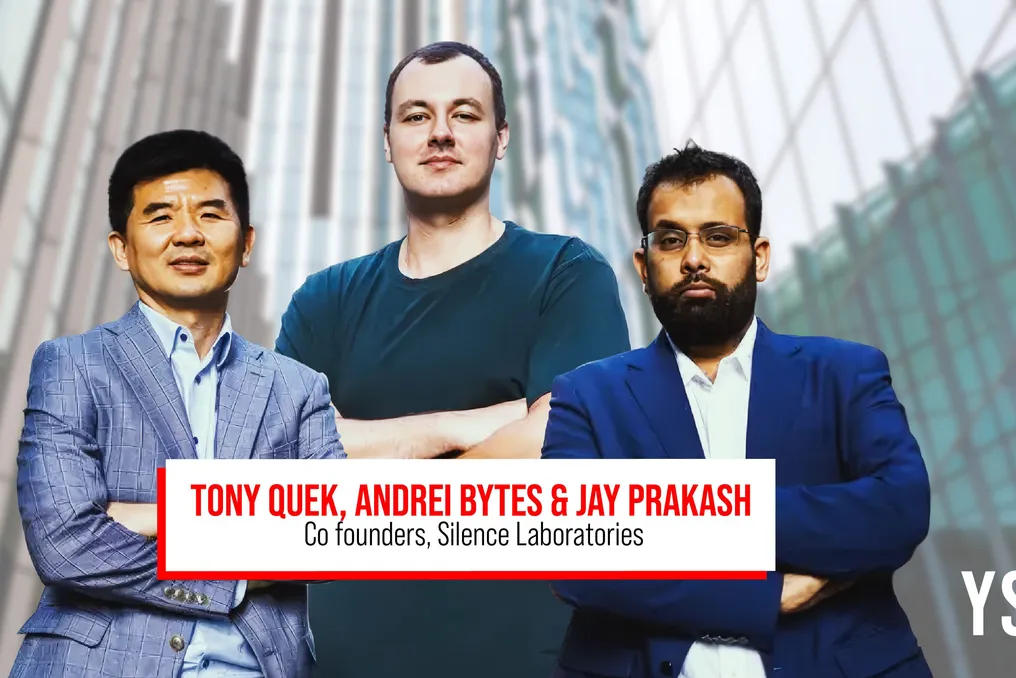
Silence Laboratories develops cybersecurity technology with a focus on privacy

The startup Silence Laboratories is creating cybersecurity technologies that place privacy at the forefront. The company's foundation is built on scientific research, and its products are based on ideas derived from the doctoral dissertations of each founder.

CEO Jay Prakash stated that one of the company's earliest products was related to audio space. They worked on merging sound waves and radio frequency (RF) waves to verify proximity. The goal was to use sound signals and wireless transmissions to confirm the physical closeness of an entry device and a token device during authorization.

It was this early work with silent, inaudible signals that gave the startup its name. Despite the company expanding beyond audio and moving into a broader range of cryptographic and privacy-enhancing products, the name remained the same.

Today, Silence Laboratories operates as a cryptographic company specializing in developing technologies that enhance cryptographic privacy. Prakash notes that their products allow organizations to perform computations over encrypted and distributed data sources without the data ever being revealed to any participating party.

Besides Prakash, the Palo Alto-based startup was founded by CTO Andrei Bytes and CISO Tony Keck. Their team of 30 people is spread across 14 countries and includes former executives from companies such as VMware, Snap, A.T. Kearney, and Oracle. Together, the founders possess over 40 years of experience in cybersecurity.

Prakash emphasized that the team's research experience is reflected in over 10 Tier-1 publications, as well as collaborations with Microsoft and IISc. Recently, the startup won the Accenture Tech Next Challenge 2026 in the cybersecurity category. This victory, according to Prakash, confirmed the value of their technology and the growing market need for collaborative processing of private data.

Silence Laboratories' products are based on a Cryptographic Computation Virtual Machine (CCVM)—a secure virtual environment that allows applications to perform computations on encrypted data without revealing the underlying information. This technology is built on the principles of Multi-Party Computation (MPC) and Zero-Knowledge Proofs (ZKP).

MPC enables multiple parties to jointly compute on shared data without revealing their private information to each other. ZKP allows anyone to prove a statement without disclosing the information underlying it. Prakash believes this distinguishes their technology from traditional approaches.

He explains that most data exchange schemes rely on policies, contracts, and third-party intermediaries to ensure data security. The company replaces this reliance on trust with trust in mathematics and cryptography. The guarantee of privacy, he says, is not just a promise in an agreement; it is ensured by the cryptographic protocol itself, regardless of who participates or how they behave.

Practically, this means that partners always retain control over their own data. Raw data never leaves the organization's boundaries. Parties themselves determine what can be computed and for what purpose. Each participant receives only the agreed-upon result, not the private input information of another.

The company has been working in this field for about six years, although the founders' work on core cryptography began much earlier. Although the methods themselves existed in academic literature for decades, the team focused its efforts on transitioning these methods from theory to practice, making them robust, performant, and scalable.

Currently, Silence Laboratories serves about 35 clients worldwide, including banks, asset custodians, fintech companies, and payment ecosystems. The company has participated in cross-border initiatives, including Project Mandala with the Bank for International Settlements (BIS), as well as collaborating with Proxtera to ensure the portability of cross-border credit data. The latter participation earned them the G20 2025 TechSprint award.

Prakash reported that parts of their Agent-Type Privacy Protocol (AP3) were open-sourced through the Linux Foundation Decentralized Trust, with early design partners including Networks for Humanity, Weilliptic, and EigenLabs. The client base also includes one of the largest banks in the US, as well as participants in the digital asset and fintech sectors, such as BitGo, MetaMask, Fold, Finvu, Biconomy, Okto, Zengo, and Easycrypto.

Prakash points out that a significant portion of modern digital infrastructure still relies on signature schemes that were not designed to withstand quantum threats, which particularly endangers digital assets. Consequently, quantum readiness has become a priority in Silence Laboratories' research and products.

List of Speakers for TechSparks 2026 Discussing the New Technological Paradigm
Read more
yourstory.com

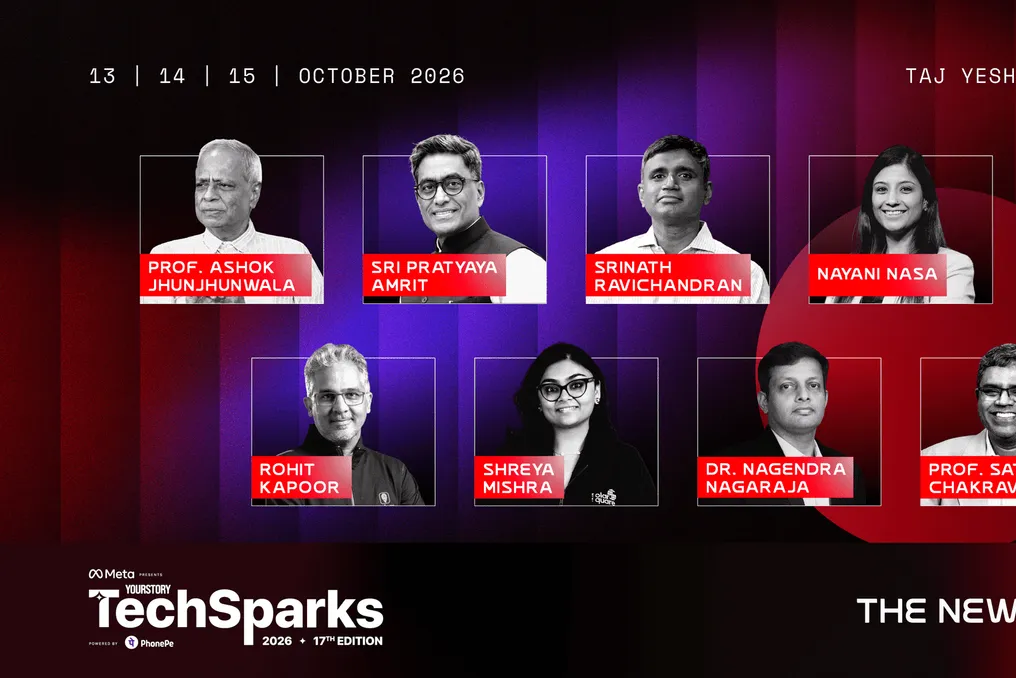
List of Speakers for TechSparks 2026 Discussing the New Technological Paradigm

Artificial intelligence, deep technologies, and new digital infrastructures are transforming technology creation processes, determining who has the right to create them, as well as the speed of idea dissemination among the population. This shift is also changing the focus of technological issues—from business scaling to the adaptation of cities and government systems.

These topics will be central to the discussions at TechSparks 2026, YourStory's flagship startup and technology summit. The event will take place in Bengaluru from October 13 to 15 under the theme 'The New Tech Order.'

Participants include Priyank Kharge, Minister of Home Affairs and Information Technology of the Government of Karnataka, and Krishna Bayre Gowda, Minister of Development of Greater Bengaluru, both representing the Government of Karnataka. The summit will examine the technologies and enterprises shaping the next phase of innovation.

The roster of speakers for TechSparks 2026 covers representatives from government, academia, startups, technology, and finance sectors. These leaders will discuss the current changes in India's startup and technology ecosystem.

Professor Ashok Jundzhunwala, a professor at IIT Madras and chairman of IIIT Hyderabad and ITEL Foundation, will join the discussions. He has experience working at the intersection of research, technology, and innovation, holding positions in both academic and technological institutions.

Pratyaya Amrit, Chief Secretary of the Bihar Government, will also participate. His experience in public service will bring the government sector into conversations about technology and governance, while also highlighting the changing needs of Indian states.

Representing the space technology sector is Srinath Ravichandran, co-founder and CEO of AgniKul. This startup develops and creates launch and space technology systems, and its work will be integrated into the overall TechSparks discussion.

Nayani Nasa, Strategic Partner Manager in India at Meta, will also be a speaker. Her work at Meta places her at the intersection of technology and business, as the company continues to build and scale its digital operations.

As the financial infrastructure evolves, Manish Maheshwari, Head of Revenue and Growth for India at Stripe, will share insights gained from his role, which focuses on revenue and growth amid the expansion of digital business.

Rohit Kapoor, Head of Food Products Market at Swiggy, is also on the list of speakers. His work at Swiggy places him at the center of one of the country's largest consumer technology enterprises, where technology plays a key role in food ordering and delivery services.

Shreya Mishra, co-founder and CEO of SolarSquare, will speak from the clean energy sector. SolarSquare operates in solar energy, where the adoption of renewable sources opens up new opportunities for consumers and companies.

Professor Satya Chakrabarti, CEO and founder of The ePlane Company, combines his experience in academia and entrepreneurship. The ePlane Company deals with electric aircraft and urban air mobility—an area at the intersection of aviation and technology.

Dr. Nagendra Nagaraj, founder, CEO, and chairman of QpiAI, will join in the field of artificial intelligence and deep technologies. His contribution will add an AI-oriented perspective to the discussion of technologies being developed and applied in India's deep technology ecosystem.

The program also includes Ajit Narayanan, CTO of Angel One; Arvind Pani, founder of CoreMantle; Priyanka Singhal, founder of Ammunic Systems; Dipit Purkayasta, co-founder and CEO of Inshorts Group; Dale Vaz, co-founder and CEO of Sahi; Sandeep Sinha, co-founder and co-CEO of Oister Global; Mayuresh Raut, co-founder and managing partner of Seafund; and Nitin Jain, CTO of ShareChat and Moj.

'The New Tech Order' is already beginning to take shape. TechSparks 2026 will gather these figures to explore what this means for India's technological and entrepreneurial ecosystem and where it is heading next.

Popular