Acer CEO predicts PC prices will fall in 2027 after memory crisis-driven hike
Read more
Olhar Digital
olhardigital.com.br

Acer CEO predicts PC prices will fall in 2027 after memory crisis-driven hike

Acer CEO, Jason Chen, predicted that computer costs may begin a new phase of decline in 2027. He believes that price adjustments driven by the current shortage of RAM memory may start to reverse by the end of next year.

This outlook positions Chen as one of the most optimistic voices within the memory sector, contrasting with the more pessimistic views presented by executives from major memory producers, who indicate longer timelines for component supply to catch up with demand.

Chen shared these comments in an interview given to DigiTimes, as reported by TechSpot. For the Acer leader, the situation improvement could occur faster than suggested by some of the market's more cautious projections.

Divergent Views on Memory Availability

Jason Chen's analysis differs from recent statements by other industry executives. Sanjay Mehrotra, CEO of Micron, stated earlier this year that the memory supply restriction would extend beyond 2027. Meanwhile, Kwak Noh-Jung, CEO of SK Hynix, estimated that the peak of the shortage would occur in 2027, but that the supply limitation would persist until 2030.

An even longer forecast was presented by Chen Li-bai, president of Adata, who calculates that high prices could remain for another decade, even with plans to expand production capacity across the industry.

However, Jason Chen interprets these projections differently. He suggests that the more negative forecasts might be influenced by manufacturers' incentives to preserve their profit margins, and not necessarily reflect a generalized memory shortage.

Chen argues that the supply of most types of RAM and SSD has already met demand. In his assessment, real restrictions are primarily concentrated in high-performance components, citing examples such as the fastest DDR5 modules and chips like the N1X, manufactured by Nvidia.

If Chen's assessment proves correct, computer prices could begin to decrease at the end of 2027, following a period characterized by increased memory demand driven by the expansion of artificial intelligence (AI) infrastructure.
Similar stories

DDR5 RAM memory selection on sale to optimize PCs and notebooks
Read more
olhardigital.com.br

DDR5 RAM memory selection on sale to optimize PCs and notebooks

For those who wish to increase computer performance, RAM memory is a crucial component, and the market currently offers several advantageous options. A selection of three DDR5 modules on sale on Amazon has been gathered, covering options for both desktop computers and notebooks, with specifications suitable for average users and those needing more powerful machines.

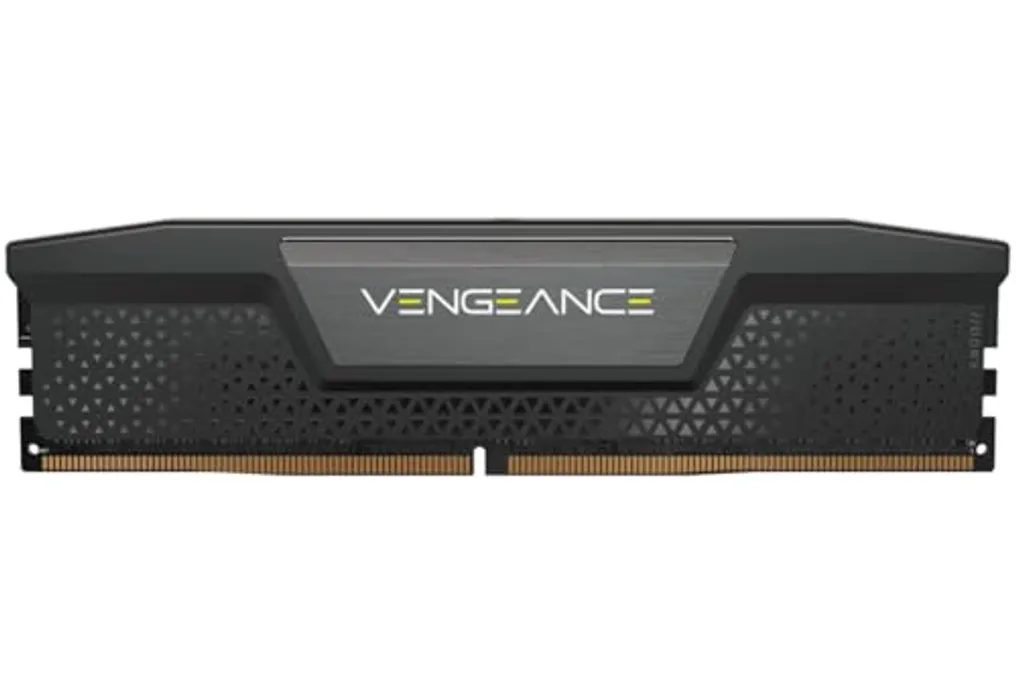
The Corsair Vengeance kit offers a single 16GB module with a frequency of 5200MHz and latency times of CL40-40-40-77. This module supports AMD EXPO and Intel XMP 3.0 profiles, allowing it to automatically adjust its settings to maximize performance in compatible systems. Its operating voltage of 1.25V ensures greater operational efficiency, making it ideal for those building or upgrading a desktop with recent processors.

For those looking to migrate to the DDR5 standard while maintaining good cost-benefit, Adata provides an 8GB module operating at 5600MHz with CL46 latency. This is a functional alternative for desktops requiring a memory increase, serving well in more compact configurations or as a base for future dual-channel expansion.

As for notebooks, the Adata XPG DDR5 8GB SODIMM memory is specifically designed for this format. It has 8GB of capacity, operates at 5600MHz, and uses only 1.1V of voltage, which contributes to energy saving and battery preservation. With CL46 latency, it balances speed and consumption well, making it recommended for expanding the RAM of laptops compatible with DDR5.

Due to stock variations in promotions, it is recommended to access the links immediately to secure the offer. The presented options cover different needs, whether for building a new PC, upgrading a desktop, or increasing notebook memory, all within the DDR5 standard, which has established itself as the path for those seeking performance in current equipment.

Popular