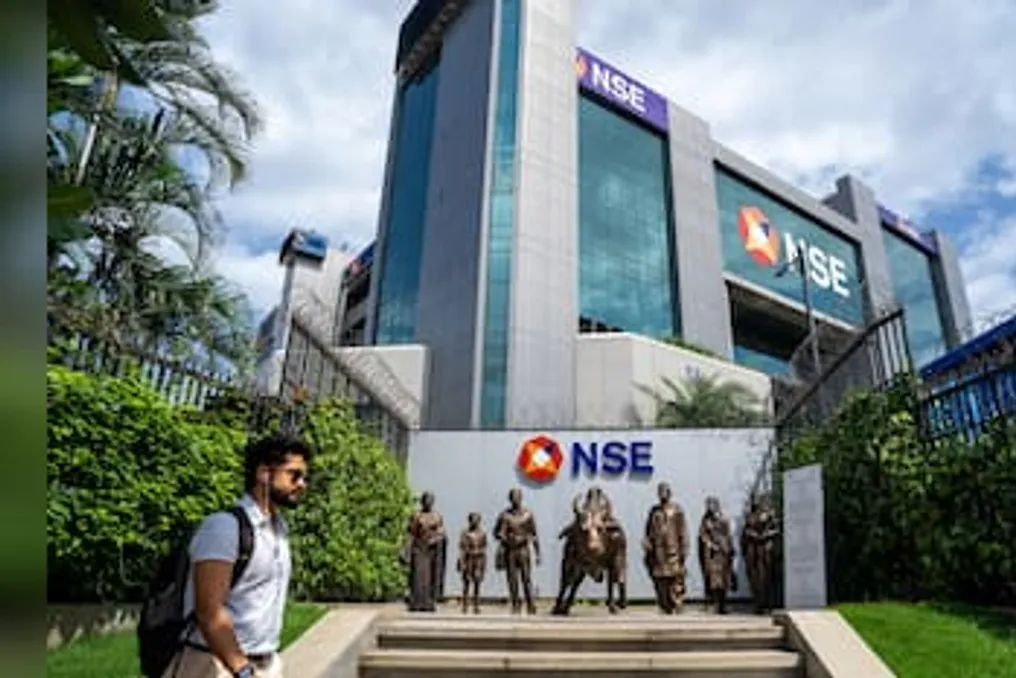
20 investment bankers earned 186 crore rupees from the National Stock Exchange (NSE) IPO
Read more
Business Standard
business-standard.com

20 investment bankers earned 186 crore rupees from the National Stock Exchange (NSE) IPO

According to exchange documents, twenty investment bankers participating in the Initial Public Offering (IPO) of the National Stock Exchange (NSE) collectively received remuneration amounting to 186.20 crore rupees in the form of commissions and fees.

The country's largest exchange, which plans to begin trading this week, reported total offering expenses of 392.12 crore rupees. This amount represents 1.74 percent of the total offering size of 22,561.5 crore rupees being offered through the Offer for Sale (OFS).

The funds paid to the banks accounted for 47.49 percent of these expenses, equivalent to 0.82 percent of the total issue size. Advertising and marketing costs were estimated at 49.69 crore rupees, or 12.67 percent of the total estimated costs, making them the second-largest expense item after banker fees.

Among the twenty merchant banks involved in the offering are organizations such as Kotak Mahindra Capital, JM Financial, Morgan Stanley India, Citigroup Global Markets, HSBC Securities, J P Morgan India, ICICI Securities, HDFC Bank, Axis Capital, and Motilal Oswal Investment Advisors.

Although the NSE IPO is the second largest in India, the payment to investment bankers is not among the highest. For instance, Hyundai Motor India, the largest IPO in India currently, paid banks 493 crore rupees, while Paytm (owner of One97 Communications) and LG Electronics paid 323 crore and 226 crore rupees, respectively.

The exchange's IPO, which closed for subscription on Monday, attracted a subscription 5.71 times greater than the number of shares offered. The primary demand was provided by Qualified Institutional Buyers (QIBs), who subscribed 12.68 times more than their reserved portion. Estimates suggest that the demand for the issue exceeded 90,000 crore rupees at the upper limit.

Since the issue was entirely structured as an OFS, the NSE itself will not receive revenue from the offering. Instead, the offering expenses are borne by the selling shareholders proportionally to their share of the sold shares.

The exchange attracted 6,746 crore rupees from nearly 189 anchor investors, including the Life Insurance Corporation of India (LIC), Norway's Government Pension Fund Global, the Monetary Authority of Singapore, the Abu Dhabi Investment Authority, and Societe Generale.

Similar stories

India's National Stock Exchange IPO attracts modest retail demand amid 5.71x overall subscription
Read more
business-standard.com

India's National Stock Exchange IPO attracts modest retail demand amid 5.71x overall subscription

The Initial Public Offering (IPO) of the National Stock Exchange of India (NSE) concluded with a subscription on Monday, September 21. The offering, valued at ₹22,562 crore, received bids for 50.58 crore shares against an offer of 8.86 crore, resulting in an overall subscription of 5.71 times.

However, the overall subscription figure masks a significant divergence between the interest shown by institutional and retail investors. Qualified Institutional Buyers (QIBs) subscribed 12.68 times more than their allocated portion, while Non-Institutional Investors (NIIs) subscribed 6.55 times. Meanwhile, the retail segment received bids for 6.13 crore shares compared to 4.41 crore, leading to a relatively modest subscription of 1.39 times.

The NSE IPO became the second largest public offering in India after Hyundai Motor India's IPO, which was worth ₹27,858.75 crore in 2024. The exchange company set a price band of ₹1,700–₹1,785 per share, with a lot size of eight shares, meaning a retail investor needed a minimum of ₹14,280 at the upper end of the price band.

Reasons for Retail Investor Caution

One of the key aspects of the NSE offering was its sheer magnitude. The total amount of approximately ₹22,562 crore required a substantial volume of capital, even though the minimum retail application was ₹14,280. Furthermore, the offering was entirely an Offer for Sale (OFS), meaning the proceeds would go to existing shareholders selling their stakes, not to NSE itself as new capital.

Another factor was changing expectations regarding listing gains. Market data showed a sharp weakening of the grey market premium during the IPO period. The premium dropped to about 2 percent from a peak of around 20 percent during trading, which could reduce attractiveness for investors focused on short-term listing profits.

Santosh Mina, Head of Research at Swastika Investmart, noted that retail investors are adopting a more selective approach to the NSE IPO amidst a crowded primary market where numerous offerings compete for the same pool of capital. He stated: 'The relatively modest grey market premium also lowered expectations for immediate listing gains. At the same time, the IPO is entirely an Offer for Sale, meaning there is no inflow of new capital for NSE.' Mina added that concerns over regulatory changes affecting F&O, which remains a vital part of NSE's business, might also prompt some investors to remain cautious. He concluded: 'Given the size of the offering at ₹22,561.57 crore, the subscription requirements are also significant, making the retail response relatively restrained compared to smaller IPOs.'

Comparison of NSE Retail Demand with Other Indian Mega-IPOs

The relatively modest retail subscription of 1.39 times becomes clearer when compared to some of India's largest IPOs. According to Prime Database, Coal India showed a retail subscription of 2.21 times, and LG Electronics India showed 3.39 times. LIC, another major IPO, demonstrated a retail subscription of 1.61 times. Compared to these, the retail subscription for NSE at 1.39 times was the lowest of the three.

Nevertheless, several other large offerings also recorded relatively moderate retail demand. HDB Financial Services showed a retail subscription of 1.43 times, and Paytm showed 1.27 times. Tata Capital and Swiggy each registered a retail subscription of 1.06 times.

Prime Database data also indicates that Hyundai Motor India, the country's largest IPO worth ₹27,858.75 crore, had a retail subscription of only 0.44 times. General Insurance Corporation of India (GIC) showed 0.59 times.

Significance of Valuation and Listing Gain Expectations

Abhinav Tiwari, Senior Research Analyst at Bonanza, pointed to the difference between the NSE IPO price and its previous non-listed valuation as another factor influencing retail investor participation. He noted: 'The main concern for investors is the gap between the NSE IPO price and its previous non-listed market price. The upper price band of ₹1,785 is approximately 26 percent below the non-listed peak of ₹2,400 observed in June 2025. Additionally, pre-IPO shareholders face a six-month lock-in period post-listing, which may reduce their willingness to participate further.'

Tiwari emphasized that for new investors, a lower IPO price might not appear attractive. Instead, it might suggest that the previous non-listed valuation was too high. The grey market also shows limited enthusiasm, as the GMP fell to only 4-5 percent above the upper price band. Tiwari also drew attention to NSE's revenue trajectory, its valuation, and its exposure to the derivatives market as factors investors might consider.

He added: 'NSE's financial performance is also a cause for concern. Net profit for FY26 decreased to ₹10,302 crore from ₹12,188 crore, and EBITDA operating margin fell to 66.9 percent from 73.8 percent. At a P/E of 42 times earnings, the valuation remains high, especially considering that NSE's share in industry option premiums decreased from 78.6 percent to 68.5 percent.'

Since the IPO is entirely an Offer for Sale, and other large IPOs may enter the market, retail investors might prefer to wait, as retail demand in India is largely driven by trading aimed at listing gains, and a 3 percent cushion does not justify locking up funds. He concluded: 'Once the valuation and pricing become clearer, we may see retail participation in the long term, as the fundamentals are strong, like any other large-cap stock.'
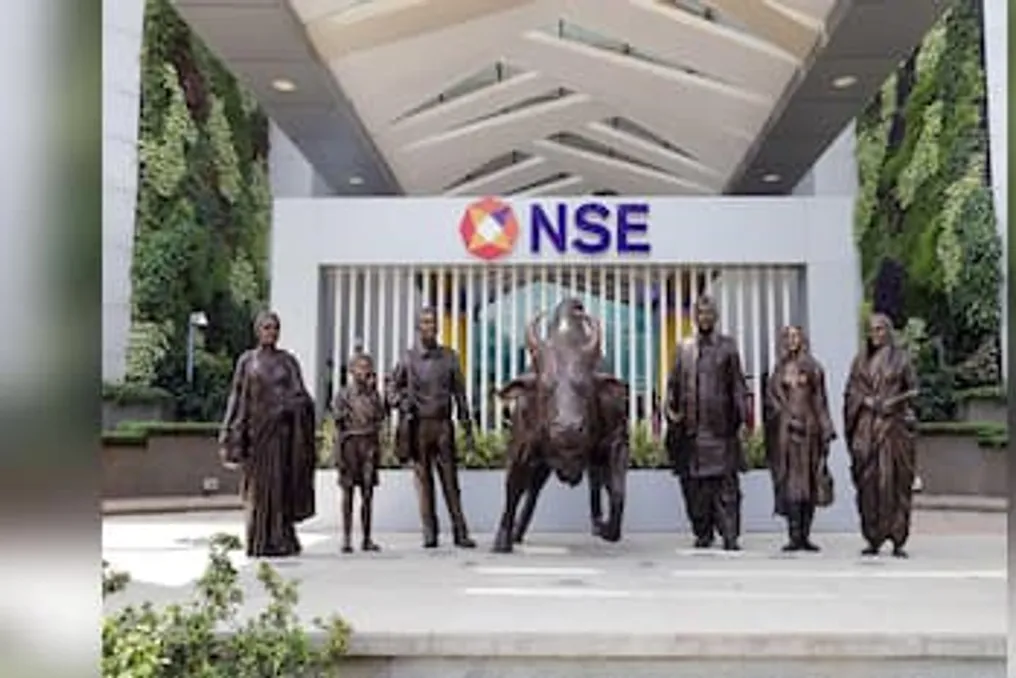
India's National Stock Exchange IPO attracts unexpectedly high demand, book size reaches over 6000 crore rupees
Read more
business-standard.com

India's National Stock Exchange IPO attracts unexpectedly high demand, book size reaches over 6000 crore rupees

The National Stock Exchange of India (NSE) reported that its Initial Public Offering (IPO) attracted 'unexpectedly large' demand, significantly exceeding the number of shares available for distribution, stated Managing Director and CEO of NSE Ashishkumar Chauhan on Tuesday.

Chauhan did not disclose the ratio between Domestic Institutional Investors (DIIs) and Foreign Portfolio Investors (FPIs), noting that the allocation process is still ongoing. He also mentioned that the initially expected book size of around 9000 crore rupees was reduced to over 6000 crore rupees, despite sustained high demand.

'The demand is unexpectedly large,' emphasized Chauhan, adding that the offering interested a large number of investors wishing to acquire a limited number of shares.

The allocation will be made among various categories of institutional investors, including domestic mutual funds, other domestic institutions, and FPIs, in accordance with prevailing regulations. The NSE IPO is scheduled to begin subscription on September 17 and conclude on September 21. The price band is set at 1700–1785 rupees per share. The offering is a Follow-on Public Offer (OFS), wherein existing shareholders sell up to 12.64 crore shares; no new NSE shares are being issued.

Chauhan also noted that initially, some shareholders were reluctant to sell their stakes at the proposed valuation, which led to a reduction in the offer from the previously stated 6.2% to 5.11%. Furthermore, NSE had to approach some of its shareholders to participate in the OFS so that the exchange could meet listing requirements.

Listing the exchange will provide existing shareholders with a more transparent and liquid way to realize their assets. Currently, NSE shares trade in a private market, where shareholders may face increased transaction costs and counterparty risks, according to Chauhan.

According to the company's IPO prospectus, the shares will be listed on BSE. Regarding pricing, Chauhan clarified that the company's bankers consulted with investors both in India and abroad, including large institutions, mutual funds, pension funds, and retail investors. He explained that during discussions, it was decided to maintain the option for retail investors.

The proposed IPO comes as NSE remains India's largest stock exchange by turnover in several key segments. According to the IPO prospectus, as of June 30, 2026, NSE accounted for 93.05% of India's money market turnover and 68.48% of equity options turnover based on the premium turnover for the three months ending June 2026.

Chauhan also refuted the notion that NSE's operations heavily depend on weekly options. He stated that weekly options currently account for about 42% of NSE's total revenue, compared to 60–70% three to four years ago. The rest of the revenue comes from monthly index options, equity options, stocks, equity futures, colocation services, data, indices, and other business areas. The exchange has also expanded its activities into various asset classes, including equities, currencies, commodities, interest rates, and power.

NSE's integrated business model includes exchange listings, trading, clearing and settlement, indices, and market data. Chauhan explained part of the decrease in NSE's EBITDA margin last year due to a large one-time fine, noting that the exchange's normalized EBITDA margin remained in the range of 76–79% over the past five years.

As per the company's IPO prospectus, NSE's consolidated operating revenue grew by 9% year-on-year to 4560 crore rupees in the quarter ending June 2026, and net profit increased to 3121 crore rupees compared to 2811 crore rupees the previous year.

Chauhan stated that NSE's investor base has significantly expanded beyond major cities in the country, and the exchange will continue efforts to attract more investors and companies from regions such as Jammu and Kashmir, Northeast, Odisha, Jharkhand, and Chhattisgarh to the capital market. As of June 30, NSE had 13.237 crore unique registered investors and 26.136 crore registered investor accounts, with investors spread across over 99% of India's postal codes. 3005 organizations are registered on the exchange platform with a cumulative market capitalization of 474.08 trillion rupees.

NSE's IPO expected to be valued at ₹1700-1800, OFS volume may be reduced to 5.25%
Read more
business-standard.com

NSE's IPO expected to be valued at ₹1700-1800, OFS volume may be reduced to 5.25%

According to sources familiar with the situation, the much-awaited Initial Public Offering (IPO) of the National Stock Exchange (NSE) is expected to be priced around ₹1700–₹1800 per share.

Sources added that the size of the Offer for Sale (OFS) may be reduced from the initially planned 6 percent to 5.25 percent, which will lead to a lower overall offering volume compared to the previously projected ₹30,000 crore.

The pricing for the exchange's IPO, which will consist solely of OFS, is expected to be announced next week, and the offering itself is likely to commence later in the same week. Shares may be listed on BSE on September 25.

In the over-the-counter market, NSE shares were trading at approximately ₹2025 per unit, according to UnlistedZone data. As of Wednesday, the premium in the grey market was about ₹228.

The exchange plans to file an updated draft prospectus early next week. Sources also noted that the expected price range reflects the reaction of institutional investors during the roadshow.

One source stated that a more attractive offer was made regarding the pricing for small investors participating in the OFS.

The exchange filed its preliminary documents with the Securities and Exchange Board of India (Sebi) in June and received regulatory approval for the Draft Red Herring Prospectus (DRHP) on September 4. Earlier this month, the Supreme Court allowed Sebi appeals regarding joint listing and dark fiber following a settlement in which NSE paid approximately ₹1,491.21 crore.

A source familiar with the developments explained the reduction in offering volume by stating that some shareholders do not wish to sell now under OFS, as they believe they can achieve a higher price after listing.

Popular