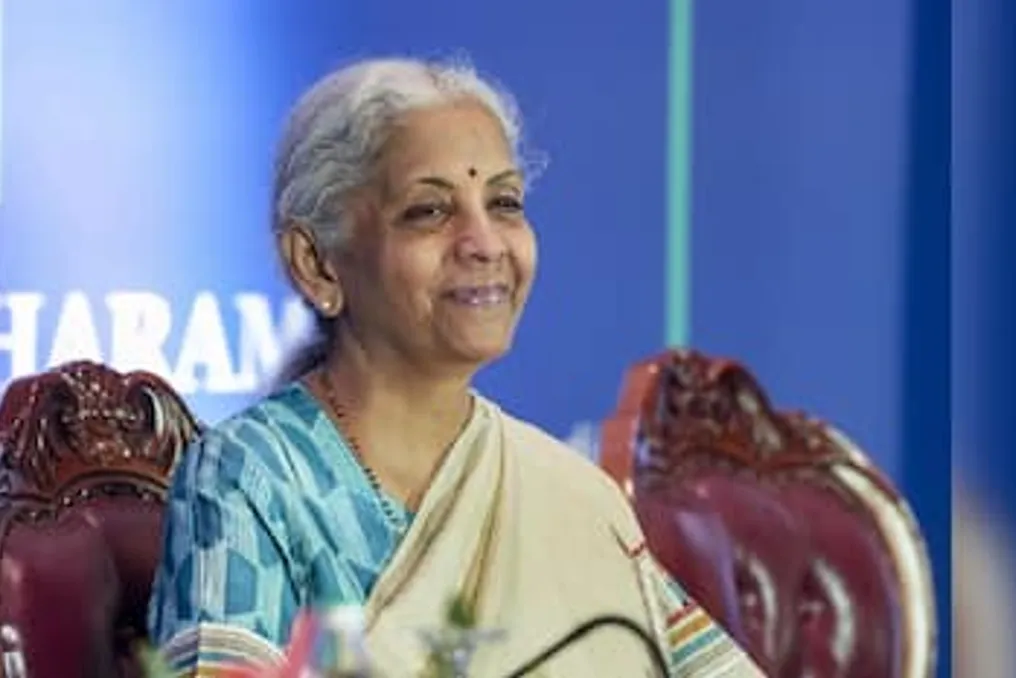
Finance Minister Nirmala Sitharaman called for an increase in trust, transparency, and predictability among participants in business relations, emphasizing that enterprises should interact with government bodies and regulators in advance to resolve disagreements.
Sitharaman stated that while legal remedies are always available, not every dispute should begin with litigation. She noted that companies should actively participate in consultations, provide evidence, and work towards finding solutions even before disagreements turn into full-blown disputes.
The Minister stressed that trust between businesses cannot be a requirement; it must be built through the behavior of both parties. Furthermore, she pointed out that a mature economy must have the capacity to resolve disagreements without immediately resorting to confrontation. Sitharaman also called for deeper institutionalization of Indian business.
Call for Business Institutionalization
She stated that the main task for the next two decades is not just creating more startups, but ensuring that existing startups transform into large, sustainable, and professionally managed corporations. According to her, the true value lies not in the number of 'unicorns' created, but in the number that survive and become major companies of the future.
Sitharaman believes that management institutions and experienced corporate leaders can help startups transition from founder-managed enterprises to institutionally managed companies without losing entrepreneurial spirit. This challenge of institutionalization extends to India's family businesses. A significant portion of micro, small, and medium-sized enterprises (MSMEs) and mid-sized companies in the country are family-owned. Despite having strong products, loyal customers, and growth potential, the expansion of such enterprises is often hindered by role ambiguity, succession disputes, informal decision-making, and internal family conflicts.
The Minister noted that the problem often lies not in entrepreneurship itself, but in the lack of institutionalization. She called for greater professionalization by separating ownership from management, clearly defining responsibilities, preparing the next generation, and resolving conflicts before they negatively affect the business. Sitharaman proposed that AIMA expand practical programs for family businesses covering succession management, corporate governance, professionalization, conflict management, and delegation of authority.
Additionally, Sitharaman advocated for reforming management curricula to align with modern techno-economic realities and promote interdisciplinary learning. She emphasized that modern leaders need deeper knowledge in geopolitical and supply chain risks, climate risks, behavioral science, data, regulation, and technology-driven project implementation. She strongly recommended that educational institutions prepare leaders capable of integrating various disciplines rather than working in isolated functional departments.