Aliwal Shoal Underwater World off the KwaZulu-Natal Coast: Attractions and Marine Life
Read more
Getaway
getaway.co.za

Aliwal Shoal Underwater World off the KwaZulu-Natal Coast: Attractions and Marine Life

Near the KwaZulu-Natal coast, close to the coastal settlement of Scottburgh, lies one of South Africa's most famous diving spots—Aliwal Shoal.

This underwater reef formed from ancient fossilized sand dunes, and its marine environment is shaped by the warm, nutrient-rich Agul Current. The reef stretches approximately 5 kilometers, rising from depths of about 6 meters to 25–30 meters in some areas. Its underwater landscape includes caves, ravines, pinnacles, and sandy patches that serve as habitats for an impressive diversity of marine organisms.

The area is protected under the Aliwal Shoal Marine Protected Area (MPA), which was expanded in 2018 and 2019, covering an area of about 670 square kilometers. This reserve aims to conserve the reef and the marine species dependent on it.

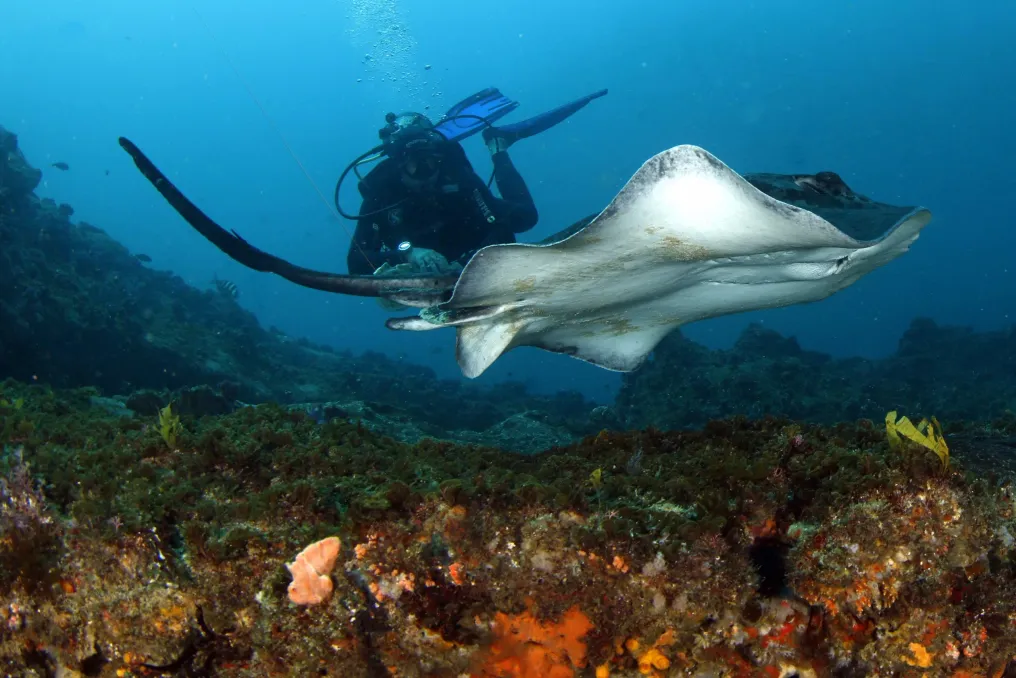
One of Aliwal Shoal's main attractions is sharks, as divers regularly encounter several species. From July to November, sharks with serrated teeth, known as reggae sharks, gather around specific parts of the reef. These sharks are generally considered peaceful, and their seasonal presence has made Aliwal Shoal a popular destination for underwater wildlife viewing enthusiasts.

In addition, the reef is visited by tiger sharks, grey sharks, hammerhead sharks, and sometimes whale sharks. Depending on the season and conditions, divers may also encounter turtles, humpback dolphins, bottlenose dolphins, and migrating humpback whales.

The Agul Current plays a vital role in maintaining this biodiversity, delivering warm water and nutrients along the KwaZulu-Natal coastline. The reef is also closely linked to two historic shipwrecks: the MV Produce and the SS Nebo.

The Norwegian molasses tanker MV Produce sank in 1974 and now rests at a depth of about 30 meters. This wreck provides an additional attraction for experienced divers, as its remains create a habitat for marine life. The SS Nebo sank in 1884 during its maiden voyage. Parts of this ship, including boilers and propeller, remain on the seabed, allowing divers to glimpse the region's maritime history.

Both wrecks contribute to the overall appeal of Aliwal Shoal, combining underwater exploration with the opportunity to encounter marine life around these structures.

Aliwal Shoal caters to divers of various skill levels: from introductory dives and open water courses to advanced and specialized training. ScubaXcursion, based at Premier Resort Cutty Sark on the waterfront, offers diverse programs, including shark and shipwreck dives, as well as daily trips to the reef. According to the operator, some dive sites can be reached in less than 20 minutes from the departure point.

The proximity of the resort and dive center allows visitors to combine coastal relaxation with regular trips to the reef without long commutes. Different sites offer unique underwater experiences depending on the conditions and the diver's experience. For instance, Crown and Pinnacles are known for their walls, ravines, sponges, and reef life, while Reggae Cave is associated with seasonal sightings of serrated-toothed sharks. North and South Sands feature sandy areas where rays and sand sharks can be found. The shipwrecks provide another option for experienced divers interested in maritime history.

As in any remote diving location, conditions can change, and the movement of the Agul Current can sometimes complicate diving. The period from July to November is particularly important for observing serrated-toothed sharks, although Aliwal Shoal offers year-round diving opportunities. Divers are advised to check local marine conditions and follow operator instructions before heading out to sea. Since the reef is within a Marine Protected Area, visitors must also adhere to conservation rules and avoid touching or taking marine life.

Thanks to the ancient reef formations, seasonal shark encounters, historic shipwrecks, and proximity to the KwaZulu-Natal coast, Aliwal Shoal offers a truly South African diving experience. It is a place where geology, marine wildlife, and maritime history converge in one protected underwater landscape.

Similar stories

Investigation of the Mysterious Underwater Cave System Wondergat in the North West
Read more
getaway.co.za

Investigation of the Mysterious Underwater Cave System Wondergat in the North West

A dark freshwater body has unexpectedly opened up in the North West region. From the surface, Wondergat appears deceptively calm, but beneath it lies a complex network of underwater caves and rock formations descending into darkness.

This massive sinkhole, located approximately 30 km from Mahikeng and 60 km from Lichtenburg, was formed by the dissolution of surrounding dolomite by groundwater, which ultimately led to the collapse of an underground cave. Currently, the oval opening measures about 75 m by 100 m and reaches a depth of approximately 58 m.

The name, which roughly translates from Afrikaans as 'wonderful opening,' seems fitting when one realizes how much of Wondergat is submerged. Wondergat is considered one of the known freshwater diving spots in South Africa, but this location is not intended for casual visitors.

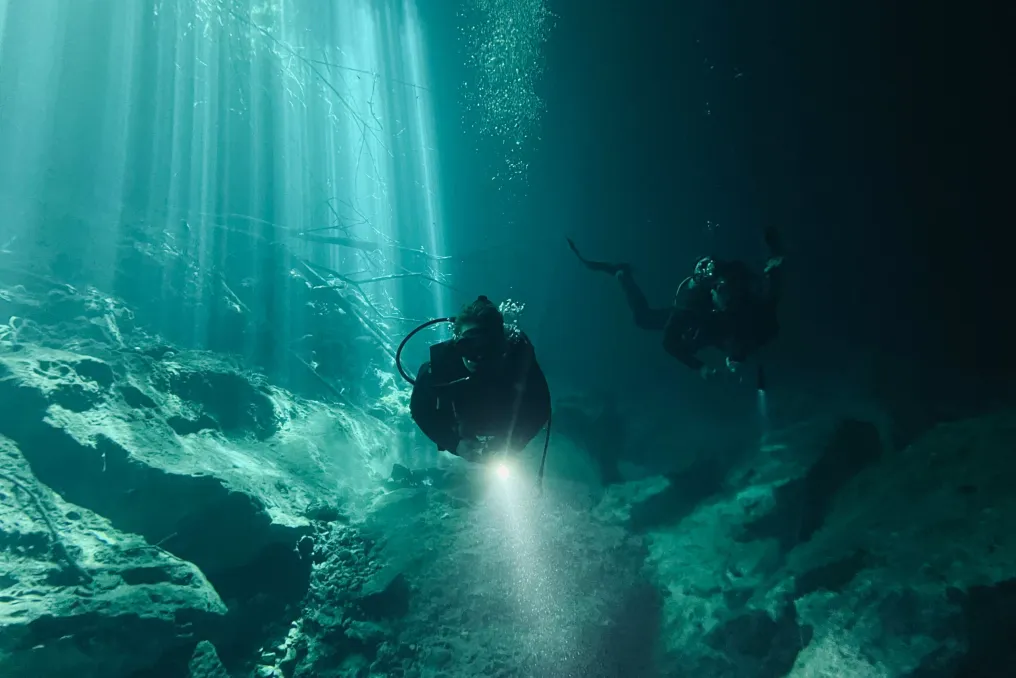
Divers descend through clear freshwater past steep rock walls before reaching a series of underwater spaces, including the northern and southern caves, the overhang, and the Leopard Cave. A chambered cave is located deeper within the system. Experienced divers use guide ropes and marked nets for navigation in the caves.

Conditions can be demanding: water temperature usually ranges from 14°C to 21°C, and visibility depends on conditions and depth. The site is used by advanced, technical, and instructor divers, necessitating appropriate training and equipment.

Historically, Wondergat has been recorded at depths exceeding 70 m, although the current maximum depth is around 58 m. Over time, it is gradually becoming shallower due to natural processes. In this underwater world, the landscape changes its character: sunlight fades, walls narrow, and the usual perception of a lake gives way to something much more subterranean.

Geological features are part of Wondergat's charm. The dolomite that formed the sinkhole remains underwater, creating caves and passages that divers explore. Furthermore, underwater stromatolites have been discovered at this site, adding another layer to the already unusual geological landscape.

Natural fauna is also present. Among the freshwater species recorded in Wondergat, one can find knifefish and southern mouth bass, with striped tilapia being particularly associated with this location.

However, the rocks attract attention. Wondergat resembles an entrance to a watery geological world more than a dive into a lake. It is important to note that the underwater environment of Wondergat has claimed the lives of divers, and memorial stones have been placed beneath the surface in memory of those who died. The site has also been used for specialized and technical diving training, including by the South African Police Service Special Operations Tactical Group.

This story serves as a reminder that Wondergat is not a tourist attraction to be visited without proper preparation. Divers must possess the requisite qualifications, experience, and equipment, and the site is recommended for group dives rather than solo ones.

For those staying overnight, campsites, barbecue areas, sanitary facilities, and electricity are available, allowing one to spend a night by the water before returning to the surrounding landscape.

There is something captivating about a place whose main feature is invisible from the surface. In Wondergat, a quiet body of water conceals shafts, caves, and rock formations shaped over geological time. For experienced divers, diving here means entering a landscape few see. For everyone else, a simple observation from the edge provides insight into the strange connection between water, rock, and time.

Mkhambathi Reserve on the Wild Coast: Where Waterfalls Meet the Indian Ocean
Read more
getaway.co.za

Mkhambathi Reserve on the Wild Coast: Where Waterfalls Meet the Indian Ocean

There are places on the Wild Coast where the landscape seems intentionally designed to make visitors pause, and Mkhambathi Reserve is one such place. Here, gentle grasslands give way to forested gorges, rivers carve through the scenery, and waterfalls cascade into the Indian Ocean. The reserve offers secluded beaches, rocky shores, freshwater pools, and ample open space for walks among wildlife, birds, and the sea.

Mkhambathi is also recognized as one of the important conservation areas of the Eastern Cape. In 2025, the reserve was designated as the 31st Ramsar Convention site in South Africa, becoming the first wetland of international importance in the province. This nomination highlights the value of rare wetlands, estuaries, swamp forests, and biodiversity.

To enjoy this place, you do not need to be an experienced tourist or a passionate wildlife enthusiast. Mkhambathi suits both a family looking for simple nature recreation and a couple wishing to spend quiet days by the sea, or anyone wanting to replace screens and city traffic with fresh air.

The waterfalls are likely the most attractive feature of Mkhambathi, and this is not accidental. The Mkhambathi River flows through the reserve, forming a series of pools and cascades before reaching the coast. The most famous is Horseshoe Falls, where the river spills over a sandy terrace in a wide arc. Further downstream, the river plunges through Strandloper Falls and Mkhambathi Falls before entering the Indian Ocean.

Access to Horseshoe Falls is by walking along the Mkhambathi River, which turns the journey itself into part of the experience, rather than just a trip to a viewpoint. The walk allows observation of the grasslands, the river, and the changing landscape as you progress.

Visitors are advised to bring comfortable walking shoes, a swimsuit, and a picnic basket to spend the day following trails, stopping at pools, and finding their own favorite view. It is important to remember that this is still wild territory, not a manicured family attraction. Conditions can change, so visitors must stay on marked routes and follow local instructions.

The Mkhambathi coastline stretches for approximately 10 kilometers, featuring rugged rocky beaches and sandy coves framed by grasslands, forests, and open coastal landscapes. There is something captivating about exploring a coastline that remains largely untouched. Shell collecting, photography, walks, and simply finding a quiet spot to sit fit organically into a day here.

Visitors can explore the coast and rock pools; activities such as fishing and diving are available in designated areas and require appropriate permits. Whale and dolphin watching is also among the reserve's offerings, providing another reason to look at the horizon instead of a phone.

For couples, this may be Mkhambathi's most obvious advantage. No pre-planned itinerary is required. A long walk along the coast, a picnic, swimming under favorable conditions, and an evening spent to the sound of the ocean can be enough in this corner of the Wild Coast.

If you enjoy birdwatching, be sure to bring binoculars. The mix of grasslands, forests, rivers, wetlands, and coastal habitats in Mkhambathi supports a great diversity of bird species. Among the registered species in the reserve are the Eurasian nuthatch, Ramero's dove, African fish eagle, crowned eagle, Gurney's sugarbird, great crested sunbird, yellow-breasted longbill, and chirping cisticola.

The Ramsar site status adds another layer of importance. Its wetlands and river systems support vital biodiversity, while the Mtentu and Msikaba gorges serve as habitat for endangered species, including Cape vultures.

Thus, a walk through Mkhambathi is more than just reaching the next waterfall. By observing the grasslands, forests, and river valleys, the reserve begins to reveal another layer of its already captivating character.

Mkhambathi is not a traditional 'Big Five' safari destination. Its appeal lies in the combination of coastal wilderness and wildlife. The grasslands support artificially introduced populations of eland, red gazelles, blue antelope, springboks, and gemsbok, although eland and red gazelles are native to the area.

The open spaces facilitate memorable wildlife encounters, especially when animals appear against the backdrop of the Indian Ocean. Safaris are among the listed activities, although large areas of the wilderness are explored on foot.

This is one of the reasons Mkhambathi feels different from many typical nature retreats. One moment you can watch a herd of antelope on the grasslands, and the next you can look at a waterfall or the sea.

There are many ways Mkhambathi can occupy long hours of your time without making you check the clock. You can hike a trail, practice birdwatching, or swim if conditions allow. You can fish in designated areas with the necessary permits, canoe, explore the coast, or simply sit somewhere with a view and do little.

There is enough here to engage active visitors, but no pressure to fill every hour. This makes the reserve particularly appealing as a refreshing escape from the ordinary pace of life.

For families, it offers the opportunity to spend time outdoors together, offering activities such as hiking, wildlife viewing, waterfalls, and swimming. For couples, the same landscape is ideal for a quieter retreat. And for anyone interested in photography, ornithology, fishing, or nature, there are plenty of reasons to pay attention without needing a structured tour.

The reserve has accommodation options, including Main Lodge and Stone Cottage. Additional lodging options, such as rondavels and larger lodges, are available in the GweGwe area.

Mkhambathi is quite remote, so do not expect many shops and restaurants. You should arrive prepared to spend most of your time outdoors.

This might seem a bit daunting, considering how much time we constantly spend connected and within easy reach of amenities. But that is the essence of Mkhambathi. You come here to disconnect from the noise, spend time outside, and let the landscape set the pace.

Mkhambathi is located on the Wild Coast in the northeastern part of Pondoland, approximately 71 km from Flagstaff. The reserve covers 7,720 hectares of coastal wilderness between Port Edward and Port St John.

Access is via the R61 road and further to Holy Cross Hospital, with the final approach involving gravel roads. This remoteness should be considered when planning a trip. Bring everything you need for the day, ensure your vehicle is suitable for the upcoming roads, and check the latest reserve conditions before departing.

There are also special rules for visitors in Mkhambathi. Activities such as fishing require permits, and certain activities in the protected area need approval. Check the latest information with the Eastern Cape Parks and Tourism Agency before traveling.

The Wild Coast is abundant with spectacular sights, but Mkhambathi combines several of the region's best qualities into one reserve. And now, thanks to its Ramsar site status, there is another reason to pay attention to this corner of the Eastern Cape. Mkhambathi is not just beautiful; its wetlands, estuaries, forests, and grasslands are part of a globally important ecological landscape that deserves protection.

You can come for the waterfalls and stay for the silence. You can come seeking adventure and end the day watching birds. You can come as a family, a couple, or just with a camera and a pair of walking boots. In any case, Mkhambathi is a place that reminds you why the Wild Coast got its name. Here, the best experiences are often the simplest: follow the trail, find the waterfall, look at the sea, and let the landscape do the rest.

Popular