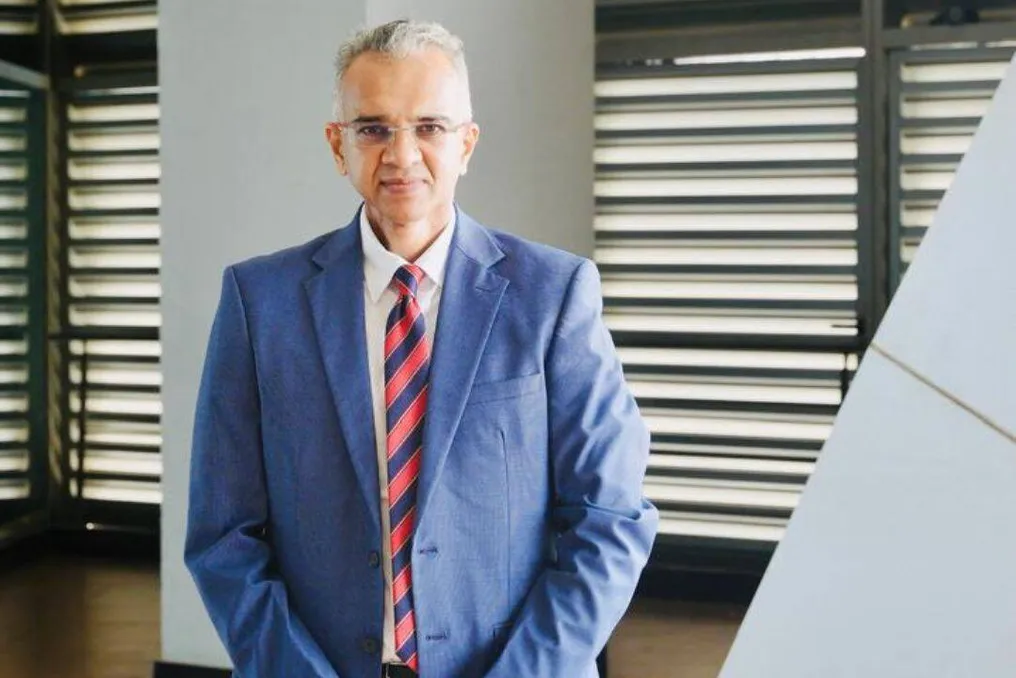
NPCI's Dilip Asbe explains the new UPI MDR commission structure to support small businesses
Read more
The times of India
timesofindia.indiatimes.com

NPCI's Dilip Asbe explains the new UPI MDR commission structure to support small businesses

Although waiving fees for UPI sellers accelerated the system's adoption during the Covid pandemic, the growth rate has slowed. In an interview with TOI, Dilip Asbe, CEO and Managing Director, explained how the new commission structure protects small transactions while charging larger merchants who already pay card transaction fees. Furthermore, there are several exceptions designed to protect consumers and small traders.

NPCI forecasts collections of ₹13,000–₹15,000 crore in the first year, with 5% of this amount being allocated to support small traders. The model will be reviewed regularly.

When was the decision made to introduce MDR on UPI, and how was the decision made to set the threshold at ₹2000 and MDR at 0.4%? Will the scheme be periodically reviewed? Previously, P2M transactions were charged from the beginning, and the system followed a global model, keeping P2P free and P2M at reasonable costs, significantly lower than the established MDR for debit and credit cards, internet banking, or wallets. The government's decision for zero MDR in 2020 contributed to the rapid expansion of UPI among sellers during the Covid period.

Over the last four years, the UPI ecosystem—including NPCI, banks, fintech startups, and industry bodies like the Payments Council of India and IBA—has worked towards a review to ensure a self-sustaining system that can create long-term value for the country, citizens, and merchants. UPI growth has slowed, and India remains underpenetrated compared to China and Brazil, where nearly 90% of the adult population uses digital payments daily, whereas this figure is 40% in India.

Therefore, investments are necessary to expand digital payments, especially among low-income groups. The commissions were finalized primarily based on accounting for the costs incurred by various participants in processing UPI transactions. Instead of a fixed fee model, which would penalize low-value operations, a percentage system was chosen so that large margin transactions could constitute the majority of the MDR. Some categories with high bill amounts but low margins were kept with a fixed fee of ₹5 regardless of the bill size to continue stimulating adoption.

Looking at the rates, they are almost comparable to global rates for QR payments, which are charged similarly without exceptions, and these charges remain significantly lower than those levied on large merchants for debit or credit card transactions.

Is a collection of around ₹15,000 crore expected in the first year? The system may require time to stabilize. It is possible that revenue of ₹13,000–₹15,000 crore will be collected in the first year, of which 5% will be allocated to a small merchant fund to stimulate the growth of digital payments among small traders. Management plans to publish relevant guidelines soon.

What is the reason for levying fees when the government could easily cover expenses of ₹20,000 crore, as this is a negligible fraction of its budget, especially when it spends thousands of crores on unmerited subsidies? Why can't banks, NPCI, or RBI bear this burden? The idea is not to burden small players, as over 80% of MDR collections are expected to come from enterprises with turnover exceeding ₹1000 crore. Most of them already accept cards and pay a much higher MDR for cards under the current structure. There are competing demands on public funds, and this is the best way to make the ecosystem sustainable, fostering growth and innovation without dependence on subsidies.

NPCI is a non-profit organization; all profits are reinvested into creating infrastructure, settlement guarantee reserves, innovation, and sustainability. NPCI must not just survive but thrive for the next 100 years.

Banks continue to make significant investments in maintaining and scaling the UPI ecosystem, with the annual expenditure of most large banks often exceeding ₹2000 crore. Moreover, withdrawing ₹5000 in cash can often be replaced by 50–100 UPI transactions, highlighting the scale and efficiency of digital payments. While the shift from cash to digital payments undoubtedly brings savings through reduced costs of handling cash and ATM maintenance, banks also incur significant costs in creating and operating a reliable, secure, and scalable UPI payment infrastructure.

Over the last six years, the entire ecosystem has invested over ₹75,000 crore in maintaining and developing the UPI ecosystem without substantial cost recovery. These investments and innovations will benefit the country in the long run.

What is being done to prevent consumers from bearing the MDR burden? Is NPCI proposing a GST revision? Operating the UPI ecosystem requires about ₹21,000 crore annually, and management aimed to protect small traders and low-value payments to help small businesses attract capital and invest. The goal is also to increase the number of participants and enhance competition. Consequently, person-to-person transactions and seller payments up to ₹2000, without an upper limit on aggregate or repeated transactions, all regular payments or AutoPay, and small individual sellers receiving up to ₹1 lakh per month into their accounts, will not be subject to MDR. Since the majority of MDR will be generated by sellers who already accept card payments, the consumer price is already factored into the MDR charges; otherwise, we would see sellers offering large discounts on UPI and RuPay debit card transactions over the past six years. We have prohibited platform fees and charging sellers from customers. We plan to review this periodically along with the ecosystem. Regarding GST, I have no comments, as this decision will be taken by the Ministry of Finance and the GST Council. However, large merchants will be able to claim input tax credit on GST.

How do you propose using these funds for market development? Do you foresee banks and other service providers offering bonus points for UPI transactions, as happens with credit cards? The purpose of these charges is to ensure the prosperity and self-sufficiency of the ecosystem and its capacity for innovation and value creation, which in turn will boost UPI growth. Today, we observe that payment methods with good cost recovery have better innovations and features. For example, EMIs, rewards, and discounts help boost seller sales, especially in categories like electronics. Once cost recovery begins, the ecosystem will create a powerful incentive to attract new consumers and sellers, install more terminals, and increase activity in underserved geographical regions and categories through digitalization. In changing times and landscapes, this will also allow the ecosystem to proactively invest in cybersecurity and resilience.

Will there be control over sellers and consumers splitting transactions to avoid MDR above ₹2000? Any policy with a ceiling or floor has these secondary effects. If a consumer is willing to participate in transaction splitting at the seller's request, we do not see harm in it, and consequently, no upper limit is set for such transactions. We believe this may be, at best, a short-term phenomenon, and ultimately, the consumer experience will prevail. What we have seen globally and in India is that consumer choice primarily drives digital payments.

The new system caused confusion regarding several aspects of the scheme... Yes, but we are working with industry bodies and ecosystem participants to clarify. For instance, some people interpreted the limit of MDR below ₹2000 as a daily limit rather than a per-transaction limit, which is incorrect.

How do you respond to accusations that the decision was made under US pressure? USTR refers to the 30% market share limitation of UPI and NCMC's access to other competing international schemes, which is a fair and factual point, and we believe it should be the prerogative of the country to make such a decision. We found no references to charges or MDR, and as I mentioned above, it is beneficial for competing companies to keep it free.
Similar stories

Introduction of MDR commission on UPI transactions may become a new source of income for fintech companies
Read more
yourstory.com

Introduction of MDR commission on UPI transactions may become a new source of income for fintech companies

The investment market shows optimism regarding the valuation of fintech companies after the government introduced a Merchant Discount Rate (MDR) on UPI transactions exceeding 2000 rupees. Positive changes began with a 7% rise in Paytm's share price on Wednesday.

Investors and industry specialists believe that valuations may grow in the coming quarters, although the exact impact will only become clear later. Dipak Gupta, General Partner at WEH Ventures, noted that the recent introduction of UPI MDR could make existing payment businesses more profitable. He added that investors can now view payments as an independent business, rather than waiting for future profits from selling other financial products to customers.

The government has set a commission of 0.4% on UPI payments over 2000 rupees for merchants, limiting this fee to 300 rupees for transactions of 75,000 rupees and above, as part of implementing a system for large digital payments to merchants.

According to trader and investor Meshach Manohar, who closely monitors the fintech market, the impact of MDR on valuations may be limited. He explained that previously, fintech companies offered free UPI transactions mainly to collect customer purchase data and understand their buying patterns, which were then used for cross-selling loans and other financial services.

Manohar believes that while the new MDR might slightly increase the revenue and profit of companies, it is unlikely to have a significant impact on their net profit. He forecasts only a small profit improvement, possibly within 0.5%–1%, especially in the first two quarters.

Although fintech and payment companies welcome this development, experts warn against drawing conclusions about its future direction too soon. Manohar stated that if users have to pay, like for a credit card, they will stop using UPI. He emphasized that consumer behavior will become evident during the festive season, but this requires waiting two to three quarters.

He also mentioned that due to a 13% UPI failure rate, public sector banks are incurring losses, necessitating new approaches to the UPI ecosystem.

Experts also consider it premature to discuss how specific fintech companies like Paytm or Razorpay will be affected, as consumer behavior remains uncertain. Nevertheless, brokerage firms, including Jefferies and Goldman Sachs, indicated that Paytm and Pine Labs could benefit significantly from this move.

According to Jefferies, the sector could potentially generate between 150 and 180 billion rupees in revenue, which will be distributed among issuers, payment applications, acquirers, and banks. Jefferies raised its profit forecasts for Paytm for fiscal years 28–29 by 10–12%, citing potential growth from UPI MDR. The brokerage firm assumes an effective revenue pool of 40 basis points after accounting for discounts and pricing pressure, and increased its FY27 profit forecast by 18% to reflect the initial benefit from MDR.

Meanwhile, Goldman Sachs sees potential EBITDA growth for Paytm in FY28 of 40–70%. Goldman Sachs notes that some online retailers already use fixed or pay-plus fees for payment instruments, which may reduce the additional revenue pool for the industry, although they assess Paytm's share among online retailers as relatively low. The Goldman Sachs report also indicates that the calculation implies a potential revenue pool of around 206 billion rupees for the industry from the announced UPI MDR.

Goldman Sachs maintained a 'Buy' rating on Paytm with a 12-month target price of 1500 rupees, justifying it with strong fundamental profit growth and continued market share momentum, which they believe will support higher valuation multiples.

Emkay Global, in turn, estimates that Paytm could receive 11.2 billion rupees in revenue from UPI MDR in FY28, based on a conservative realized rate of 10 basis points. The company raised its target price for Paytm to 2400 rupees while maintaining a 'Buy' rating, valuing the current worth of these additional revenues at 434 billion rupees.

The impact will not only affect payment companies. PhonePe, which is reportedly resuming IPO plans, may benefit from greater revenue transparency, while brokers like Zerodha might face increased costs as UPI becomes paid for certain operations.

Jefferies estimates that out of the 40 basis points of MDR, approximately 16 basis points will go to issuing banks, 12 basis points to acquiring banks, 8 basis points to third-party application providers (TPAP) or payment applications, and 4 basis points to the payment service provider bank (PSP). This distribution will determine what portion of the new revenue pool ultimately reaches individual participants.

Introduction of UPI Commission: Rules and Conditions That Will Not Affect Ordinary Users
Read more
www.aajtak.in

Introduction of UPI Commission: Rules and Conditions That Will Not Affect Ordinary Users

UPI has become an integral part of the daily lives of many people, assisting in purchases ranging from milk and vegetables to online shopping. Consequently, questions have arisen regarding the impact of the upcoming introduction of commissions on UPI. The government has decided to implement a Merchant Discount Rate (MDR) on UPI, which will come into effect on October 15, 2026.

The Department of Financial Services (DFS) of the Government of India and the National Payments Corporation of India (NPCI) have released a new MDR structure for payments made via UPI. The primary concern among the public is the potential increase in costs when conducting digital payments.

For ordinary users who use UPI to purchase daily necessities such as groceries, milk, vegetables, rations, taxis, or make online purchases, UPI will remain completely free, as before. Peer-to-Peer (P2P) transfers between friends or relatives remain absolutely free, regardless of the amount, whether it is 100 rupees or 100 thousand rupees.

When paying in a store or on an online platform using a QR code scan or UPI ID, the customer will not be charged any additional fees. The government has given a clear directive that payment applications, such as Google Pay, PhonePe, Paytm, or BHIM, must not levy any hidden or paid charges on users for the platform.

MDR (Merchant Discount Rate) refers to a commission or fee that the merchant pays to banks and payment service providers (such as PhonePe, Paytm, Google Pay) for accepting digital payments. Previously, since January 2020, the MDR for UPI was completely zeroed out to stimulate digital payments. Now, however, the new rules stipulate its reintroduction.

For transactions up to 2000 rupees at any store or with a vendor, the MDR will be zero, meaning no charges for either the customer or the merchant. If the payment in a large store or mall exceeds 2000 rupees, the merchant will be charged an MDR of 0.4%. For example, for a transaction of 3000 rupees, the seller will pay approximately 12 rupees, and for a transaction of 5000 rupees, it will be 20 rupees.

A maximum MDR limit has been set for large enterprises: for payments of 75,000 rupees and above, the maximum charge is capped at 300 rupees, irrespective of whether the transaction is 100 thousand or 500 thousand rupees.

Small entrepreneurs, such as vegetable vendors, tea stall owners, small grocery stores, and taxi drivers, actively use QR codes. They have been provided with significant support. Small traders and sellers whose total volume of digital payments via QR code per month does not exceed 100,000 rupees have been assigned the P2PM category. For these sellers, the MDR will be completely zero (0%) for all transactions, even if they exceed 2000 rupees.

According to data, 96% or more of all merchant transactions via UPI in India are transactions of 2000 rupees or less. The government believes that over 95% of small and medium enterprises will remain outside the scope of this MDR charge.

For essential services such as train tickets, fuel stations, insurance, and telecommunications, a fixed MDR of 5 rupees has been established instead of a percentage charge. This means that if a user makes a payment via UPI exceeding 2000 rupees (for example, fueling a car for 2500 rupees or paying an insurance policy of 50,000 rupees), the merchant will only bear a fixed charge of 5 rupees. This specific rate stabilizes costs without passing on indirect burdens to consumers.

The government argues that the system processing billions of UPI transactions monthly requires enormous infrastructure. Round-the-clock server maintenance, protection against cyberattacks, and fraud prevention are costly processes. Banks and fintech companies have long demanded compensation for these expenses. These minor charges will strengthen the banking and fintech industry.

Five percent of the total collected MDR volume will be directed to a special development fund. This fund will be used to strengthen the network and infrastructure of digital payments in small towns and rural areas across the country. Although the government will not directly receive income from the introduction of the UPI commission, all revenue will be distributed among the digital payment ecosystem (banks, payment applications, and NPCI). Estimates from global brokerage firms Jefferies and Bernstein suggest that the introduction of MDR for large transactions will generate an annual revenue of approximately 500 billion rupees for the payments industry.

MDR commission introduced at 0.40% for UPI transactions over 2000 rupees, but free for regular users
Read more
www.aajtak.in

MDR commission introduced at 0.40% for UPI transactions over 2000 rupees, but free for regular users

The government has announced the introduction of a Merchant Discount Rate (MDR) for payments made via UPI. At the UPI Steering Committee meeting held on September 15, it was decided that the UPI MDR for transactions exceeding 2000 rupees will be 40 basis points, or 0.4 percent. This means that merchants will have to pay 0.4% on payments exceeding 2000 rupees.

The new UPI MDR regulation will take effect for certain merchants (P2M) starting October 15, 2026. Meanwhile, customers will incur no costs. The commission will also not apply if the transfer is between UPI users.

Under the new rules, small merchants earning up to 100,000 rupees monthly through QR codes are exempt from paying MDR. For special categories such as railways and fuel, a fixed fee of 5 rupees will be charged for transactions over 2000 rupees, while for other higher-value P2M transactions, a 0.4% commission will apply, capped at a maximum of 300 rupees.

This implies that when making a personal payment to a merchant (P2M) exceeding 2000 rupees, the recipient will receive no more than 300 rupees in MDR. Furthermore, for fuel and diesel fuel, the MDR commission for the merchant via UPI will be a maximum of 5 rupees.

The new provisions stipulate that merchants receiving payments of less than 2000 rupees will not pay any commission, which accounts for 95% of all cases. Thus, this commission will only affect 5% of merchants. As part of this initiative, the government will establish a special fund to modernize digital payment infrastructure for small traders and Tier 3 markets.

The government explains the introduction of these norms by stating that UPI has become a very large system requiring funding for safe operation. Investments are necessary to prevent fraud, ensure cybersecurity, and facilitate continuous innovation. The government aims to create this fund by introducing MDR on UPI payments, as relying solely on government subsidies is impossible and unsustainable.

Popular