Suyash Jadhav, who lost both arms at the age of 11, won the Arjuna Award
Read more
The Better India
thebetterindia.com

Suyash Jadhav, who lost both arms at the age of 11, won the Arjuna Award

After Suyash Jadhav was in an accident at the age of just 11 and lost both arms below the elbows, people assumed he would never be able to swim again.

However, after almost three years away from the pool, Suyash returned to swimming and did not look back. He achieved significant success, becoming the first person in Indian history to win a gold medal in swimming at the Asian Para Games.

Furthermore, he participated in three Paralympic Games, won over 150 medals, and received the prestigious Arjuna Award.

What started as an impossible dream turned into an outstanding journey marked by determination, resilience, and athletic skill. Today, Suyash Jadhav serves as a source of inspiration for aspiring para-athletes across India.

Similar stories

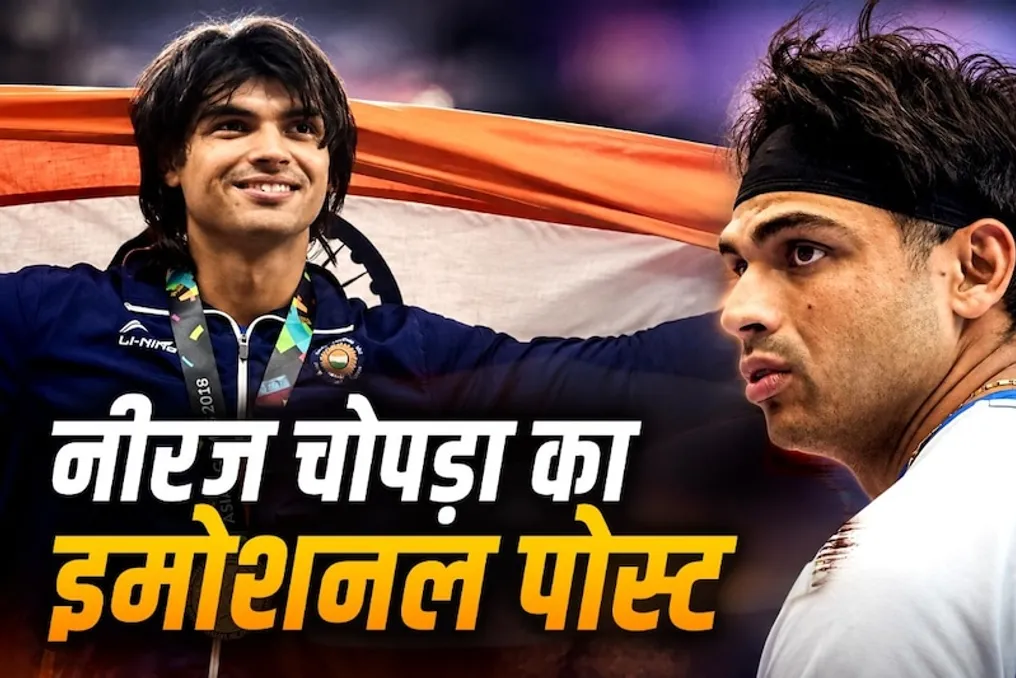
Neeraj Chopra disappointed by withdrawal from Asian Games due to ankle injury
Read more
www.aajtak.in

Neeraj Chopra disappointed by withdrawal from Asian Games due to ankle injury

Neeraj Chopra, who previously won gold medals at the Asian Games in Jakarta in 2018 and Hangzhou in 2023, had hoped to represent India at the upcoming Games. However, an ankle injury sustained during training derailed his plans. About a month later, Chopra openly shared his pain.

The Tokyo Olympic gold medalist wrote on LinkedIn that the Asian Games gave him the most important moments of his career, and it is difficult for him not to represent India this time. He wished good luck to the Indian team arriving in Nagoya, noting that he will miss interacting with the athletes but will continue to support them from afar.

In his post, Chopra stated that he is battling a ligament injury. After much thought, he decided not to participate in the Asian Games. He emphasized that stepping onto the field for the country's hopes is an honor, but the inability to compete causes real pain.

This is not Chopra's first experience battling injuries. In 2019, he had to postpone surgery on his right elbow. In 2022, he missed the Commonwealth Games due to a groin injury. In 2023, a muscle strain affected his season, and in 2024, he withdrew from one competition due to adductor issues. Now, the ankle injury has excluded him from both the Asian Games and the Diamond League final.

His last major competition was the Diamond League in Lodz, where he took second place behind Rumesh Pathirana of Sri Lanka.

Chopra noted that injuries are part of sports, and not all circumstances can be controlled. In such moments, the support of others is immensely valuable. He mentioned that due to training, travel, and competitions, he is often far from home, so communicating with good friends helps him stay positive and grounded.

He added that in difficult times, consultation is not always necessary. Sometimes, simply calling a friend and talking about something completely different is enough. Chopra shared that some of his friends know he is 'not in the best shape' right now, but when he calls, they don't ask about his ankle. They laugh, reminisce about old times, and plan meetings. According to Chopra, this reminds him that life is not limited to the next competition, and friends' support helps him more than he expected.

Information was also provided regarding the 2026 Asian Games: the opening ceremony will take place on September 19th in Itte-Nagoya, Japan. The ceremony will start on September 19th from 18:00 to 20:00 Japan local time. In India, the broadcast will be available from 14:30 to 16:30. The broadcast will be shown on Sony Sports 1 and Sony Sports 5, as well as Sony Sports 3 (in Hindi) and Sony Sports 4 (in Tamil, Telugu, and Kannada). Online streaming is available on the SonyLIV app and website.

Shreyas Iyer included Afghanistan captain in award ceremony after India's victory
Read more
www.aajtak.in

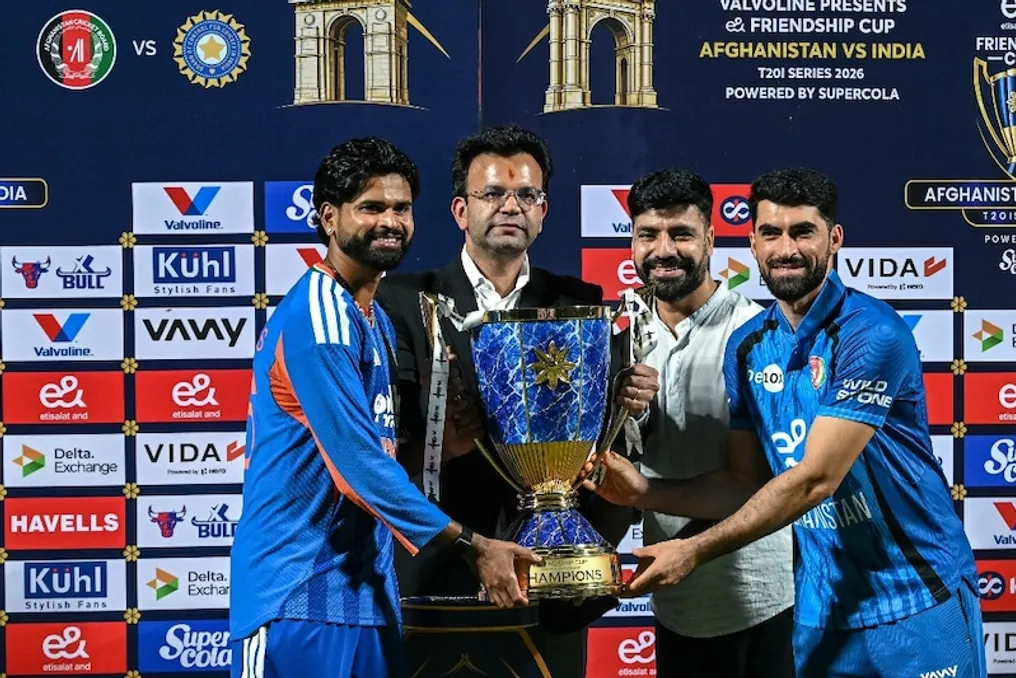
Shreyas Iyer included Afghanistan captain in award ceremony after India's victory

The Indian team defeated Afghanistan in the third and final T20 series match, winning by a margin of 127 runs. This victory allowed India to clinch the T20 series with a score of 3-0. The match took place on September 17th at Arun Jaitley Stadium in Delhi.

Abhishek Sharma was the hero of the victory, scoring 108 runs off 34 balls, hitting 11 sixes and 9 fours. His powerful performance led to the breaking of several records, but a moment occurred after the match that made this victory special.

India's captain, Shreyas Iyer, demonstrated outstanding sportsmanship by inviting Afghanistan's captain, Ibrahima Jadaran, to participate in the trophy presentation ceremony. Iyer called Jadaran onto the stage so he could join the celebration of the Indian team. Afterward, Jadaran was seen in a joint photograph with the Indian players and support staff.

Although it was a series win for India, Shreyas Iyer showed respect to the opponent. This moment clearly demonstrates the respect and friendliness between players after the completion of an intense competition. Great batsman Sunil Gavaskar highly praised Iyer's gesture, calling his inclusion of the rival captain in the photo magnificent. Gavaskar noted that such moments are what remain in memory for many years.

Shreyas Iyer's action reminded one of an old Indian cricket event. In June 2018, Afghanistan played its first Test match against India in Bangalore. This match held historical significance for Afghanistan as they were playing their first Test after becoming the 12th full member of the ICC. India won that match by an innings and 262 runs.

After that match, captain Ajinkya Rahane invited Afghan captain Asghar Afghan and his team for a joint photo with the Indian players. Approximately eight years later, Iyer repeated something similar with Jadaran. In both cases, the result was in favor of India, but there was a tradition of respect for the opposing team after a victory.

Earlier, Abhishek Sharma dealt a serious blow to the bowling efforts of the Afghan players. He completed his century in just 30 balls, becoming the fastest batter in T20 International for India. He surpassed Rohit Sharma's record, who reached a century in 35 balls. Sanju Samson also bolstered the team's score, scoring a half-century in the second consecutive match. Thanks to Abhishek's explosive play, India scored 221 runs, winning while losing 7 wickets.

The Afghanistan team, which was chasing the target, faced pressure from the beginning. Axar Patel dismissed Rehmanullah Gurbaz and Sedikul Attal in the powerplay. Then Jasprit Bumrah created trouble with a perfect yorker. Yash Thakur increased the difficulties for Afghanistan, taking the wicket of Ibrahima Jadaran in the sixth over. Nitish Kumar Reddy also closed the door to the team's comeback, taking three wickets. Ultimately, the entire Afghanistan team was dismissed in 14.1 overs, scoring only 94 runs, and India won the match by a margin of 127 runs.

After 35 Years, Tension Flares Up Again at the Tulip Cup Final: A Comparison of Incidents from 1991 and 2026
Read more
www.aajtak.in

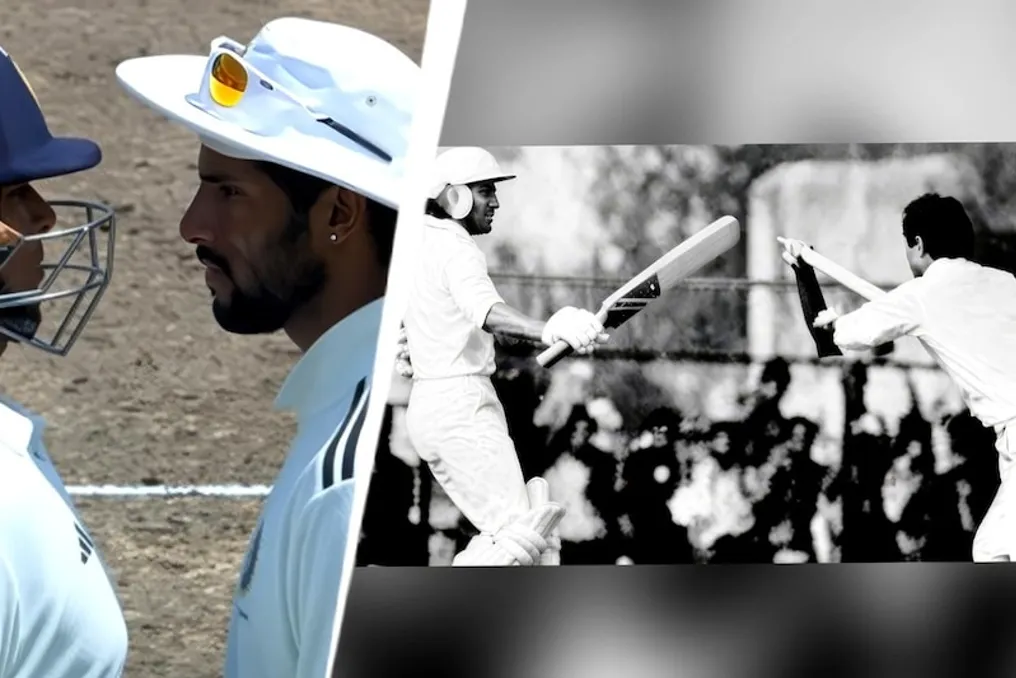
After 35 Years, Tension Flares Up Again at the Tulip Cup Final: A Comparison of Incidents from 1991 and 2026

In the world of cricket, some matches remain unforgettable not because of the sporting moments, but due to sudden bursts of emotion that sweep over the field. The Tulip Cup demonstrated such a scene 35 years ago in Jamshedpur. In the 1991 final, anger reached a point where the stumps became the target. Now, in the 2026 final in Chennai, a similar moment occurred again: the tense atmosphere between 15-year-old Vaibhav Suryavanshi and South Region captain Tilak Verma attracted the attention of all spectators.

There is a gap of 35 years between these two events. On one hand, it was the most scandalous incident in the history of Indian domestic cricket; on the other, it was a brief moment of passion between two young and prominent players of the new generation. However, both cases share one question: how high can the temperature rise on the field when the Tulip Cup match ceases to be just a battle of bat and ball?

When the East Region started its innings in Chepauk, all eyes were fixed on Vaibhav Suryavanshi. He is only 15 years old, yet he played as if he had been performing on a big arena for many years. His opponent was Mohammed Siraj, a recognized fast bowler in Indian cricket. But Vaibhav paid no attention to his age; he focused on the ball. He aggressively attacked Siraj, hitting a four, a six, and another four in just one over at the start of the final, showing that he came not just to gain experience.

Later, another interesting scene unfolded on the field. South Region captain Tilak Verma approached Vaibhav. They were having a conversation. Cameras captured this moment, and it quickly became one of the most discussed events of the final. Some reports described it as a heated exchange of remarks, while others interpreted it as light teasing or a casual chat.

However, the real intrigue of this scene lay not so much in the words as in the difference in age and status of the participants. On one side—15-year-old Vaibhav, and on the other—Tilak Verma, who had already made a name for himself in Indian cricket. This picture reminded one of another story from the Tulip Cup, which happened 35 years ago.

The last day of the five-day final, held at the Keenan Stadium in Jamshedpur between the North and West Regions, turned into a dark day in the history of Indian domestic cricket. The West Region team, represented by Rashid Patel, went ahead to attack the stumps of the North Region batsman, Raman Lamba. Lamba himself tried to defend. Everyone present at the stadium was stunned by what was happening.

It was the fifth and final day of the match. The North Region's victory was predetermined based on the first innings. The North Region team, led by Kapil Dev, scored an impressive 729/9 runs and declared their innings. In response, the West Region team, led by Ravi Shastri, was bowled out for 561 runs. Thus, four days passed for these large scores. On the last day, the North Region began its second innings with remaining time. But what happened in the tenth over was not good.

The start of the North Region's second innings was made by Ajay Jadeja and Raman Lamba, who scored 180 runs in the first innings. Both played very well. The score reached 59/0 after 9.5 overs. Rashid Patel bowled around the wicket in anger, directing them into a dangerous zone for Lamba. At this moment, Lamba showed the handle of his bat, expressing his dissatisfaction.

Then Rashid lost control and threw the ball at Lamba almost halfway down the field. Lamba's head barely avoided being hit. Rashid did not stop. He turned, snatched the stumps, and ran after Lamba, trying to strike him while he ran towards the boundary line. At this time, Lamba was trying to defend himself. Eventually, the confrontation ended.

Spectators, seeing this scene on the field, became excited and started throwing stones. Vinod Kambli, who was fielding near the boundary, was injured. After this, all players were isolated in the dressing room. Inside, the winners were presented with the trophy. Ultimately, Rashid Patel was given a 13-month ban. Lamba also faced this and received a 10-month ban.

Raman Lamba's era often witnessed player anger on the field. Today, cricket is much more professional, but the thirst for rivalry remains the same. The only difference is that Vaibhav still has his entire career ahead of him. Lamba's story reminds us that in cricket, skill and aggression are not everything; self-control is also important. Vaibhav's challenge is not just about hitting sixes against bowlers or holding his ground among senior players. The real challenge is coping with growing status, increased attention, and field pressure.

Unfortunately, Raman Lamba's story ended tragically. In 1998, during a club cricket match in Bangladesh, while fielding on the short leg side, he...

_

Popular