It is possible to create separate lanes for cyclists, scooters, and mopeds on the streets of Tashkent. This approach is being studied for application on other streets to make movement more convenient for couriers, bicycle riders, and scooter users.
According to the Tashkent City Traffic Organization Center, special routes for electric scooters, bicycles, and electric mopeds may appear in Tashkent.
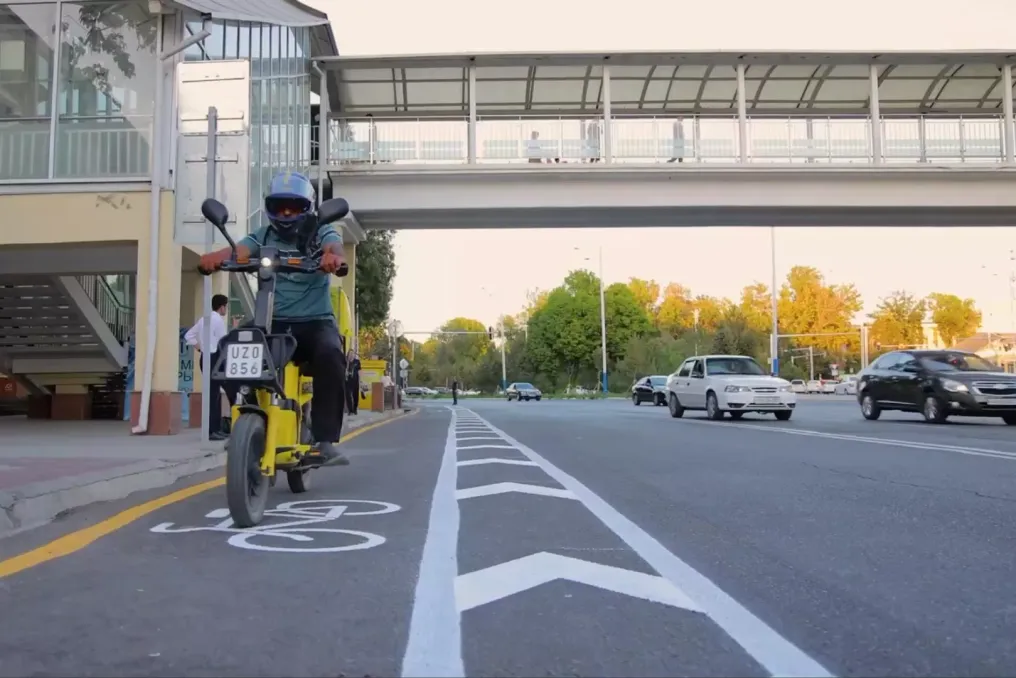
The Center has organized a test lane for micro-mobility devices on a 2.4-kilometer section of Lutfi Street. This lane is intended for bicycles, electric scooters, electric mopeds, and similar vehicles.
The main goal of implementing this solution is to separate traffic flows moving at different speeds. In areas where specialized infrastructure is absent, bicycle and scooter users are forced to travel either in the vehicle traffic zone or on the sidewalk with pedestrians.
The pilot project on Lutfi Street showed positive results, and now other streets and districts of the city are being studied for the possibility of creating similar lanes.
It is planned that in future projects, these lanes will be physically separated from the flow of cars using dividers, barriers, and other protective elements. According to current traffic rules, the creation of a separate lane for bicycles and individual means of transport within the road's traffic zone is provided for, which will be separated from other traffic by markings.
Similar systems are used in major cities around the world. For example, in Paris, electric scooter movement is permitted on bike paths, but movement on sidewalks is prohibited. In New York, given the growth of micro-mobility, protected bicycle lanes are being expanded; some of them have reached a length of up to ten feet (approximately 3 meters).