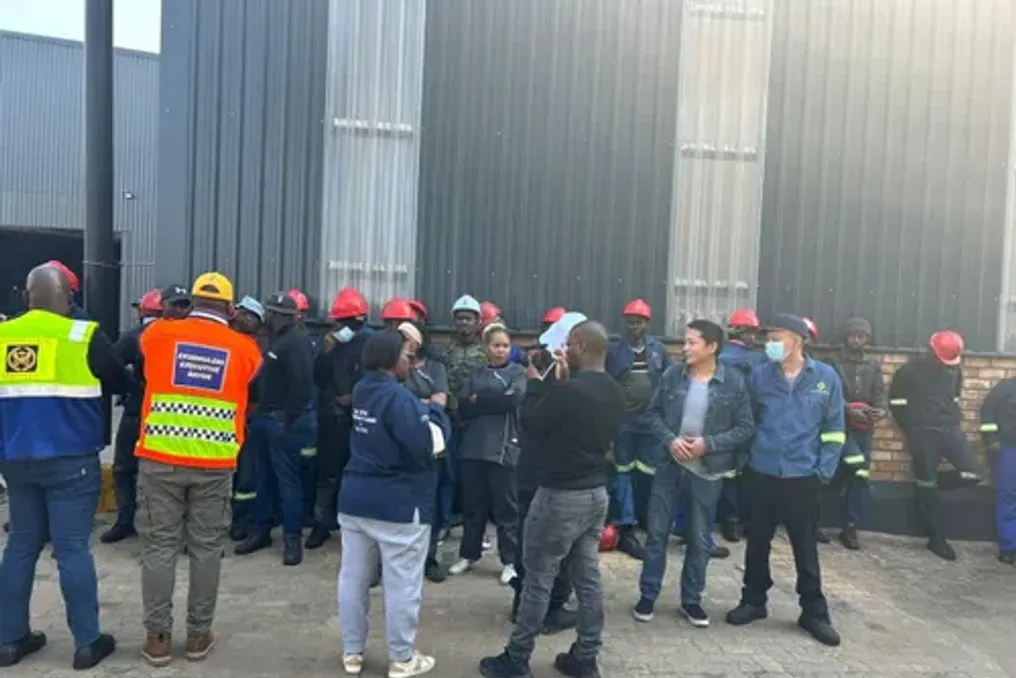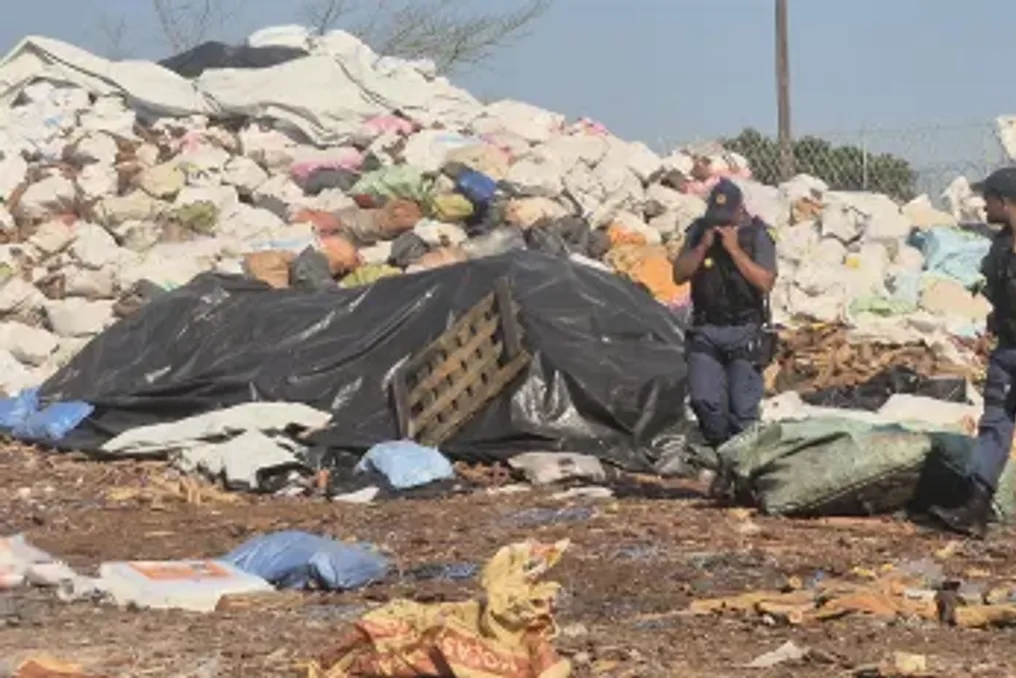
During an inspection at the TJ’s Lekka Braai facility in the Blackheath area, which took place the day before Heritage Day, labor inspectors expressed concerns regarding worker safety, alleged payment methods, and documentation of foreign nationals.
Officials reported that some workers had left the premises and hidden in spaces under the roof, while others were observed working in areas covered with coal dust without proper protective gear.
The operation involved the Department of Employment and Labour, SAPS, the Department of Home Affairs, and other law enforcement agencies. A representative from the provincial department of labour, Vanessa Cupido, noted that the inspectors initially visited the site as part of a routine check, but their observations led to larger actions.
The Department of Employment and Labour, SAPS, the Department of Home Affairs, and Cape Town police conducted a comprehensive unannounced inspection at the JT Lekker Braai factory in Blackheath, known for producing barbecue firewood, coal, utensils, and grates.
Department of Home Affairs checks fingerprints
Vanessa Cupido stated that surveillance cameras were installed throughout the building, and it is possible someone warned about the inspectors' visit. She added that some people were inside the roofs, and others were still hiding there.
Fezeka Ngalo, the acting provincial chief inspector, reported that officials blocked escape routes before entering the premises. She specified that some workers ran to the back of the site and climbed into the attic. Ngalo confirmed that despite the presence of fugitives, SAPS managed to detain some individuals.
Thirty-two people were detained for further investigation. The Department of Home Affairs was tasked with checking their documents and fingerprints to establish the legality of their employment in South Africa. Officials emphasized that the verification process is ongoing, and the detainees cannot automatically be considered undocumented.
Inspectors also pointed out that workers engaged in coal processing were not using masks, gloves, or other protective equipment. Cupido stated: "None of them had PPE — no protection, no masks, no gloves."
Furthermore, questions were raised about the absence of fire wardens, health representatives, and medical monitoring. Ngalo described the rear part of the production area as heavily dusty, noting that workers should have been provided with appropriate protective equipment. She reported that officials are investigating potential violations of occupational health and safety legislation. Inspectors may issue a prohibition notice if an immediate danger is identified, requiring operations to cease until the threat is eliminated. Other notices may also be issued, and officials will return for follow-up inspections; if the employer fails to comply with the requirements, the case may be referred for prosecution.
Officials investigate alleged piece-rate payments
Inspectors were also examining claims regarding the method of payment. According to Cupido, some employees claimed they were paid not for hours worked, but for volume produced. One worker allegedly stated that he had to pack a pallet containing 100 seven-kilogram bags of firewood for 70 rand. Packing 50 bags weighing 20 kg allegedly also yielded 70 rand.
Officials stated that this scheme would be assessed against minimum wage requirements.
The manager of TJ’s Lekka Braai refuted several accusations. He suggested that the company was being targeted ahead of National Braai Day. He stated that the business underwent an audit in 2025 and has since strived to comply with all requirements. The manager insisted that workers were issued masks and other protective gear every morning and evening, and that the company possessed valid documentation for foreign employees. He confirmed that everyone had the necessary documents: passport, valid passport, valid residency. The manager admitted that the coal section had dark areas and was not cleaned that morning, but maintained that employees were given masks. He also denied allegations of paying below minimum wage, stating that the company adheres to the applicable hourly rate. The inspection took place during a period of high business activity; management reported that before the Heritage Day rush, they were scheduled to ship about 120 pallets to Freshmark.