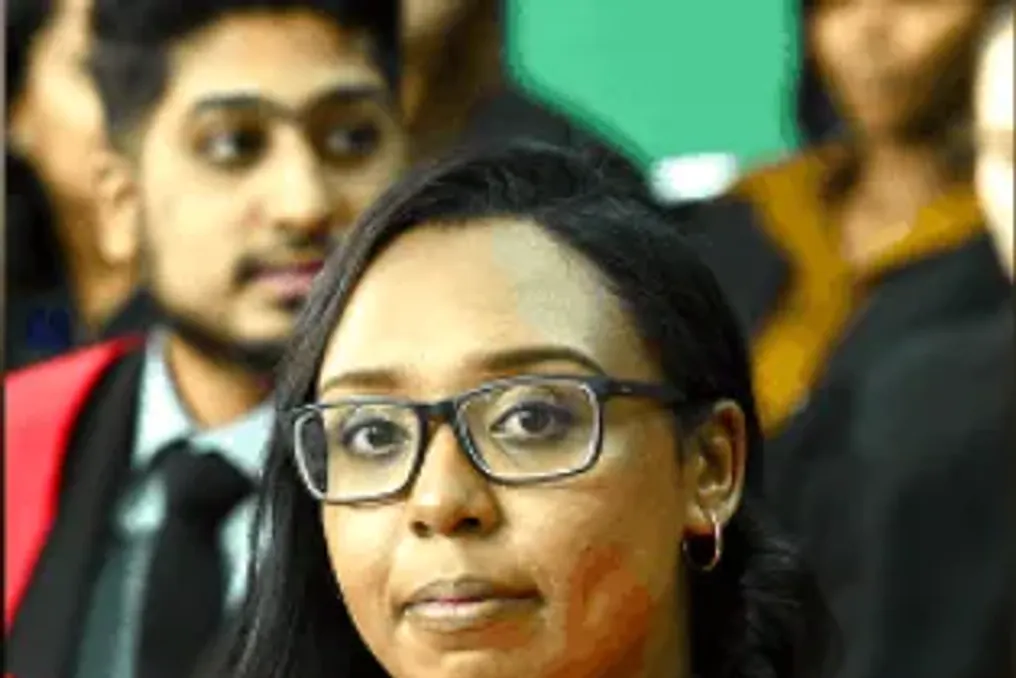
Researcher Dr. Feroza Morris from the University of KwaZulu-Natal (UKZN) has applied satellite data and machine learning to study the possibility of remote monitoring of rivers in the Maloti-Drakensberg region. This could potentially support water resource management in poorly monitored catchments.
Dr. Morris, who is the first in her family to earn a PhD, recently received her doctorate in ecology at UKZN. Previously, the university was not a frequent topic of discussion among her friends or in her community. This changed after representatives from the University of KwaZulu-Natal visited her high school and introduced students to STEM subjects (Science, Technology, Engineering, and Mathematics).
She noted that most of South Africa's water resources originate from several small mountainous areas that have the least monitoring network. Morris emphasized that installing and maintaining river sensors in steep, rugged terrain is difficult due to risks of damage or vandalism, while the national monitoring network has been shrinking over the years.
Maloti-Drakensberg is one such area from which water is pumped across an escarpment for residential, industrial, and power station needs in Gauteng, and also reaches Durban and Pietermaritzburg via the Mui River.
Morris used satellite data and machine learning to determine if these rivers can be tracked remotely. She explained that satellites record rainfall, soil moisture, and land changes daily, and this data is freely available. She applied machine learning to establish the relationship between satellite assessments and the actual volume of water in the river.
However, she clarified that satellites will not replace sensors, which are still necessary to validate models based on ground measurements. Nevertheless, they offer a way to continue monitoring catchments, especially where sensors are absent.
Morris developed and tested machine learning models in Cathedral Peak, a rare mountain catchment with good data dating back to 1948, and then applied the same approach to the much larger Uthukela catchment, managed by dams in Spioyenkop, where monitoring is scarce.
As a lecturer in Geography at UKZN, Morris now aims to incorporate the human aspect into her research, recognizing that water is never solely a hydrological issue. She plans to carry this concern into her future higher education research, studying how postgraduate students critically evaluate AI tools when integrating physical and social data.
A mother of two, Morris spends her free time with her children and visits Wentworth on weekends to be with her extended family. Reflecting on her journey as a coloured woman from the Southern Durban Basin community, she hopes her story will inspire others. She added: 'I was never the smartest person in the room and I never fit the mold, but perseverance and hope in God helped me. The feeling of not belonging somewhere is not proof that you shouldn't be there. You are not sent to fit in. You are sent to make space.'