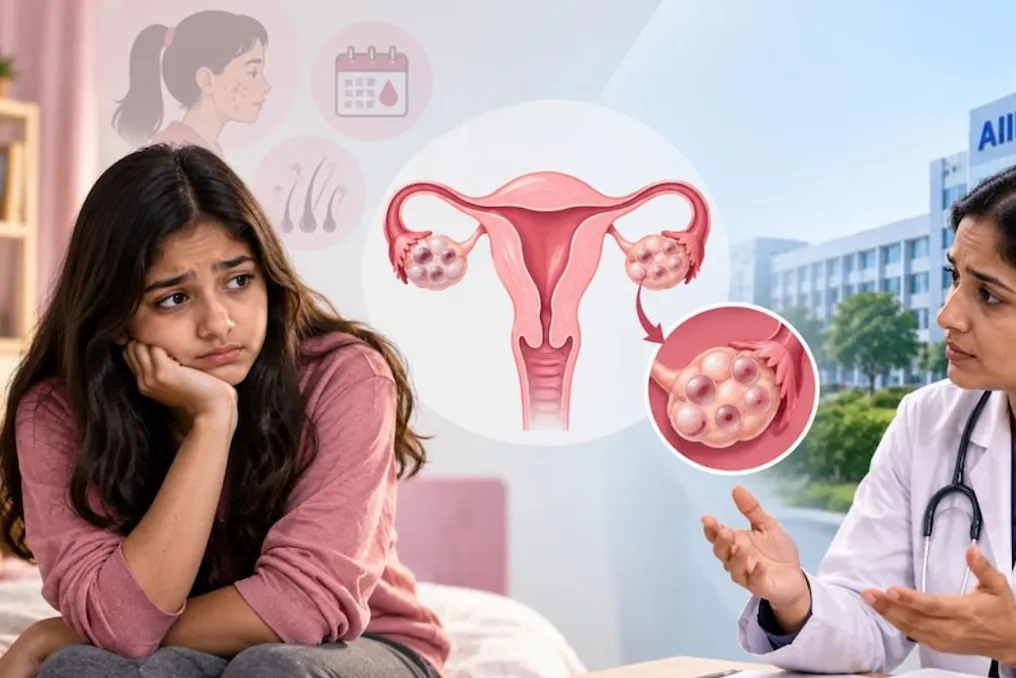
If your daughter has started menstruating at the age of 11–12, but her periods are irregular, or if she has developed excessive facial hair and acne, this could indicate Polycystic Ovary Syndrome (PCOS). Doctors at AIIMS Delhi note that PCOS is increasingly common in adolescent girls, specifically between the ages of 11 and 19. Currently, it is observed in 3–8 percent of girls in this age group, whereas previously the condition was more often diagnosed in women aged 20–30.
Professor Dr. Rima Dada from AIIMS Delhi told Aajtak.in that potential causes for the development of PCOS include poor nutrition, an unhealthy lifestyle, psychological stress, lack of physical exercise, and a family history of PCOS. With PCOS, there is an increased production of androgens, or male hormones, in the ovaries. This can affect the menstrual cycle, skin condition, hair, and ovulation. The difficulty lies in the fact that symptoms of puberty and signs of PCOS can look similar, which requires vigilance from parents.
Dr. Rima Dada also emphasized that irregular menstruation alone does not necessarily mean PCOS; other signs must be monitored, such as the appearance of excessive hair on the face, chest, abdomen, or back, persistent or severe acne, and weight gain. If a child aged 10 to 12 exhibits these symptoms, they should consult a doctor for PCOS diagnosis and treatment, without ignoring the issue due to their young age.
Professor Dr. Rajni Sharma from the Pediatric Department at AIIMS Delhi explained to Aajtak.in that the impact of PCOS is not limited to the ovaries. Therefore, correct treatment may require consultation not only with a gynecologist but also with a pediatrician, nutritionist, and in some cases, a psychiatrist. It is important to recognize and treat this condition promptly, as it can lead to serious diseases later on, such as cardiovascular pathologies and stroke.
Key signs to watch out for:
- Irregular menstruation
- Appearance of male-like hair on the face
- Excessive facial acne
- Rapid weight gain