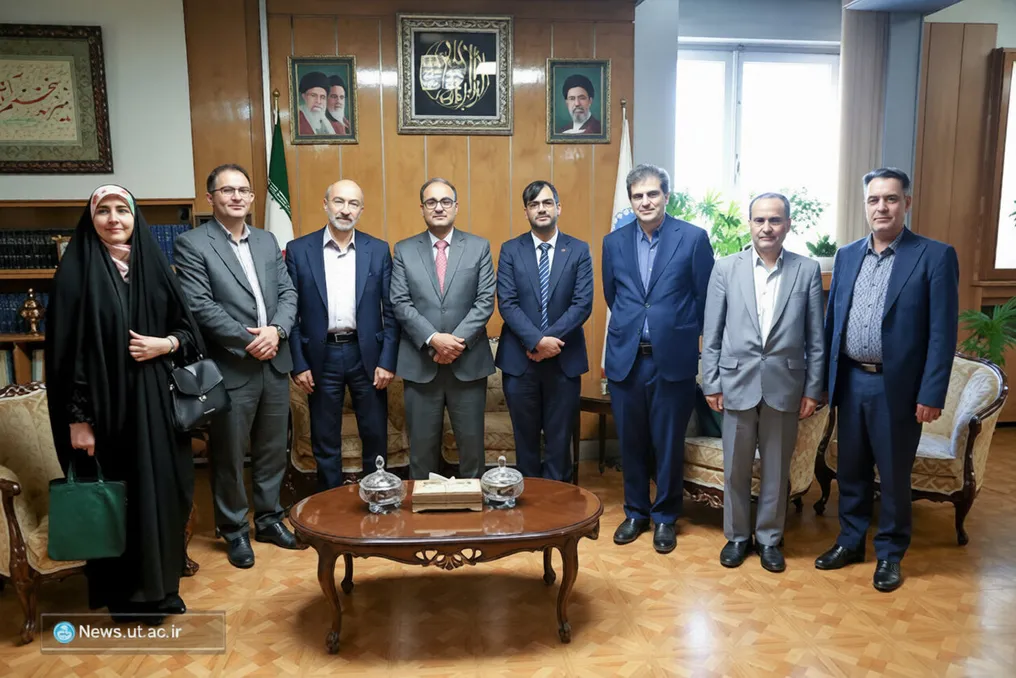
Representatives from Iran and Pakistan held a meeting to explore opportunities for strengthening scientific, academic, and cultural interaction between the two states. According to IRNA, the parties met on Saturday, emphasizing the need to implement the previously signed memorandum of understanding.
During the negotiations, Mohammad-Hossein Omid, Rector of Tehran University, highlighted the common cultural and linguistic features of the two countries. He noted that Iranian and Pakistani scientists had previously exchanged knowledge using Persian as a common language. Omid also proposed holding a joint conference dedicated to the life, works, and intellectual heritage of the renowned philosopher and poet Allama Muhammad Iqbal Lahori, a distinguished literary figure in both countries.
The Rector of Tehran University spoke about his university's global ranking and achievements, expressing interest in promoting scientific cooperation among faculty and students from both nations. For his part, Imran Ahmed Siddiqui, Pakistan's ambassador to Iran, stated Pakistan's readiness to deepen its partnership with Iran in scientific, technological, and economic fields.
He mentioned that topics discussed included holding joint meetings and expanding research in areas such as international relations, technology, and economics. Siddiqui called for activating ties in developing technologies, including artificial intelligence (AI), and suggested establishing an 'Iqbal Lahori Room' at Tehran University as a symbol of shared scientific values.
Emphasizing the vital role of embassies in fostering academic interaction, he recommended leading Pakistani universities, such as Quaid-e-Azam University, National University of Sciences and Technology (NUST), COMSATS University Islamabad, and Punjab University, for developing scientific contacts. The parties agreed to conduct joint online courses, exchange students and professors, and provide scholarships to mutual learners.
In June, Pakistan's Minister of Federal Education and Professional Training, Wajeeha Qamar, met with Iran's Minister of Science, Research, and Technology, Hossein Simai-Sarraf. During this meeting, it was proposed to establish a joint scientific working group between the two countries.
The meeting took place on the sidelines of the 7th Turkish Education Technology Summit (TETZ 2026), which was held in Istanbul from June 26 to 28. Wajeeha Qamar, citing ISNA, noted that Iran's recent successes on the international stage serve as a source of inspiration for many countries, including Pakistan.
Highlighting the emotional, spiritual, historical, and cultural ties between the peoples, the official stated that Pakistan would support Iran's initiatives and actions, and that relations between Tehran and Islamabad would remain strong and stable due to these common foundations. She added that cooperation must be promoted to fully utilize the potential of each side.
Wajeeha Qamar also pointed out that deep linguistic, religious, and civilizational ties would contribute to the development of cooperation. Referring to Iran's scientific and educational achievements, she stated that Pakistan could benefit from Iran's valuable experience in skills training, agriculture, construction, and manufacturing.
For his part, Hossein Simai-Sarraf noted that the current scientific, academic, and technological interaction between Iran and Pakistan does not fully meet the potential of both sides. The minister also stressed the need to establish departments for Persian and Urdu languages in the respective countries. Highlighting the scientific capabilities of Sistan-Baluchestan University, the Minister of Science announced the university's readiness to host Pakistani students.