India wins match against Japan by two runs despite low score
Read more
Aaj Tak
www.aajtak.in

India wins match against Japan by two runs despite low score

Despite the perceived large gap between India and Japan, the match at Sanno International Stadium on Tuesday, played in a five-over format, completely changed perceptions of the upcoming rivalry. The Japanese team, whom many considered incapable of facing Indian bowlers, managed to keep India under pressure until the final delivery. Ultimately, India won by only two runs, but this result raised several questions.

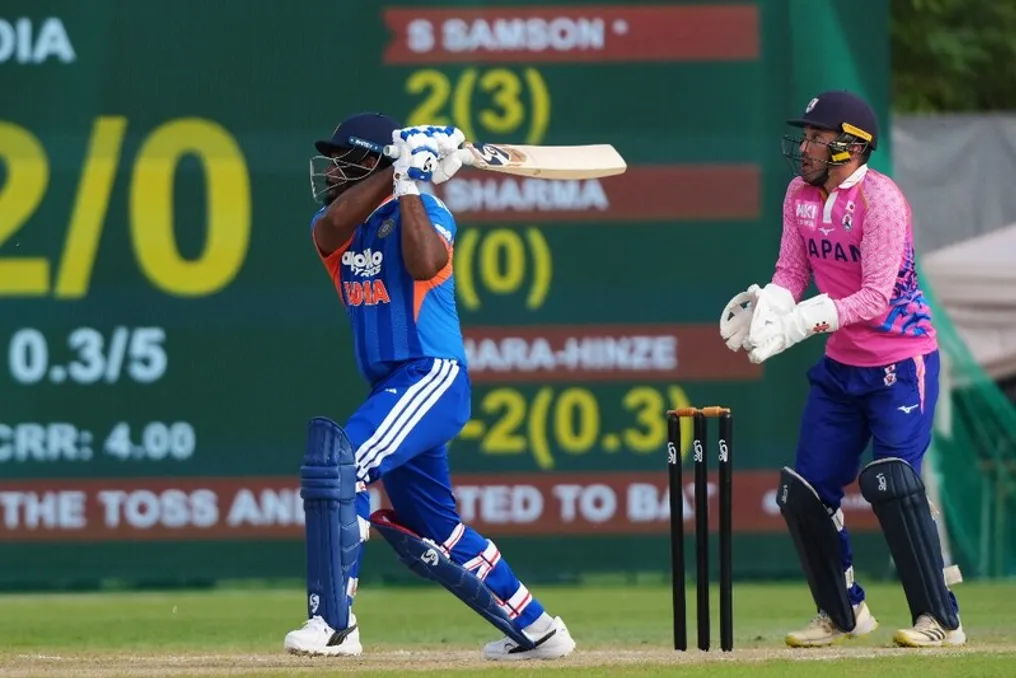
One of the most significant issues was Vaibha Suryavanshi's inability to participate in the match. Due to rain, the game was shortened to five overs. Under these conditions, India kept its starting pair of Sanju Samson and Abhishek Sharma, leaving Vaibha out of the squad. Abhishek returned after coming onto the field without scoring a single run, while Samson managed only 9 runs.

India had the option of using Vaibha for an aggressive game approach, but the team management decided to stick with the established starting combination. The situation was complicated by the fact that the Indian attack stumbled, losing four batsmen while scoring 32 runs in five overs.

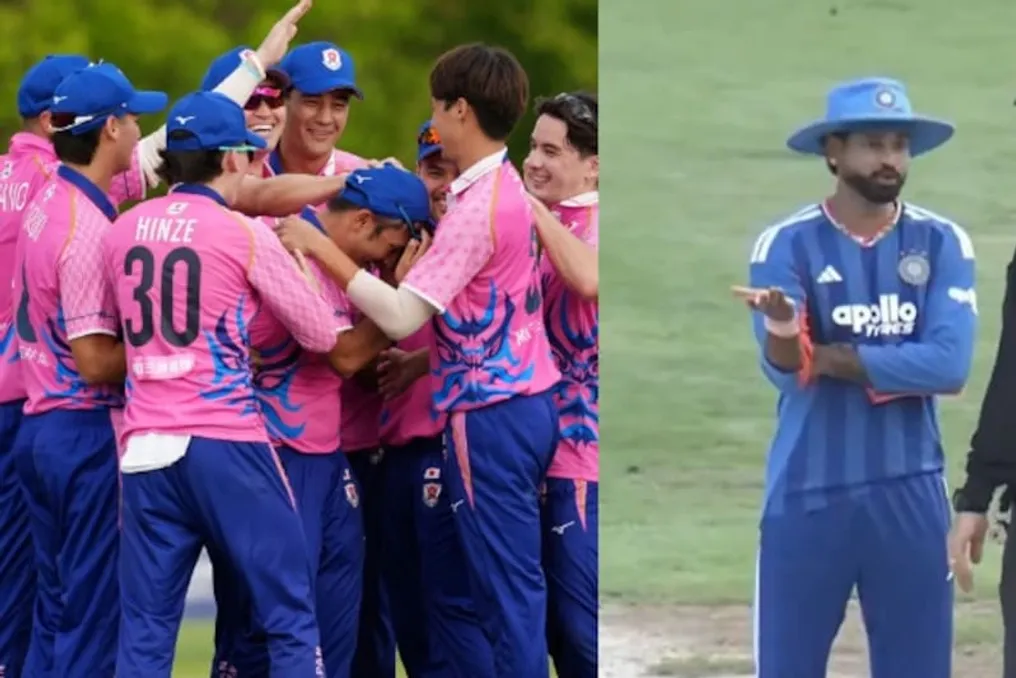
Since Vaibha Suryavanshi was not in the squad, he was seen on the field during the match distributing water to the players. The young batsman, from whom bright shots were expected, served solely as a 'water boy' in this game. He was visible on the field handing water to the players, and his facial expression was captured by the camera.

This match also held significance in the context of celebrating the 75th anniversary of diplomatic relations between India and Japan. Both teams are preparing for participation in the Asian Games, where India is scheduled to start its tournament in the quarterfinals. Thus, this confrontation served as an opportunity for India to test its readiness for the Asian Games.

When the match was shortened to five overs due to rain, the question naturally arose as to why the young and explosive batsman Vaibha Suryavanshi was not used. However, the Indian team retained the opening pair of Sanju Samson and Abhishek Sharma, and Vaibha did not get a spot in the squad. The result was the halting of India's score at 32 runs against the Japanese spinners.

The problem for the Indian batsmen was not the strength of the known bowlers, but the Japanese spinners, against whom it was expected that the Indian players would hit powerfully. The pitch was humid, and the ball spun more than expected, which became a weapon for the Japanese bowlers.

Charlie Hara edged Abhishek Sharma for zero. Abhishek attempted a slog sweep but lost his timing. Following this, Ibrahim Takahashi forced Samson to play in the air for 9 runs, and he was caught at mid-wicket. Ishan Kishan also returned with three runs; he continued to try hitting against constant spin and was caught at mid-off.

Captain Shreyas Iyer scored 16 runs, but even he could not play freely due to the slow pace and spin of the pitch. In the Indian innings, only three-quarters were scored.

With such a small target of 32 runs, one might have assumed India would finish the match by several runs. However, in this unusual five-over contest, this small score became a pressure point for India. In the third over, Ravi Bishnoi earned 10 runs for Japan, and Washington Sundar conceded seven runs in the fourth over. In the last over, Japan needed only eight runs.

It was the experienced Akshar Patel who saved India. With over 150 IPL matches of experience, Akshar did not give the Japanese batsmen a chance to flourish in the last over. He placed the ball in such a way that Shirai Patmore and Benjamin Ito-Davis were unable to hit powerful shots.

Due to the rain, the pitch was also slow, which complicated matters for Japan. On the last delivery of Japan, a boundary was required, but Akshar Patel prevented this. Shirai Patmore tried to hit over the line, but the ball hit the pad and went towards the fine leg, and the batsman could only run one run. Thus, Japan's hope for a historic comeback ended, and India won a very tense match by a margin of two runs. Disappointment was evident on the faces of the Japanese batsmen, as they were confident they were very close to one of the greatest turns in cricket.

The drama in the last over intensified when umpire Chris Torgate called two wide balls against Patmore, who was attempting a reverse slog. India's captain Shreyas Iyer expressed disagreement with the on-field umpire Chris Brown. The decision on the second wide was ultimately overturned. This meant that in the final moments of the match, India was fighting not only against the Japanese batsmen but also against the decisions of the umpires.

Vaibha remained out of the game, but the match raised a second question.

Similar stories

Questions about umpiring after the decision to overturn a wide in the final over of the India vs Japan match
Read more
www.aajtak.in

Questions about umpiring after the decision to overturn a wide in the final over of the India vs Japan match

The T20I friendly match between India and Japan, held on Tuesday, featured a combination of intense action, disputes, and incidents. Despite the influence of rain, which interrupted play, India secured a narrow victory over Japan by a margin of two runs. However, the decision to overturn the wide in the final over raised serious questions regarding the officiating.

The match took place on September 22nd. Japan needed to score 8 runs in the last over to win. Akshar Patel was bowling. On the third ball of the over, he bowled it towards the left side of Alexander Shiraishi-Patmore. The batter attempted a reverse swing shot but missed.

The local umpire, Chris Thorpe, initially called this delivery a wide. India's captain, Shreyas Iyer, was dissatisfied with this decision and discussed the situation with the state umpire, Chris Brown. After discussion, both umpires changed their initial decision, declaring the ball dead, and returned an extra run that had been awarded to Japan. This decision proved critically important for the match outcome, as the Japanese team ultimately fell short of the target by only two runs.

Due to rain and humidity on the field, the match was shortened to five overs. The moisture on the pitch contributed to more spin on the ball, which the Japanese spinners exploited. They managed to restrict India's strong attacking line to just 32 runs in 4 overs. In his innings, India scored only three fours. Key players for Japan were left-arm spinner Charlie Hara Hinge, who took 2/17, and off-spinner Ibrahim Takahashi, who gathered 1/13.

Abhishek Sharma failed to score runs; when attempting a slog sweep against Hara-Hinge, he missed. Takahashi guided Sanju Samson to the flight, and he was caught at mid-wicket, scoring 10 runs. Next, Benjamin Ito-Davis dismissed Ishan Kishan for 3 runs. Ishan tried to play against the consistent spin but was caught at mid-off.

Shreyas Iyer scored 16 runs and hit one four, but playing cross-line shots on a wet pitch was difficult. With a small target of 32 runs, Japan made the task very difficult for India. In the third over, Ravi Bishnoi conceded 10 runs, and Sundar Washington gave up 7 runs in the penultimate over. Sundar performed with figures of 2/13.

After this, Japan needed 8 runs in the final over. Akshar Patel used his experience to effectively counter Shiraishi-Patmore and Benjamin Ito-Davis, preventing them from playing a frank shot. Since the outfield slowed down due to the rain, India gained an advantage. Ultimately, the Japanese team could not reach the target, falling short by only 2 runs, and India won a very tense match.

Captain Shreyas Iyer clashed with the umpire during India vs Japan match
Read more
www.aajtak.in

Captain Shreyas Iyer clashed with the umpire during India vs Japan match

The T20 match between India and Japan in Sano turned out to be much more exciting than expected. Due to rain, the game was shortened to five overs, and India, batting first, scored only 32 runs.

After this, the Japanese team managed to create serious problems for the Indians, and the match went down to the final over. It was in this decisive moment that a tense drama unfolded, leaving everyone in attendance holding their breath.

The situation reached its peak tension in the final over. Japan needed only a few runs to win, and the pressure on the field was immense. Akshar Patel was bowling when umpire Chris Thorpe ruled that one of Akshar's balls was a wide.

The series of wides was already causing difficulties for the Indian team, and the umpire's decision caused strong disappointment for bowler Akshar Patel. However, the situation did not end there. Indian captain Shreyas Iyer lost his composure and immediately walked towards the umpire.

It was evident from the broadcast how angry Iyer was about the decision, and he expressed his dissatisfaction in a very aggressive manner. At such a critical moment in the game, awarding an extra run could have been fatal for India, and Iyer's anger was caused by this.

Considering the anger of the Indian team's captain and the pressure from the players, field umpires Chris Thorpe and Chris Brown held a discussion. Following this, a dramatic turn occurred: the umpires changed their initial decision and ruled the ball as valid. This review fundamentally changed the course of the match.

In this thrilling game, the Indian team maintained psychological resilience after the drama and managed to stop the runs scored in the last balls, thereby preventing Japan from winning. Ultimately, India won this intense confrontation by a margin of two runs. In the five-over match, India scored 32/4, while the Japanese team managed only 30/3.

Probsimaran Singh showed impressive play in the T20 League but remained outside the Indian squad
Read more
www.aajtak.in

Probsimaran Singh showed impressive play in the T20 League but remained outside the Indian squad

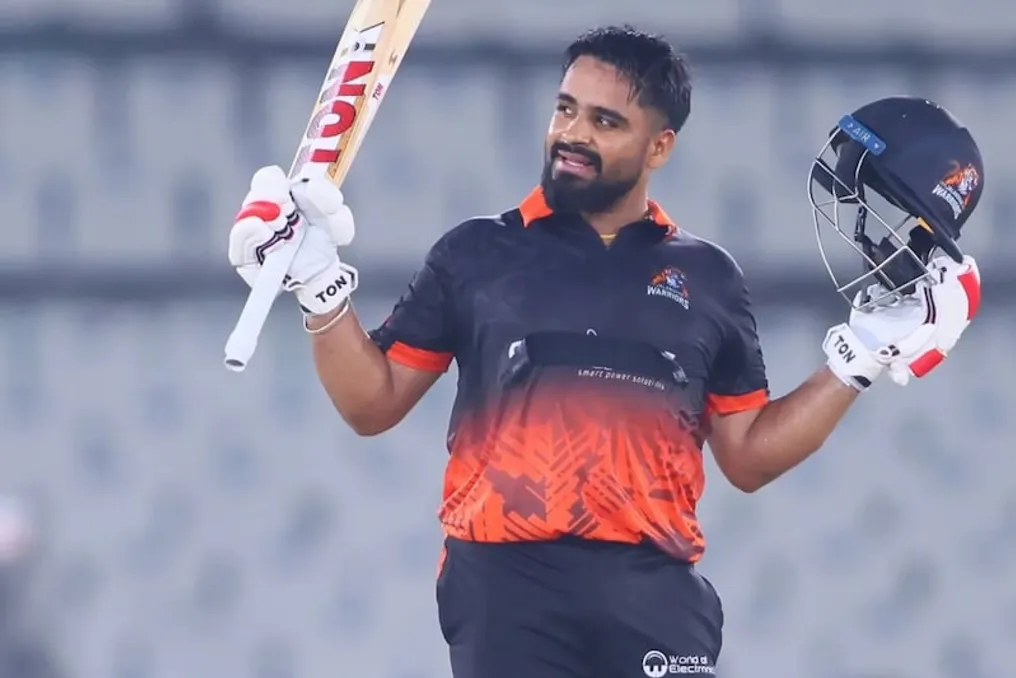
In the 'Sher-e-Punjab 2026' T20 League, batsman Probsimaran Singh demonstrated explosive play. In the semi-final match against Ludhiana Lions, he played as captain of the Jalandhar Warriors team. In this game, Probsimaran scored 63 runs off 35 balls, including five fours and four sixes.

Nevertheless, this powerful performance was not enough to help Jalandhar Warriors defeat Ludhiana Lions. In the match held at the Punjab Cricket Association (PCA) stadium in Mohali, Ludhiana Lions won by a margin of 17 runs.

Ludhiana Lions, having lost the coin toss, started the game with an attack, scoring 220 runs for the loss of five wickets. Salil Arora was a key figure, scoring 120 runs off 56 balls, which included 10 sixes and 7 fours. Madhav Singh Patania also contributed, scoring 42 runs without getting out from 22 balls.

In response, Jalandhar Warriors could only score 203 runs for the loss of eight wickets, despite Probsimaran's brilliant performance. Sahil Bhaskar, playing for Ludhiana Lions, took 6 wickets, conceding only 16 runs.

Although Jalandhar Warriors failed to reach the tournament final, captain Probsimaran Singh won the hearts of the fans due to his performance. In nine matches played in the tournament, he scored a total of 575 runs, including two centuries and three half-centuries. His average was 82.14. The most outstanding feature was the speed of his scoring, which reached 201.05.

Probsimaran constantly put pressure on the bowlers. Throughout the tournament, he hit 57 fours and 34 sixes, totaling 432 runs over the boundary. His aggressive style is confirmed by the fact that while scoring 575 runs, his average exceeded 200. Maintaining an average above 82 with such a high scoring rate in T20 cricket makes his performance particularly significant.

This success of 26-year-old Probsimaran occurred at a time when many young batsmen are trying to make a name for themselves in Indian domestic cricket. Probsimaran's statistics in the T20 League are undoubtedly among the most influential batting performances of this tournament.

Probsimaran Singh was selected for the Indian team for the tour in Zimbabwe this year, but he remained on the bench in all three matches. Previously, he was also part of the Indian team at the Asian Games in Hangzhou but did not get a chance to play in any match. As of now, Probsimaran has not debuted in international cricket for India.

Despite this, he continues to show consistently good results in batting. In the Indian Premier League (IPL), Probsimaran Singh has also played crucial matches for Punjab Kings (PBKS) on several occasions. Now it remains to be seen whether the selectors will give him a chance to take the field.

Popular