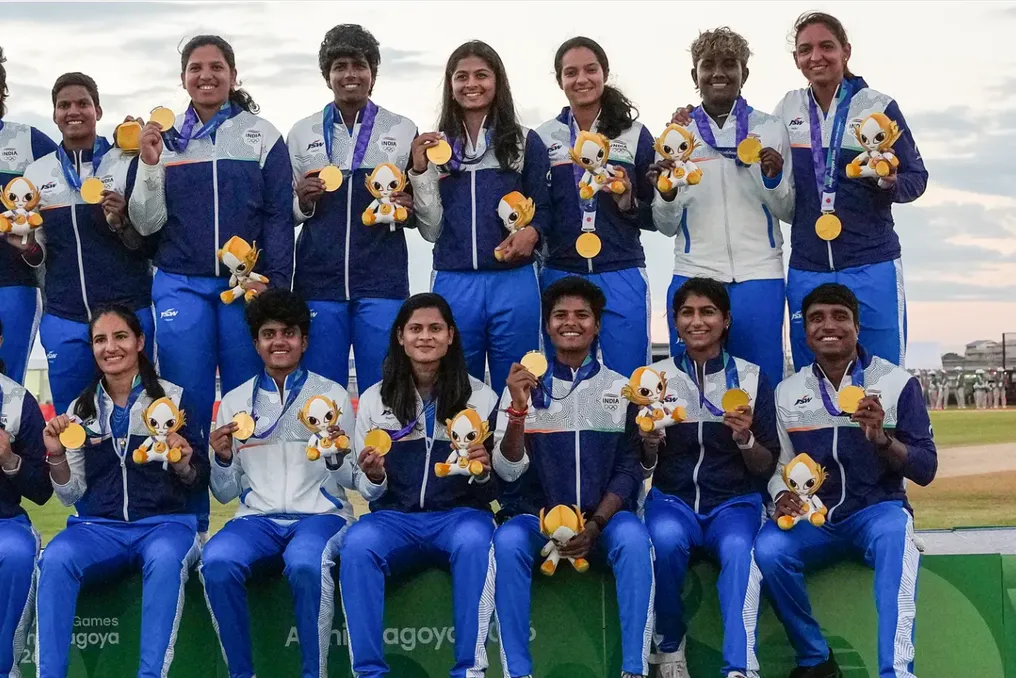
The Indian women's cricket team once again demonstrated its dominance at the continental level, securing its second consecutive gold medal at the Asian Games. On Tuesday, in the final, the team crushed long-time rivals Sri Lanka with a score of 147 runs.
The gold medal, won by the team under Harmanpreet Kaur's leadership, was India's first of the current tournament. The victory was secured by a brilliant batting performance that forced Sri Lanka to chase a record target of 217 runs.
Smriti Mandhana played brilliantly, scoring 79 runs off 45 balls, while Richa Ghosh added powerful late-over hits, taking India's score to 216 for three wickets. This set a new record for the Asian Games.
After reaching this record total, the outcome of the match became clear. All hopes for Sri Lanka rested on captain Chamari Atapattu (29 runs off 21 balls), but she could not counter the Indians. Sri Lanka capitulated, scoring only 69 runs across all overs, which took 15.4 overs, as the Indian spinners completely controlled the game against them.
Shafali Verma showed versatile play, scoring 48 runs and taking 2.3 wickets, while Dipti Sharma (3 wickets for 6 balls) and Shri Charani (2 wickets) traditionally helped the team in the final, which was not an even contest.
India was considered the clear favorite for the title and lived up to expectations, securing three confident victories throughout the competition. Similar to the Asia Cup earlier this month, Sri Lanka found itself in the losing position in the final, unable to compete with their familiar rivals.
Pakistan won the bronze medal by defeating Bangladesh with a comfortable margin of 31 runs earlier that day. Since the scenario for the Indian women's team unfolded according to plan, it was expected that the men's team would also defend its title.
The team maximized the advantages of powerplay after winning the draw. Mandhana (79 runs off 45 balls) and Shafali (48 runs off 29 balls) took the team to 59 without loss in six overs. Both batters are in excellent form since the Asia Cup, making a significant contribution to the team's success in the decisive final by building a partnership of 99 runs off 60 balls. Sri Lanka's weak bowling allowed these batters to dictate the terms of the game, with both being extremely effective against the spinners.