India becomes the first T20I team to win 200 matches after defeating Japan
Read more
Aaj Tak
www.aajtak.in

India becomes the first T20I team to win 200 matches after defeating Japan

India defeated Japan in their only T20 International match, with a margin of just 2 runs. This match took place on September 22 at the Sano International Cricket Stadium in Sano.

Batting first, India scored 32 runs, losing 4 wickets in 5 overs. The Japanese team, chasing the target, managed only 30 runs, losing 3 wickets in the same 5 overs. With this victory, India became the first team in the world to win 200 men's T20 Internationals.

This was the first encounter between the two nations at the senior level. Although the match started about three hours later due to rain and wet pitch conditions, the number of overs was reduced to 5 per side. Even with such a short format, the target of 33 runs proved difficult, and the match outcome was decided by the last ball.

India's journey to 200 T20I victories (including super over wins) is as follows: the first victory was against South Africa in Johannesburg in 2006 (6 points); the 50th victory was against Sri Lanka in Colombo RPS in 2017 (7 points); the 100th victory was against West Indies in Calcutta in 2022 (8 points); the 150th victory was against Australia in Gross-Aylet in 2024 (24 points); and the 200th victory was achieved against Japan in Sano in 2026 (2 points).

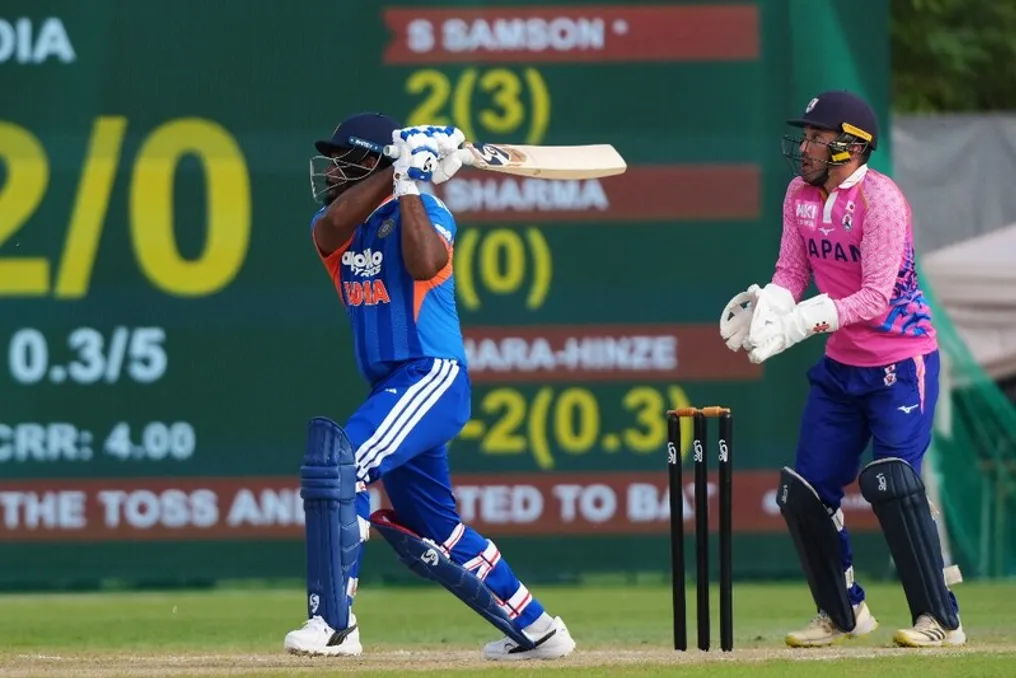
When the Indian team came out first after the toss, the Japanese bowlers did not allow them to play freely at Sano. Due to the spin and extra bounce of the ball, Indian batsmen found it difficult to score runs. Captain Shreyas Iyer scored the most runs—16, making one quarter-century in his innings of 12 balls. Sanju Samson earned 9 runs off 7 balls. Charlie Hara-Hing from Japan demonstrated excellent bowling performance, taking two wickets; he prevented Abhishek Sharma from starting the game and also sent India's captain Shreyas Iyer to the pavilion.

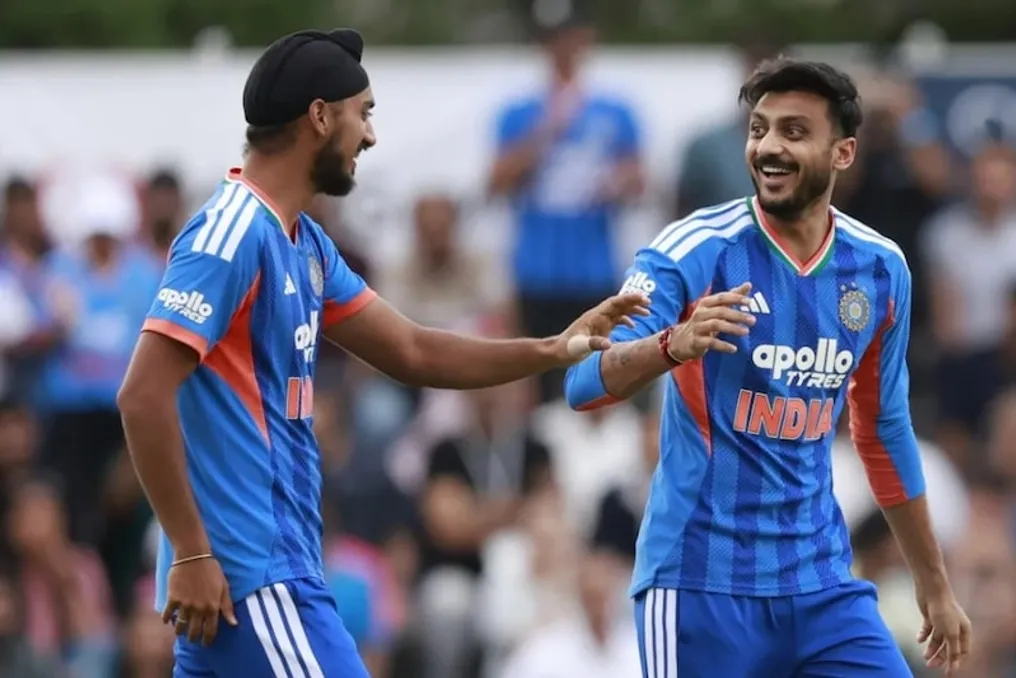
Japan needed 33 runs, and it seemed achievable within five overs. However, the Indian bowlers prevented the Japanese batsmen from scoring any extras for every run scored. Akshar Patel and Washington Sundar led a very tense game. The Japanese team managed to score only two boundaries across all five overs. Washington Sundar played a key role in India's victory, taking 2 wickets. Japan needed 8 runs in the final over to win the match, but the Indian bowlers maintained pressure. Ultimately, Japan could only manage 30/3, and India secured the match.

The most exciting moment occurred in the final over. Alex Shiraie-Patmore attempted a reverse sweep against a ball bowled by Akshar Patel. The ball went towards the boundary line, and the field umpire ruled it a wide. This decision caused disagreement among the Indian players. Captain Shreyas Iyer discussed the situation with the square leg umpire, Chris Brown. Following this, both field umpires held a discussion, and the wide decision was changed. This change benefited India, as the Japanese team did not receive extra runs.
Similar stories

India wins match against Japan by two runs despite low score
Read more
www.aajtak.in

India wins match against Japan by two runs despite low score

Despite the perceived large gap between India and Japan, the match at Sanno International Stadium on Tuesday, played in a five-over format, completely changed perceptions of the upcoming rivalry. The Japanese team, whom many considered incapable of facing Indian bowlers, managed to keep India under pressure until the final delivery. Ultimately, India won by only two runs, but this result raised several questions.

One of the most significant issues was Vaibha Suryavanshi's inability to participate in the match. Due to rain, the game was shortened to five overs. Under these conditions, India kept its starting pair of Sanju Samson and Abhishek Sharma, leaving Vaibha out of the squad. Abhishek returned after coming onto the field without scoring a single run, while Samson managed only 9 runs.

India had the option of using Vaibha for an aggressive game approach, but the team management decided to stick with the established starting combination. The situation was complicated by the fact that the Indian attack stumbled, losing four batsmen while scoring 32 runs in five overs.

Since Vaibha Suryavanshi was not in the squad, he was seen on the field during the match distributing water to the players. The young batsman, from whom bright shots were expected, served solely as a 'water boy' in this game. He was visible on the field handing water to the players, and his facial expression was captured by the camera.

This match also held significance in the context of celebrating the 75th anniversary of diplomatic relations between India and Japan. Both teams are preparing for participation in the Asian Games, where India is scheduled to start its tournament in the quarterfinals. Thus, this confrontation served as an opportunity for India to test its readiness for the Asian Games.

When the match was shortened to five overs due to rain, the question naturally arose as to why the young and explosive batsman Vaibha Suryavanshi was not used. However, the Indian team retained the opening pair of Sanju Samson and Abhishek Sharma, and Vaibha did not get a spot in the squad. The result was the halting of India's score at 32 runs against the Japanese spinners.

The problem for the Indian batsmen was not the strength of the known bowlers, but the Japanese spinners, against whom it was expected that the Indian players would hit powerfully. The pitch was humid, and the ball spun more than expected, which became a weapon for the Japanese bowlers.

Charlie Hara edged Abhishek Sharma for zero. Abhishek attempted a slog sweep but lost his timing. Following this, Ibrahim Takahashi forced Samson to play in the air for 9 runs, and he was caught at mid-wicket. Ishan Kishan also returned with three runs; he continued to try hitting against constant spin and was caught at mid-off.

Captain Shreyas Iyer scored 16 runs, but even he could not play freely due to the slow pace and spin of the pitch. In the Indian innings, only three-quarters were scored.

With such a small target of 32 runs, one might have assumed India would finish the match by several runs. However, in this unusual five-over contest, this small score became a pressure point for India. In the third over, Ravi Bishnoi earned 10 runs for Japan, and Washington Sundar conceded seven runs in the fourth over. In the last over, Japan needed only eight runs.

It was the experienced Akshar Patel who saved India. With over 150 IPL matches of experience, Akshar did not give the Japanese batsmen a chance to flourish in the last over. He placed the ball in such a way that Shirai Patmore and Benjamin Ito-Davis were unable to hit powerful shots.

Due to the rain, the pitch was also slow, which complicated matters for Japan. On the last delivery of Japan, a boundary was required, but Akshar Patel prevented this. Shirai Patmore tried to hit over the line, but the ball hit the pad and went towards the fine leg, and the batsman could only run one run. Thus, Japan's hope for a historic comeback ended, and India won a very tense match by a margin of two runs. Disappointment was evident on the faces of the Japanese batsmen, as they were confident they were very close to one of the greatest turns in cricket.

The drama in the last over intensified when umpire Chris Torgate called two wide balls against Patmore, who was attempting a reverse slog. India's captain Shreyas Iyer expressed disagreement with the on-field umpire Chris Brown. The decision on the second wide was ultimately overturned. This meant that in the final moments of the match, India was fighting not only against the Japanese batsmen but also against the decisions of the umpires.

Vaibha remained out of the game, but the match raised a second question.

Indian Women's Cricket Team Wins First Gold at Asian Games 2026 in Cricket
Read more
yourstory.com

Indian Women's Cricket Team Wins First Gold at Asian Games 2026 in Cricket

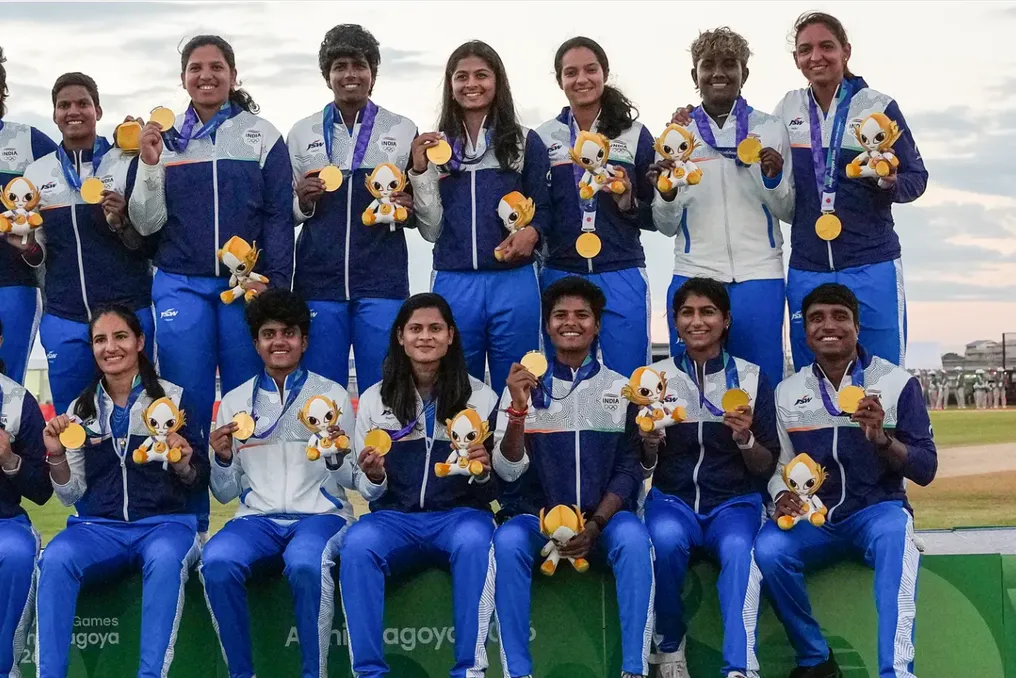
The Indian women's cricket team once again demonstrated its dominance at the continental level, securing its second consecutive gold medal at the Asian Games. On Tuesday, in the final, the team crushed long-time rivals Sri Lanka with a score of 147 runs.

The gold medal, won by the team under Harmanpreet Kaur's leadership, was India's first of the current tournament. The victory was secured by a brilliant batting performance that forced Sri Lanka to chase a record target of 217 runs.

Smriti Mandhana played brilliantly, scoring 79 runs off 45 balls, while Richa Ghosh added powerful late-over hits, taking India's score to 216 for three wickets. This set a new record for the Asian Games.

After reaching this record total, the outcome of the match became clear. All hopes for Sri Lanka rested on captain Chamari Atapattu (29 runs off 21 balls), but she could not counter the Indians. Sri Lanka capitulated, scoring only 69 runs across all overs, which took 15.4 overs, as the Indian spinners completely controlled the game against them.

Shafali Verma showed versatile play, scoring 48 runs and taking 2.3 wickets, while Dipti Sharma (3 wickets for 6 balls) and Shri Charani (2 wickets) traditionally helped the team in the final, which was not an even contest.

India was considered the clear favorite for the title and lived up to expectations, securing three confident victories throughout the competition. Similar to the Asia Cup earlier this month, Sri Lanka found itself in the losing position in the final, unable to compete with their familiar rivals.

Pakistan won the bronze medal by defeating Bangladesh with a comfortable margin of 31 runs earlier that day. Since the scenario for the Indian women's team unfolded according to plan, it was expected that the men's team would also defend its title.

The team maximized the advantages of powerplay after winning the draw. Mandhana (79 runs off 45 balls) and Shafali (48 runs off 29 balls) took the team to 59 without loss in six overs. Both batters are in excellent form since the Asia Cup, making a significant contribution to the team's success in the decisive final by building a partnership of 99 runs off 60 balls. Sri Lanka's weak bowling allowed these batters to dictate the terms of the game, with both being extremely effective against the spinners.

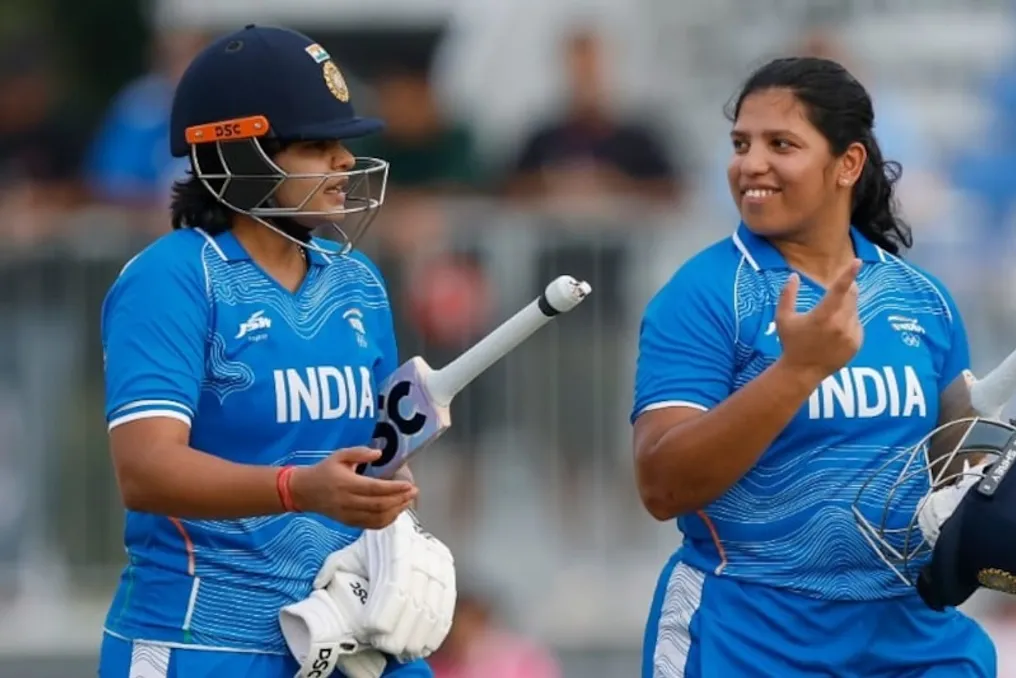
India defeats Japan 57:59 and advances to the Asian Games semi-finals
Read more
www.aajtak.in

India defeats Japan 57:59 and advances to the Asian Games semi-finals

At the Asian Games, the Indian team secured a spot in the semi-finals, but the true story of this victory is far more interesting than just the score on the board. In Nisshin (Korogi Sports Park, Nisshin) on Tuesday, Indian spinners created such a complex game that the Japanese batsmen had no chance of scoring runs. As a result, the entire team was brought down to a score of 57 points, and India won with a score of 59 in five overs, taking eight wickets.

India bowled first and chose the bowling option, immediately putting pressure on Japan. The Japanese batsmen had no answer to the Indian bowling. The situation became clear within six overs, which constituted the powerplay. Japan accumulated only 24 points during this period, with only two fours being hit, and one of them came not from hitting the center of the bat, but from touching the periphery.

Advancing to the Semi-finals

The experienced spin attack of the Indian team completely stifled the Japanese offense. The most significant contribution came from left-arm spinner Shri Charni. In the seventh over, she dismissed two batsmen consecutively: Haruna Iwasaki and captain Mai Yanagidu, which was a serious blow to Japan's hopes. After this, Charni did not allow the Japanese batsmen to play freely and took four wickets, conceding only 10 runs. This was her best performance in the T20 format.

The rotation and bounce of the ball also complicated matters for the Japanese batsmen. The ball either hit the bat or suddenly soared upwards, surprising the players. Under these conditions, attempts to score big often ended in catches.

Shefali also demonstrated spinning mastery

Although the attacking stars appeared later, Shefali Verma also proved to be a strong bowler. Bowling off-spin, she took two wickets, conceding only 13 runs. She forced Ayaka Kato-Stafford and Shimako Kato to try and hit big, and both times the ball fell into the hands of Indian fielders. Japan scored only three fours in the innings, and no sixes were seen. This means that the Indian bowlers almost completely prevented the easy runs that could have been earned through fours and sixes over 20 overs.

Japan missed opportunities even while running

The problems were not only in the bowling. Between wicket falls, the Japanese batsmen also showed a lack of coordination while running, which allowed India to take several outs. For a team with very little experience playing against top teams and regular training, the pressure from the Indian bowling and fielding constantly increased.

India's target of 57 points became a formality

Nevertheless, the start of the Indian innings was also not easy. Gunalan Kamalini was dismissed without scoring any runs. Then Harti Fulmali returned to the bench, scoring only 6 runs. However, the target was so small that it did not significantly affect India.

Shefali's powerful attack

After this, Shefali Verma finished the match within five overs. She scored 40 runs without getting out, using only 15 balls. Her innings included 6 fours and 2 sixes. Thus, Shefali came close to Japan's total score.

Richa Ghosh also helped India reach the target, scoring 12 runs without getting out in just 6 balls. While the Japanese batsmen managed to score only 57 runs in 20 overs, India surpassed this barrier in just 30 balls. This is the essence of this quarter-final: the confrontation between Japan's inexperienced batting and India's experienced spin bowling was one-sided. India has now advanced to the women's cricket semi-finals of the Asian Games.

Popular