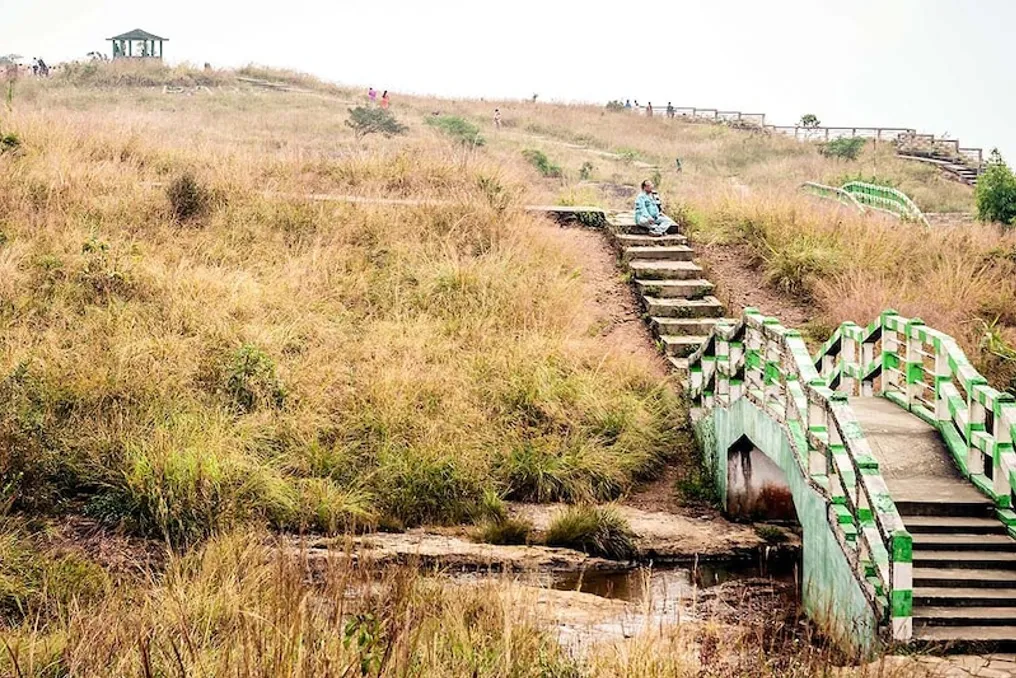
Meghalaya: Region with Record Rainfall Faces Growing Drought Risk Due to Climate Change
Read more
Aaj Tak
www.aajtak.in

Meghalaya: Region with Record Rainfall Faces Growing Drought Risk Due to Climate Change

Meghalaya, including Mawsynram and Cherrapunji, is traditionally known as one of the wettest regions in the world. However, a new study warns of an increasing risk of drought in these areas as climate change alters the pattern of precipitation.

The climate is changing such that rainfall now occurs less frequently but more intensely. The number of rainy days is decreasing, while temperatures are constantly rising. This causes water to run off the surface quickly instead of seeping into the soil, which prevents consistent water supply even during the monsoon season.

This study was published in the Theoretical and Applied Climatology Journal. The analysis covered climatic and hydrological data from 1981 to 2100. Researchers Ashesh Rudra Paul and Pankaj Kumar Roy found that the maximum local increase in daily intensity index is 0.08 millimeters per day per year. Meanwhile, the average number of rainy days decreases by 0.40 days per year.

Meghalaya's geographical location exacerbates this problem: it features steep hills and a thin layer of soil. When rains fall in heavy downpours, the water quickly runs off the surface without having time to replenish groundwater. Despite abundant rainfall during the monsoon season, there is a water deficit in the dry months.

The study indicates that this concentration of precipitation increases surface runoff and reduces absorption. Furthermore, rising temperatures accelerate evaporation and plant water loss, rapidly depleting soil moisture. This intensifies the demand for water on non-rainy days, creating conditions for drought.

The researchers used the standardized three-month precipitation evapotranspiration index. The analysis showed that in the near and distant future, droughts will occur more frequently and become more intense, based on the scenario of rapid economic growth and fossil fuel dependence. This will also affect river flow.

The Sari-Gawai and Surma-Meghna basins, which originate in or receive water from Meghalaya, were studied. According to the SSP585 model, the average annual flow in the Sari-Gawai basin could decrease by 9.8% and in the Surma-Meghna by 11.6% in the distant future. River water will concentrate mainly during the monsoon, peaking in June-July, and then drop sharply, increasing the risk of hydrological drought in subsequent months.

Local residents also report water shortages; inhabitants of Sohara and Mawsynram report that many sources and springs have begun drying up earlier. This trend became noticeable as early as mid-September. One local resident noted that many springs in the Sohara area are drying up. It should be noted that the study did not account for anthropogenic factors such as deforestation, urbanization, land-use change, and excessive groundwater exploitation, which also affect water availability.

The researchers emphasized the need to implement water resource management strategies. It is important to consider not only the total amount of precipitation but also its intensity, distribution, temperature rise, and basin flow levels. Collaboration between scientists, policymakers, and local communities is essential. Traditional water conservation methods in regions like Meghalaya must be strengthened, and modern technologies must be introduced. This study demonstrates that even in areas with abundant rain, climate change can pose a drought threat, and only proper water management and environmental conservation can ensure a secure future.
Similar stories

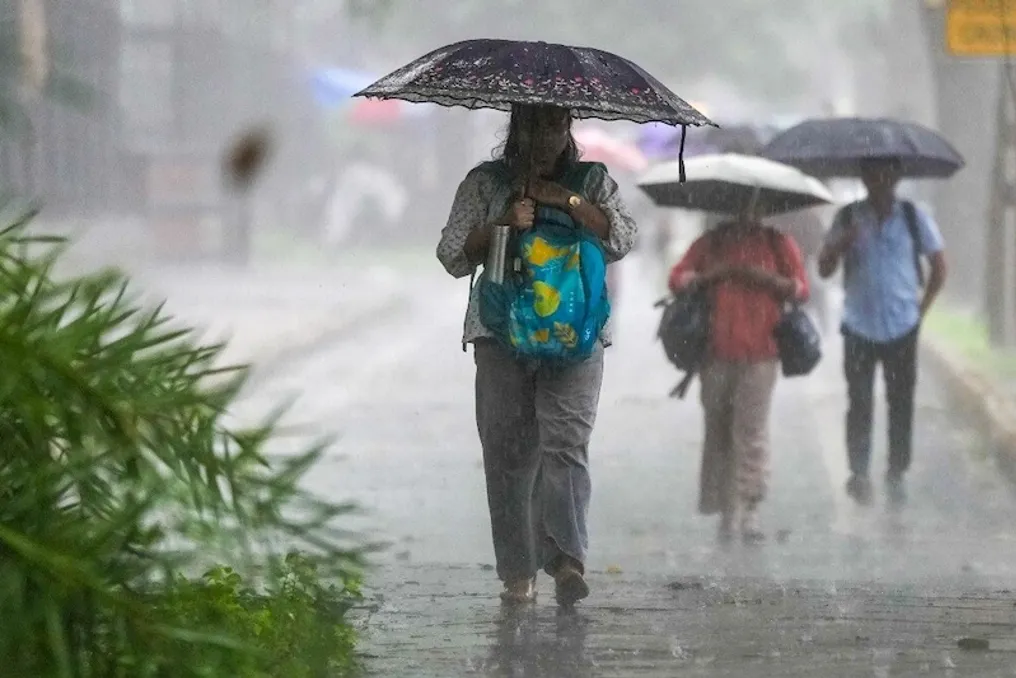
India Weather: September Forecast, Warnings for Rains and Storms in 15 States
Read more
www.aajtak.in

India Weather: September Forecast, Warnings for Rains and Storms in 15 States

Although the second week of September is usually associated with the end of the monsoon season, weather conditions in various parts of the country show a continuation of rains. The Meteorological Department (IMD) has issued a warning about the probability of rain, thunderstorms, and strong winds in Delhi-NCR and several other states.

According to IMD forecasts, the weather may change in about 15 states on September 10. In some areas, winds of 50 to 65 kilometers per hour are expected, accompanied by rain and thunderstorms. Although the probability of rain in Delhi-NCR today is low, the situation may change in the coming days.

In the capital and surrounding areas, light clouds are expected on Thursday. The maximum temperature is forecast to be around 35 degrees, and the minimum 27 degrees Celsius, which may cause a feeling of heat due to high humidity. However, relief is not far off: according to the meteorological department, weather changes may begin on September 11. The most intense rains are expected on September 12 and 13, after which the weather may become clearer on September 14, and rain is possible again on September 15.

There is a risk of heavy rains with thunderstorms and strong winds in several districts of Uttar Pradesh. A warning for thundershowers and strong winds has been issued for Gorakhpur, Bahraich, Ghazipur, Azamgarh, Varanasi, Fursatganj, Lakhimur, Prayagraj, Kanpur, Gautam Buddha Nagar, and Jaunpur. Wind speeds in these places may reach 65 kilometers per hour. Lucknow is also expected to have cloudy skies, with a maximum temperature of 32 degrees and a minimum of 26 degrees Celsius.

The Meteorological Department has also issued an orange alert for heavy rains in several districts of Bihar. Heavy rainfall may occur in Gopalganj, Siwan, Shivahar, East Champaran, Katihar, Patna, Bhojpur, Baksar, Saran, Vaishali, Samastipur, Lakhisarai, Khagdia, Munger, Bhagalpur, and Muzaffarpur. The rains are expected to be accompanied by strong winds of about 50 kilometers per hour and possible lightning strikes. A maximum temperature of 32 degrees and a minimum of 27 degrees Celsius is forecasted for Patna.

Madhya Pradesh may be one of the states with the highest amount of precipitation. A warning for very heavy rains is issued for many places, including Bhopal, Indore, Dewas, Ujjain, Guna, Khandwa, Panna, Sheopur, Narmadapuram, Narsinghpur, Chhindwara, Katni, Jabalpur, Ashoknagar, and Neemuch. During the rains, wind speed may reach 60 kilometers per hour. A maximum temperature of 31 degrees and a minimum of 23 degrees Celsius is expected in Bhopal.

In most districts of Jaipur, Bharatpur, Ajmer, Kota, and Udaipur in Rajasthan, the monsoon may weaken in the coming days. A decrease in monsoon activity is also predicted in the districts of Jodhpur and Bikaner in western Rajasthan over the next five days. Nevertheless, light or heavy rains are possible in Alwar, Bharatpur, Digha, Dausa, and Karauli. Today, a maximum temperature of 34 degrees and a minimum of 25 degrees Celsius is expected in Jaipur.

Rainfall is expected to continue in some parts of Uttarakhand and Himachal Pradesh. A warning for heavy rains has been issued for Uttarakhand from September 10 to 13, as well as a risk of thunderstorms and lightning in some areas from September 10 to 14. Heavy rains may fall in Himachal Pradesh on September 14 and 15. Constant precipitation poses a threat of landslides and traffic disruptions in mountainous regions.

According to IMD forecasts, very heavy rains are possible in Chhattisgarh on September 12. Heavy rains are expected in Western Madhya Pradesh from September 12 to 14, in Eastern Madhya Pradesh on September 11, and in Vidarbha from September 12 to 13. In West India, in Konkan and Goa, Central Maharashtra, Gujarat, and Surat-Kachha, increased rainfall is also expected in the coming days. Extensive rain is forecasted for Konkan and Goa from September 9 to 15. The weather will remain active in eastern and northeastern India: thunderstorms and strong winds are possible in Bihar, Jharkhand, Odisha, West Bengal, Sub-Himalayan West Bengal, and Sikkim.

Although discussions about the return of the monsoon usually begin in mid-September, this time a number of atmospheric systems is prolonging the rainy period. This is affecting various regions of the country. On the one hand, the rains help relieve the heat and stuffiness, but on the other hand, constant precipitation can lead to urban flooding, transportation problems, and drainage issues. Furthermore, there is a risk of landslides in mountainous areas and floods in lowlands.

Popular