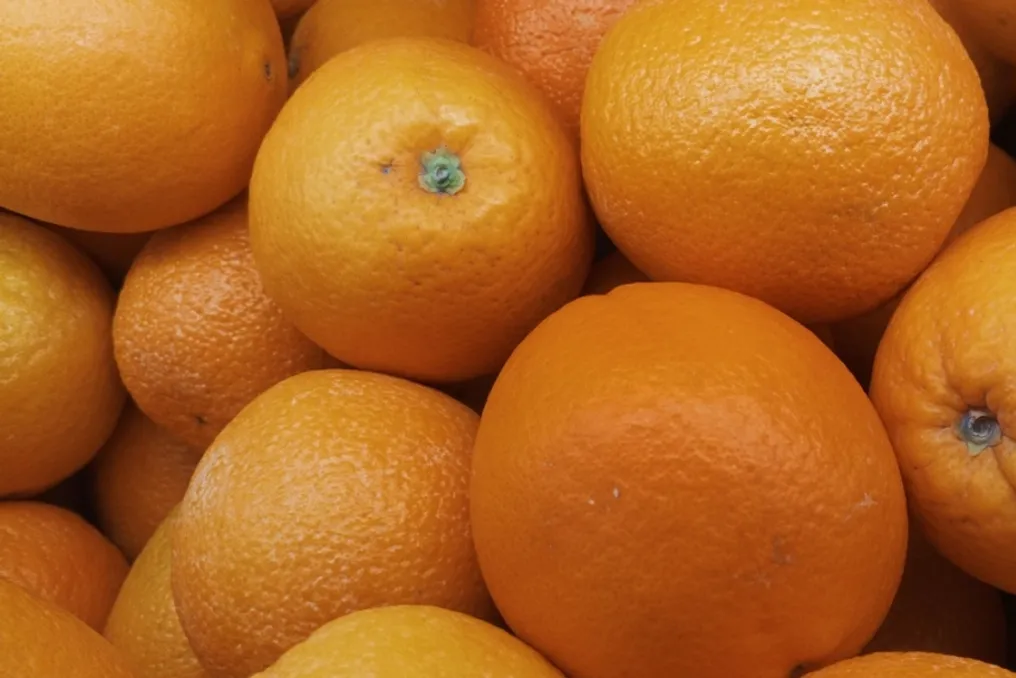
The fresh produce markets in South Africa are experiencing a mixed situation this week. Despite potato volumes being lower than in 2024, prices have decreased, while onions continue to show an unusual price increase. Regarding fruits, oranges have become 60% cheaper compared to last year.
In the latest market update from GroundRules, prepared by Agricultural Market Trends (AMT), agricultural economist Kons Moraba analyzes in detail the complex factors causing these unexpected changes in the country's fresh produce industry.
The main market puzzle relates to potatoes. Although current volumes are even lower than in the same period of 2024, a 10 kg bag is selling more than 30 R cheaper than the highs reached last year. National potato prices this week remained unchanged at 65.87 R per 10 kg. In his report, Moraba breaks down the situation by variety and size.
Even though volumes are holding steady at 2024 levels, when potatoes cost over 100 R per bag, prices remain significantly lower for two reasons. Firstly, producers did not face crop damage at the end of July, which was observed in previous seasons, allowing the market to expect a stable supply of products. Secondly, there is currently a large quantity of large potatoes in the market, putting downward pressure on other size categories.
According to Moraba, the current shortage is likely temporary and caused by one production zone finishing early and another starting late. Since an increase in supply is expected in October, prices are expected to remain relatively stable in the short term.
Onions continue their impressive rise, reaching 156.70 R per 10 kg, which represents a jump of 257% compared to last year, while market volumes have decreased by 42%. The wet winter climate limited early planting, leading to insufficient supply amid constant demand. Moraba noted that the shortage may soon end, and prices are likely to fall as volumes recover.
Meanwhile, tomatoes have dropped by 15%, reaching 6.16 R/kg, despite a 2% increase in volume. As production shifts from winter to summer regions, temporary supply dips may strengthen prices this week. However, weak demand in the informal market, which affects small retailers and low-quality produce, continues to put downward pressure on the overall market.
Carrots have fallen by 20%, reaching 3.98 R/kg, although seasonal transitions may soon provide price support. Sweet peppers have decreased by 8% to 16.09 R/kg overall; green peppers have dropped to 10.50 R/kg, while red (28.36 R/kg) and yellow peppers (32.17 R/kg) remained more expensive.
Other notable changes among vegetables include the rise of garlic to 106.74 R/kg and sweet potatoes to 4.32 R/kg, while yams remained stable at 6.38 R/kg. Cabbage and spinach stabilized at 2.47 R/kg and 2.52 R/kg, respectively.
Oranges have dropped to 2.41 R/kg—a 60% fall compared to last year. Moraba explained it simply: 'There are too many. Annual volumes exceed a huge 122%.' Prices are expected to remain moderate until supply begins to decrease in October.
Conversely, bananas have fallen by 11% due to improved supply, although a reduction in volumes towards the end of the year should strengthen prices. Apples (10.14 R/kg) and pears (9.44 R/kg) continue to rise. In the subtropical segment, avocados have increased by 2% to 16.90 R/kg, and blueberries have lost 20%, falling to 60.46 R/kg.
As seasonal transitions occur, consumer purchasing power remains the main determining factor for market direction. As Moraba notes: 'Today's shortage sets the price. Tomorrow's supply determines the direction.'
>