
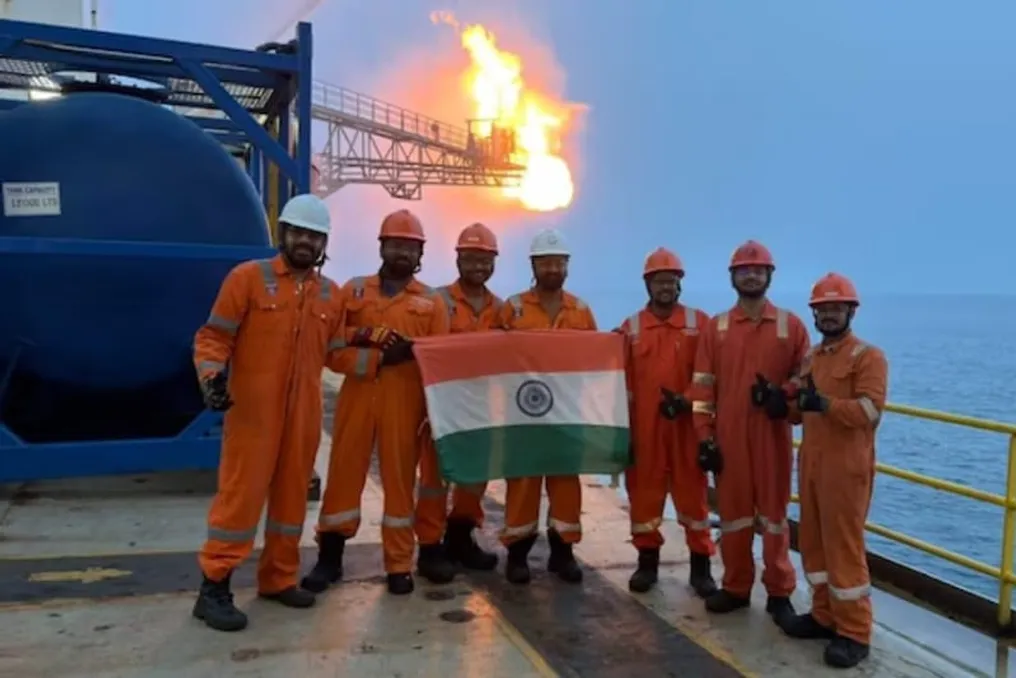
ONGC has made a major gas discovery in a deep-sea well located approximately 43 kilometers from the coast of Odisha. This find was made in the Mahanadi basin on September 18 at a depth of about 1450 meters. This discovery is considered extremely important for India as it could potentially reduce the country's import bill for oil and gas.
The company reported that gas has been flowing steadily from this well over the last three days with good rate and pressure. However, information regarding the exact volume or total gas reserves has not yet been disclosed. Further verification will be conducted to determine the amount of gas that can be extracted from this well and whether commercial extraction will be profitable.
ONGC stated on social media that it will continue searching for oil and gas in deep and ultra-deep marine areas. This discovery occurred when, two years ago, in 2024, ONGC was already conducting gas surveys named Utkal and Konak in the same Mahanadi basin.
The new well, named MDDV 28, is located approximately 23 nautical miles from Konak and is situated in water about 770 meters deep. It is the first of four wells planned to be drilled under ONGC's current campaign. Drilling of well MDDV 28 began on July 25.
This initiative is part of the 'Samudra Mantran' program aimed at exploring untouched deep-sea areas of the Mahanadi basin. According to a government agency, this basin is estimated to hold about 45 million tons of resources onshore and about 100 million tons in shallow waters, while the assessment of the deep-sea portion is not yet complete.
The central government approved 'Samudra Mantran' in July with a budget of 84,084 crore rupees, which will run until 2030–2031. The government hopes this will lead to an increase in the country's hydrocarbon reserves by more than 600 million tons.
Minister of Petroleum and Natural Gas Hardeep Singh Puri called this discovery a significant achievement for India's marine exploration program. He noted that combined with other finds in the region, there is potential for development using common infrastructure assets, which will reduce both costs and time.