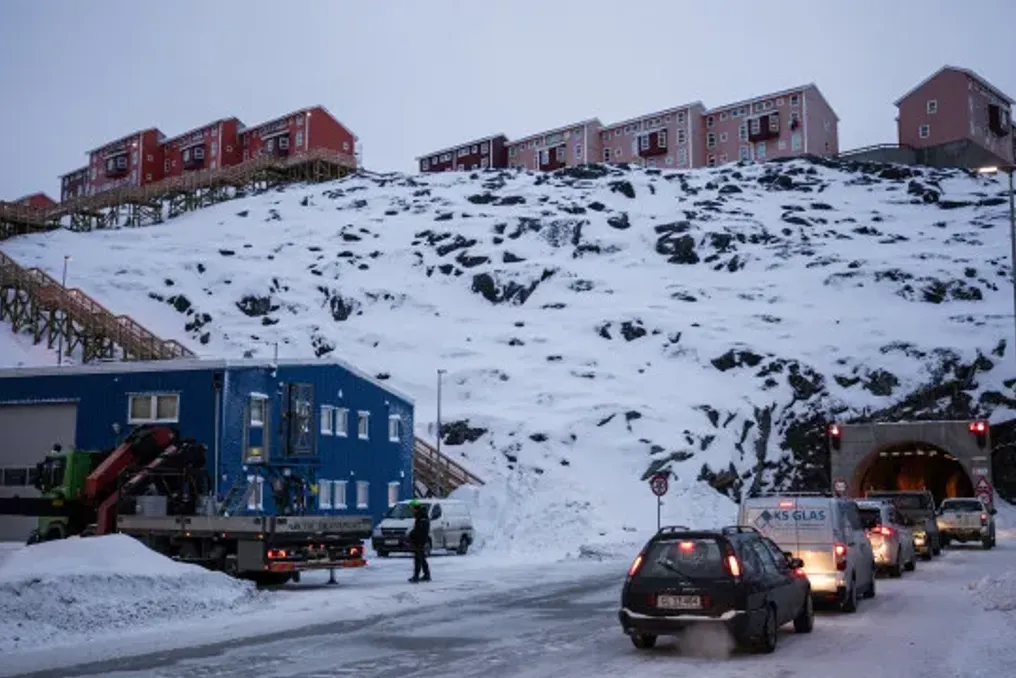
Following the announcement of a security pact involving Greenland, the autonomous territory of Denmark, diplomatic leaders from the United States, Denmark, and Greenland met during an Arctic Council session. This council includes the United States, Canada, Denmark, Finland, Iceland, Norway, Russia, and Sweden, and the meeting took place in New York, parallel to the UN General Assembly.
In a statement, State Department spokesperson Tommy Pigott declared that the allies agreed that security in the Arctic region requires constant investment to protect this crucial territory and discourage strategic competitors.
Discussions between Rubio, his Danish counterparts, Lars Løkke Rasmussen, and the Greenlandic representative, Múte Egede, focused on assuming greater responsibility for Arctic security through the development of sovereign military and economic capabilities.
This was the first public meeting between representatives of the three parties since President Donald Trump announced on Friday a 'historic' security agreement regarding the Arctic island, whose military invasion had been threatened earlier this year.
Although the full content of the agreement has not been disclosed, it would provide the United States with a permanent military presence on the island and prevent access by Russia and China, while respecting Denmark's sovereignty over the autonomous territory and Greenland's right to self-determination.
The Danish Prime Minister, Mette Frederiksen, and the Greenlandic Prime Minister, Jens-Frederik Nielsen, traveled to New York on Sunday, where the agreement signing was scheduled for Tuesday.
Donald Trump created a crisis with European allies this year by threatening to annex the Danish autonomous territory, given its strategic location in the Arctic and its natural resources sought by Washington.
Despite the lack of disclosure of details, the Danish government emphasized that the agreement on Greenland honors Copenhagen's 'red lines,' ensuring the country's sovereignty, even if Washington maintains 'permanent control' over the area's security.
Mette Frederiksen stressed that the pact 'recognizes the sovereignty and territorial integrity of the Kingdom and the right of the Greenlandic people to self-determination.'
Lars Lokke Rasmussen, Denmark's Foreign Minister, expressed satisfaction on social media with the end of 'a long period of uncertainty,' hoping it will be followed by 'a binding agreement that will strengthen security in the Arctic and North Atlantic,' as well as in Denmark within NATO and Europe.
According to the Donald Trump administration, the understanding prohibits China and Russia from establishing bases in Greenland or making sensitive investments without permission, also opening up space for strengthening the American military presence.
A 1951 defense agreement, updated in 2004, already gave US armed forces almost carte blanche to install structures in Greenland, requiring only notification of the authorities.