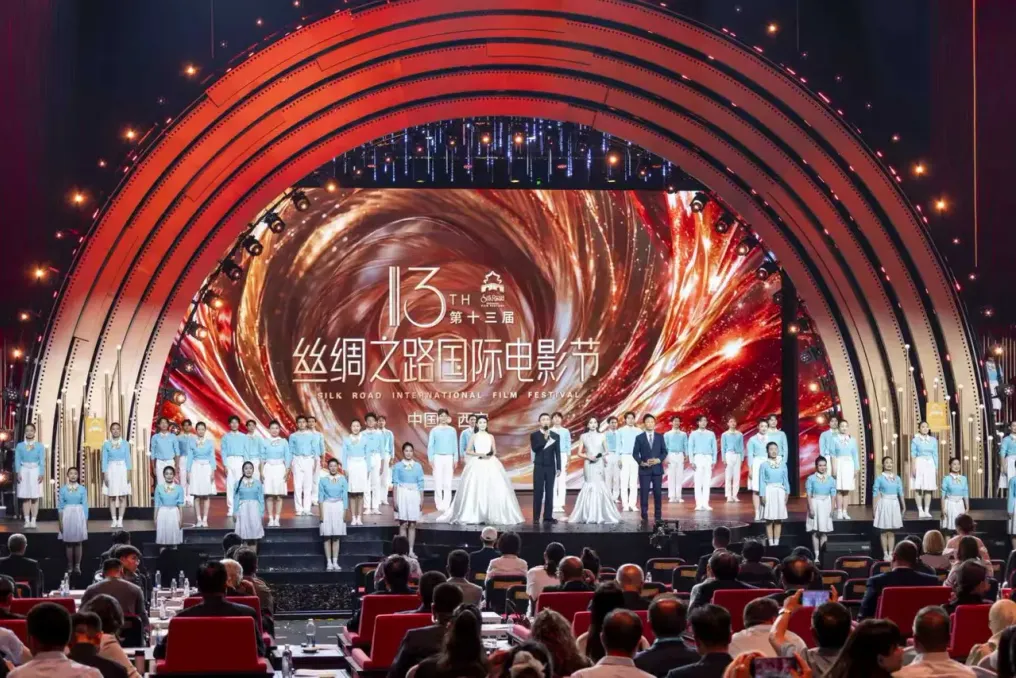
The 13th Silk Road International Film Festival officially commenced in Xi'an, the ancient capital of China, on September 19. The event gathered representatives from the film industry, culture, and media from various parts of the world.
The 13th Silk Road International Film Festival officially commenced in Xi'an, the ancient capital of China, on September 19. The event gathered representatives from the film industry, culture, and media from various parts of the world.
The festival is organized by the China Media Group in collaboration with the governments of Shaanxi and Fujian provinces. The opening ceremony was attended by officials from Shaanxi and Xi'an, representatives of the China Media Group, the Egyptian National Cinema Center, the China Film Fund, the international film community, and the diplomatic corps. Uzbekistan was represented by the Ambassador of Uzbekistan to China, Farokh Arziyev.
The Governor of Shaanxi Province, Zhao Gang, delivered a welcoming speech. Shen Haixiong, Deputy Head of the Propaganda Department of the Central Committee of the Communist Party of China and Director of the China Media Group, addressed the festival participants in a video message.
Egypt, the guest of honor for the festival this year, was represented by Ahmed Saleh, Director of the Egyptian National Cinema Center.
Speaking at the opening ceremony, Shen Haixiong noted that over more than 13 years, the Silk Road Film Festival has transformed into a significant international platform uniting filmmakers from China and other countries. According to him, the festival promotes not only professional interaction among film industry representatives but also creates new opportunities for cultural exchange between peoples.
Special attention was paid to the international program of screenings and presentations, 'Light and Shadow of the Silk Road,' organized by the China Media Group in countries participating in the Belt and Road Initiative. Shen Haixiong emphasized that further cooperation with foreign partners will enable the creation and dissemination of new stories about the Silk Road, expand awareness of Chinese culture internationally, and strengthen ties between peoples.
In turn, Shaanxi Governor Zhao Gang stated that, following the spirit of the ancient Silk Road, the festival has become an important platform for cultural exchange and professional cooperation within the framework of the Belt and Road Initiative. Shaanxi intends to continue using cinema to promote international cultural interaction, professional dialogue, and mutual enrichment of national film industries.
The opening ceremony combined traditional art with modern technology. Organizers utilized artificial intelligence and augmented reality to create an immersive large-scale audiovisual performance. Dancers and humanoid robots performed on one stage, with traditional Chinese melodies harmoniously blending with musical pieces from other countries.
A dedicated program focused on the interaction between traditional art and contemporary cinema. Theatrical productions and classic films were presented in dialogue, while filmmakers of different generations showcased works that merge cultural heritage with modern artistic language.
The 13th Silk Road International Film Festival is held under the slogan 'The Silk Road Connects the World, Light and Shadow Illuminate Chang'an.' This year, the festival received 2130 film submissions from 139 countries and regions, marking the widest international participation in the event's history. For the first time, the festival includes a special section, 'Silk Road with Children — Children's Film Festival,' featuring over 60 children's films from around the world; fifteen of these were selected for the competition. Over 400 Chinese and international films will be shown to the general public during the festival.
Egypt serves as the festival's guest of honor. The event takes place in a year marking the 70th anniversary of the establishment of diplomatic relations between China and Egypt, which adds extra significance to the cultural program. The festival also provides for professional meetings and discussions on the development of the film industry within the framework of the Belt and Road Initiative. Participants will discuss international film cooperation, copyright exchange, film tourism, and the implementation of technological innovations.
Chinese director Peter Pau has been appointed as the chairman of the international jury for the 'Golden Silk Road' award this year. The festival will run until September 23. On the closing day, the winners of the 'Golden Silk Road' award in major categories, including Best Film, Best Director, and Best Screenplay, as well as in other nominations, will be announced. The organizers view the Silk Road International Film Festival not only as a professional film platform but also as a modern continuation of the age-old tradition of cultural ties between countries along the historical Silk Road.
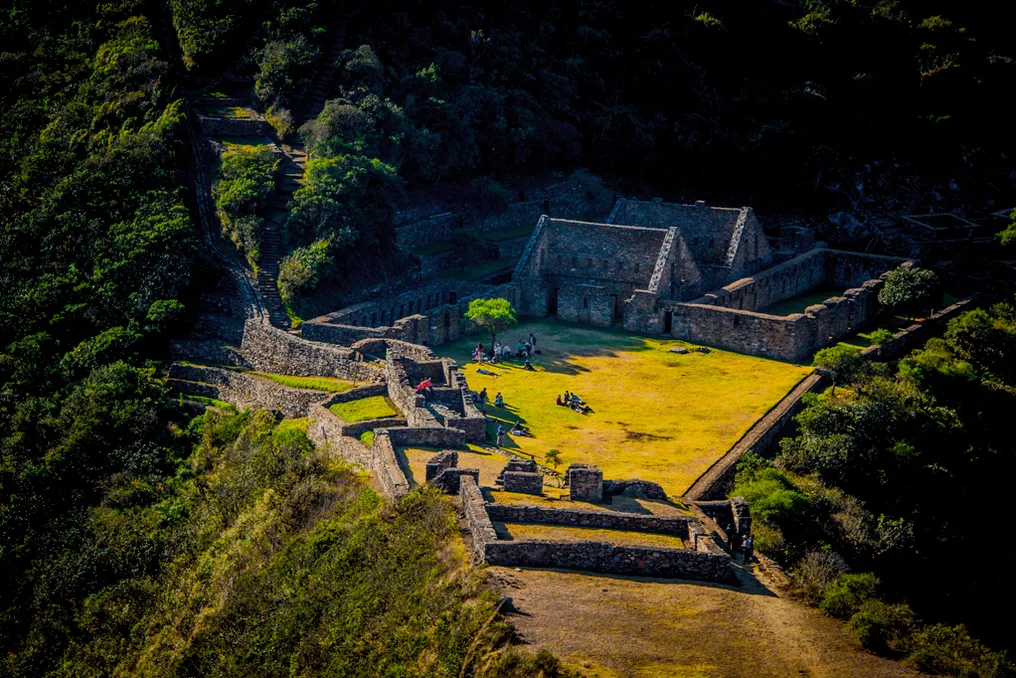
Admiring the ruins of Machu Picchu, one of the seven modern wonders, is often hindered by the large number of tourists, who reach about 1.6 million annually. However, there is another Inca city, less known and more isolated in the Andean region, called Choquequirao, which is sometimes referred to as the 'younger sister of Machu Picchu.'
This settlement was built as part of the Inca Empire between the 15th and 16th centuries. Located at three thousand meters altitude and 89 km away from the most famous tourist spot, visiting Choquequirao demands considerable effort and time, which naturally deters the average tourist. There is no transport infrastructure such as roads, trains, or nearby airports; access requires hiking and crossing the Apurímac river canyon, traversing mountainous trails for several days.
Due to its isolation in the jungle, Spanish colonizers never located it, resulting in little knowledge among researchers. It is estimated that the Choquequirao complex was built around 1450, although its exact purpose remains uncertain. The most accepted hypothesis is that this settlement functioned as a religious, administrative center, or a strategic connection point between the Andes and the Amazon.
The archaeological site features agricultural terraces, ceremonial plazas, and structures that demonstrate sophisticated planning. Among the notable elements are the terraces adorned with llama figures, sculpted in white stones on the walls, a distinctive trait of Inca architecture. Attention should also be paid to the 'Houses of the Fathers' and the 'Main Houses' overlooking the plaza, places that likely housed the local nobility.
The name of the city, which means 'cradle of gold' in Quechua, suggests its importance to the Incas, although researchers warn that this mention of gold may indicate value, prestige, or sacredness, and not necessarily the literal presence of the metal in the area.
Later, Choquequirao's remote location became tactical during the Spanish conquest in the 16th century, and it is possible that the Inca resistance sought refuge there. However, this resistance was brief, and the city ended up being abandoned.
Public recognition of Choquequirao only occurred in 1909 when American explorer Hiram Bingham described it, two years before visiting Machu Picchu. It took decades longer for the Peruvian government to direct efforts toward its preservation, which only began in 1980.
Recently, authorities have promoted the construction of a cable car as a strategy to attract more visitors. This project, with a projected investment of US$ 261 million, aims to connect strategic points between the Cusco and Apurímac regions. Furthermore, the plan includes improving existing trails as a hiking alternative. The government announced that the cable car tender will be conducted through Public-Private Partnership (PPP), aiming to raise the annual tourist flow from 8 thousand to one million people.
Although facilitating access could boost the rural and underdeveloped economy of Peru, the BBC reported that the cable car project has generated tensions among communities claiming inclusion on the route to benefit from development and increased visitors.
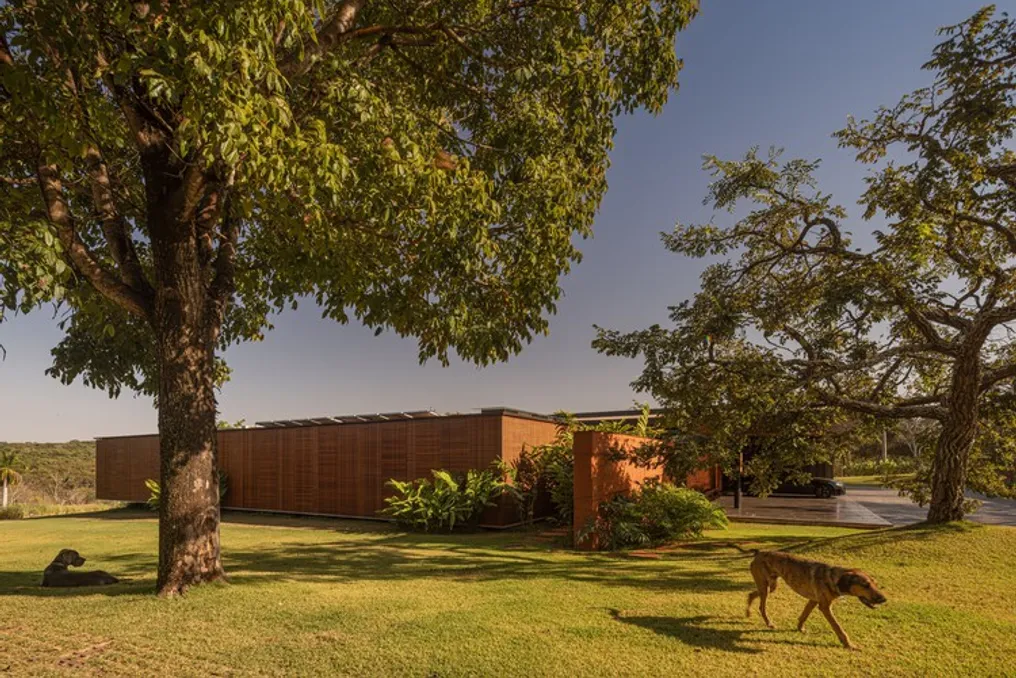
The Muxarabi House, conceived by the design team mf+arquitetos, was erected in the setting of the Triângulo Mineiro and is characterized by a horizontal gesture that embraces the natural surroundings. From a distance, its silhouette is perceived as a defined line, contrasting the intense blue of the sky with the warm tone of the earth. The project avoids any abruptness, presenting itself with a serenity that demonstrates a deep understanding of the territory on which it is situated.
The approach is marked by a combination of elongated planes, where elements such as wood, metal, and earth harmonize in a controlled balance. The external space, vast and unadorned, serves as preparation for the philosophy guiding the entire venture: architecture must function as continuity, as flow, and as shadow.
In the center of the residence, the social area clearly evidences this intention. Under an extensive and light roof, the internal and external environments coexist without rigid barriers. Light penetrates filtered through the muxarabis and the openings cutting the wooden ceiling, projecting geometric patterns and delicacy onto the rustic surfaces. The furniture, of an organic and tactile nature, reinforces the feeling of refuge, while the open panels regulate the lighting with the precision of an artisan. Each element suggests that time in this place passes differently, more paused and attentive.
The walls built with raw earth define private patios and internal gardens that maintain a state of stillness. It is these reddish surfaces, resulting from the construction process, that connect the project to the Mineiro landscape. They mirror the territory, bringing into the inhabited space the memory of geological layers, cerrado trails, and the heat that dissipates at dusk.
At the rear, the house opens widely to the grassy area and the pool, displaying its most contemplative aspect. A large overhang provides extensive shade, establishing a smooth transition between internal life and the horizon. At this point, the golden light of the afternoon meets the concrete, wood, and earth in a chromatic palette that seems to emanate directly from the soil.
The Muxarabi House does not seek to impose itself but rather to integrate into the environment. Its beauty lies in the precision of the lines, the authenticity of the materials used, and the poetry inherent in the empty spaces. It is an architecture that prefers to listen before manifesting, allowing itself to be shaped by the landscape, the climate, and the light. It is a sanctuary that welcomes, without exaggeration, the natural rhythm of its residents and the constant movement of the wind passing through Uberlândia.
Thus, among the projected shadows, the permeable panels, and the walls that seem to breathe, the Muxarabi House establishes itself as a discreet manifesto of contemporary Brazilian architecture.