Photo chronicle of protests in South Africa against gender-based violence over seven years
Read more
IOL
iol.co.za

Photo chronicle of protests in South Africa against gender-based violence over seven years

In September 2026, women from South Africa took to the streets to commemorate women killed in eKhuruleni under the slogan 'enough is enough.' This protest was part of a broader fight against gender-based violence (GBVF), which remains an unresolved crisis in the country despite promises made by the president as far back as 2019.

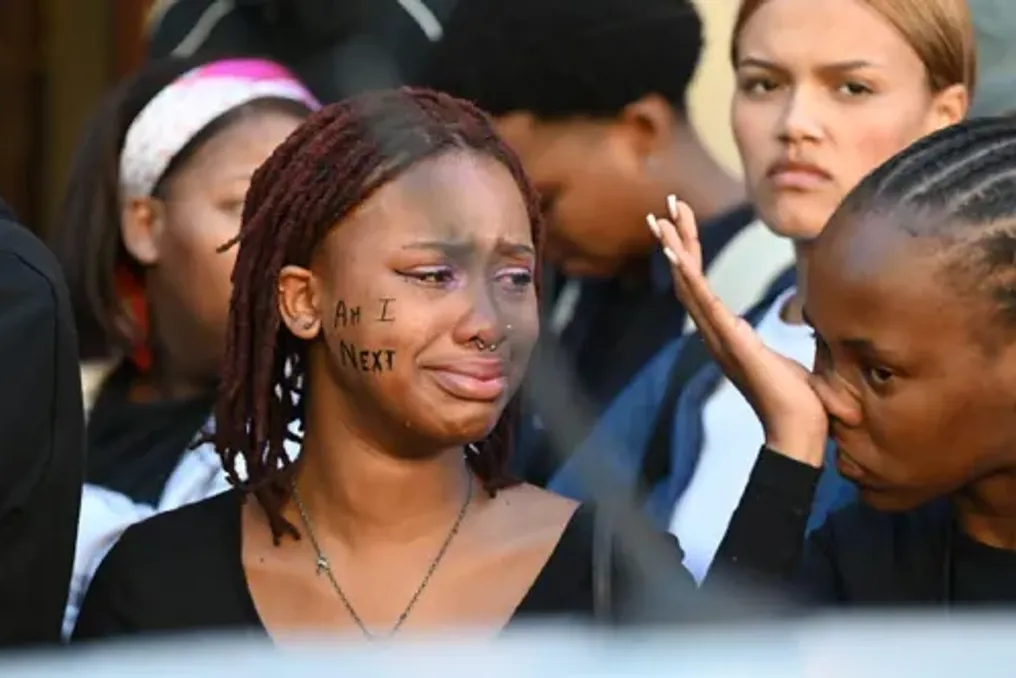
The photo chronology demonstrates a decade of public outrage over GBV, linking current demands for a safer South Africa with historical actions that first forced the government to take measures. Protesters continue to ask: 'Am I next?'

Nine female bodies were found in communities in eKhuruleni, including Kempton Park, Pomona, Clayville, Olifantsfontein, Rhodesfield, KwaTema, and Don Park. Police are still determining if these cases are connected. On September 16, 2026, South Africans took to the streets in Cape Town to pay tribute to the women whose bodies were found in eKhuruleni, demanding urgent action against gender-based violence.

The images show what official rhetoric does not reflect: families and activists await names, answers, and visible protection. A placard featuring a child and the inscription '#EndGBV' transforms an unidentified case into a personal tragedy, while a handwritten sign asking 'How many more?' demands a tally of losses. The photograph of a weeping protester illustrates the cost of waiting.

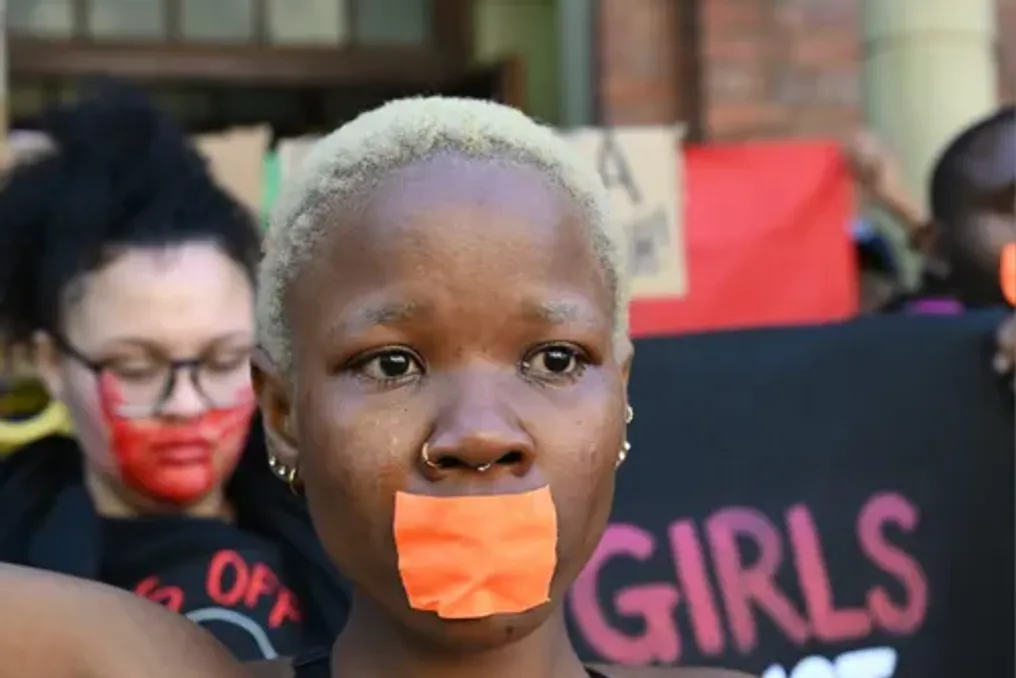
On September 16, 2026, black clothing symbolized mourning, and a 30-minute silence commemorated the loss of women whose cases remain part of a national crisis. On September 16, 2026, a 30-minute silent protest against violence against women took place in Cape Town near the Central Police Station and the Castle of Good Hope. Participants, dressed in black, gathered in silence to remember the women whose lives were cut short by violence and to support women living in fear.

In 2025, the government classified GBVF as a national disaster according to a ministerial statement from the National Council in 2026. This classification raised the level of state responsibility, requiring not just condemnation, but coordinated resources, measurable actions, and public accountability. However, the 2026 protests show that the situation on the ground has not changed since 2019, and the declaration of a disaster could not protect South African women and children.

The Gender-Based Violence and Femicide National Council Act of 2024 created a permanent legislative mechanism for coordinating and monitoring the national response. The Council held its first meeting on August 31, 2026. In January 2024, community members marched in Hyaletsh after a young woman was raped and killed.

Questions arise: who responds when there is no case? Who audits the police station? Who publishes a safety audit? Who is responsible when a survivor waits for help?

On December 7, 2023, members of the South African Women Lawyers Association and emergency service personnel marched to the Union Buildings in Pretoria, demanding that the government strengthen measures against gender-based violence. On June 19, a mural about gender-based violence appeared on the corner of Sandile Tusi and Problem Mkhize streets in Durban. On August 10, the Nokusa Foundation and people with disabilities marched from King DinuZulu Park to the Durban City Hall, uniting issues of disability, employment, and GBV into a single public demand.

On December 9, the Sidenhams and Sherwood Community Police Forum protested against GBV at Charles Hugo School, moving the issue from national policy to local police control. On June 29, 2022, the LGBTQ+ community and its allies marched from Durban City Hall to the Durban Magistrate's Court, demanding justice for murdered queer individuals and GBV victims, thereby emphasizing the need to include LGBTQ+ people in the national response to GBV.

On March 8, 2022, the organization Fee Gender and other civil society organizations marched to Site B police station in Hyaletsh after a murder case was dropped from the judicial record due to the police's inability to provide case materials. In 2022, women again posed the same unanswered question to President Cyril Ramaphosa as in 2019: 'How many more?' On February 22, 2022, residents of KwaDabek protested against gender-based violence following a series of incidents in the Claremont area. These community actions demonstrate how national language translates into local organization: residents translate the 'GBV crisis' into a demand for safety in a specific location.

On February 24, 2021, an anti-GBV demonstration took place in Cape Town near Parliament. On February 18, 2021, Ilita Labantu, police, and civil organizations conducted a motorcade in Gugulethu to break the silence surrounding violence against women and children.

Collectively, the photographs demonstrate two levels of action: one calls on neighbors to act, and the other demands accountability from the Presidency and Parliament.

On November 30, 2020, GBV victim Lovisa Terling joined a protest when a group of women addressed the Cape Town court regarding delays in domestic violence and sexual assault cases. On August 29, 2020, police used tear gas and flash-bang grenades during clashes with protesters and motorcyclists participating in a march against gender-based violence near parliament, which followed the murders of women in South Africa during Women's Month. On June 19, the South African Youth Council and gender activists staged a picket outside the SAPS West Cape headquarters, raising the banner '#WOMENLIVESMATTER,' sending a message to law enforcement dealing with GBV.

The 2019 images form the political starting point for the eight-year series. During the Covid-19 pandemic, President Cyril Ramaphosa called GBVF the 'second pandemic' of South Africa. In 2020, the Cabinet adopted a National Strategic Plan on GBVF with pillars such as accountability, prevention, justice, care, economic empowerment, and research. Six years later, have any solutions been reached?

On September 6, 2019, protesters marched to the Cape Town International Convention Centre, gathering near the African Economic Forum, and then occupied the N2 highway before returning to Parliament. The route linked legislation, global reputation, public space, and police. Uyinene Mrwetyana recalled her murder through an ordinary act preceding the crime. On September 8, 2019, President Cyril Ramaphosa addressed the nation outside Parliament in Cape Town, promising to review domestic violence and sexual assault laws and ensure stronger coordination and urgent intervention through Parliament. It can be said that little has changed since then.
Similar stories

History of women affected by the femicide crisis in South Africa
Read more
iol.co.za

History of women affected by the femicide crisis in South Africa

This publication is a collection of names of women who have become victims of the femicide crisis in South Africa, highlighting their individuality.

Among those mentioned is Nontokozwe Mazibuko, aged 25, who lived in Portgie, south of Johannesburg. She went missing on December 30th, and together with her friend Andiswa Sontangane, also 25 years old and a resident of Portgie, they were found discarded near the R28 highway.

Anneke 'Niki' van Heerden, 54, from Plettenberg Bay, was discovered with multiple injuries near a car after people heard the woman scream. She previously worked as a detective in Plettenberg Bay.

Nolumanyano Nonyamaeko Matanzima, 64, a first-grade teacher from Ntabankulu in the Eastern Cape, was shot during an attack at Ntabankulu primary school, despite being due to retire in June.

The list also features a woman whose name has not been disclosed; she is 34 years old and resided in Parsonsville, Gqeberha. She was shot at home; her name was withheld to protect her children.

Itumeleng Kekana, 32, from Pomona in Kenton Park, was found partially undressed near a river along the R21 highway 17 days after going missing. She left behind a 14-year-old daughter.

Elizabeth 'Contso' Moselakgomo, 38, a mother and runner from Rodsfield in Kenton Park, was found outside a hotel near the R21 highway some time after she went for a run.

Another woman, whose name has not been revealed, was found at a dumping site with her hands tied and burns on her body in Copswille, Pietermaritzburg. Her identity has not been established.

Is anyone missing from this wall?

The publication calls on readers to report women killed in South Africa this year. IOL verifies each name against police statements, court records, or published reports before adding it to the list. Information sent to xolile.mtembu@iol.co.za is used solely for verification purposes, and the sender's personal details are not published. This list is compiled based on information from SAPS statements, court records, and various media reports, but it is not a complete registry.

Despite declaring GBVF a national catastrophe, murders of women continue in South Africa
Read more
iol.co.za

Despite declaring GBVF a national catastrophe, murders of women continue in South Africa

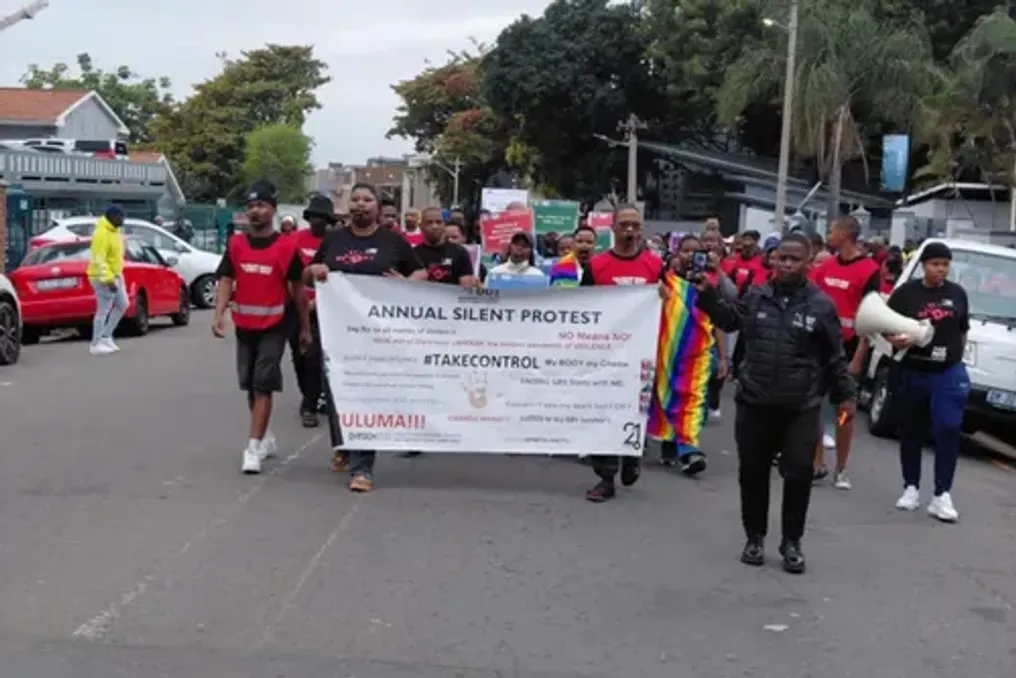
In South Africa, students and staff from DUT marched silently through Durban to honor the memory of victims of gender-based violence and femicide, and to call for an end to violence, fear, and silence.

In the eThekwini area, the body of a sixth woman was found in approximately two months. Police are investigating possible links between these cases but warn that it is too early to speak of a serial killer's guilt.

Nevertheless, this should not distract from the broader crisis. South Africa does not lack reports of GBVF; it lacks consequences, protection, and urgency.

The case of 38-year-old Elizabeth 'Ntontso' Moselakgomo intensified public anger. Moselakgomo, a mother, went missing after going for a run. Her family later identified her body at the Germiston morgue. The police deployed specialized resources to investigate her death alongside other murders.

The circumstances of the deaths are still being determined, and it would be irresponsible to claim that the women were killed by the same person before investigators establish that. However, six bodies in a concentrated geographical area demand an exceptional response.

Police have already involved multidisciplinary investigators and forensic specialists. One suspect is in custody in connection with the first body found in July. Investigators are now working to identify connections between these cases. Therefore, the public needs more than just assurances that investigations are underway; it needs results.

Because for the women living in eThekwini, the question is not whether the authorities will eventually explain what happened, but whether the state can prevent the next woman from becoming another case.

Murders in eThekwini occur against the backdrop of a national crisis. SAPS registered the murder of 569 women between April and June 2026, as well as 9201 rape cases. Over 60% of the rape cases sampled occurred in residential premises, challenging the notion that violence against women is a danger lurking somewhere outside the home.

The scale of this is precisely what led the government to classify GBVF as a national catastrophe in November 2025. This classification was intended to allow the government to coordinate its response, direct resources to the crisis, and strengthen accountability. The government also established a National GBVF Council to coordinate the national response.

However, almost a year after the declaration of the catastrophe, frontline organizations continue to report serious resource issues. The South African National Shelter Movement states that about 90% of shelters supported by them are struggling with funding and other forms of support. These facilities may be necessary for women trying to escape abusive homes, receive counseling, legal aid, or protect their children.

This reveals a fundamental contradiction. If GBVF is a national catastrophe, the infrastructure protecting its victims cannot be treated as a secondary issue.

South Africa is not alone in the fight against femicide. In Cameroon, reports indicate that over 120 women have been killed by intimate partners since the beginning of the year. In response, the government launched a three-month national campaign targeting femicide, domestic violence, gender inequality, and male dominance, focusing on prevention, reporting crimes, and prosecution.

Cameroon's campaign itself does not solve the problem. Campaigns only make sense when backed by functioning institutions. But the comparison raises an important question for South Africa: what does emergency action look like when a crisis has already been officially recognized?

It should mean swift police investigations. It should mean adequately funded shelters. It should mean prosecutors effectively handling cases. It should mean the enforcement of protection orders. It should mean early intervention when patterns of abuse emerge. And it should mean confronting the attitudes among men who normalize control, the right to dominate, and violence against women.

The most dangerous response right now will be another cycle of outrage followed by another declaration. The state has already acknowledged the problem. President Cyril Ramaphosa declared GBVF a national catastrophe, and the government established a status National Council and promised increased policing, survivor support, and prevention programs.

The question is no longer whether the government understands the crisis. The question is whether the system delivers results. This means publishing measurable targets for investigations, prosecutions, convictions, protection orders, shelter capacity, and police responsiveness. It means identifying where resources are lacking and addressing those gaps instead of creating another layer of bureaucracy. And it means that men must become part of the solution, not just receive instructions to condemn violence after another woman dies.

The women found in eThekwini cannot be reduced to statistics. Nor can the 569 murdered women in three months be reduced to statistics. South Africa has already named GBVF a national catastrophe. Now the state must act as if it believes its own declaration.

Popular