
From January to August 2026, 5.3 million citizens of Uzbekistan traveled to foreign countries for tourism purposes.
Similar stories
noticiasaominuto.comSeptember 21, 20:37
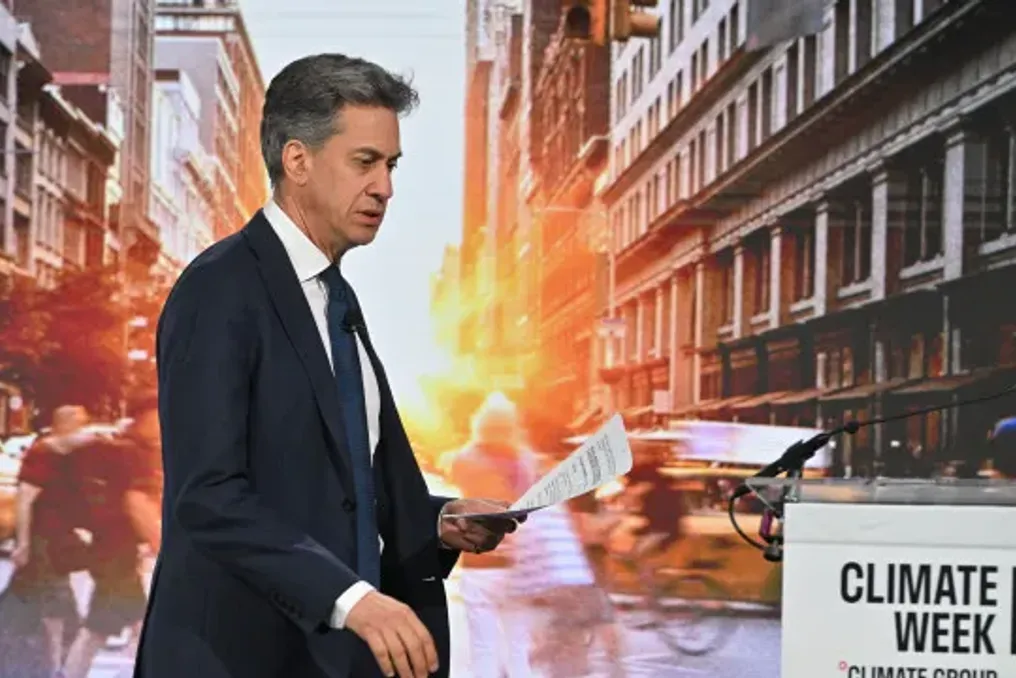
Minister states that the climate crisis is a military issue, not just an ecological one
At the official opening of Climate Week in New York, which runs concurrently with the UN General Assembly, the minister emphasized that the crisis related to fossil fuels became evident after Russia's invasion of Ukraine and the US-led war in Iran. He noted that this demonstrates the need to achieve energy independence through clean energy.
He stated that the climate crisis should be viewed not only by activists or environmentalists but also by foreign ministries, prime ministers, as well as ministries of energy and climate, and the security community.
The official also deemed the current situation unacceptable, citing examples such as a summer with record heat and wildfires in the Northern Hemisphere, deadly floods in Nepal caused by glacier melt, and the record El Niño phenomenon.
It was noted that climate and nature must be integrated into national security systems and country threat assessments. Furthermore, it was said that states are obliged to exchange information, as a crisis starting in one country can quickly spread through supply chains, financial markets, and migration flows.
Following Ed Miliband's speech, Australian Prime Minister Anthony Albanese began discussions, calling for action. He referenced his country's economy, which is heavily dependent on fossil fuels but is currently undergoing a rapid transition to renewable energy. Albanese stated: 'We cannot avoid the scale of our responsibility or the cost of inaction.'
Climate change is a key issue for UN Secretary-General António Guterres, whose mandate expires at the end of the year. He convened the world leaders' summit ahead of COP31, which will take place in Turkey in November.
Climate Week in New York is held annually during the UN General Assembly to accelerate climate action and decarbonization of the planet. It is organized by the non-governmental organization 'Climate Group'. The event concludes on the 27th, and its central theme is increasing electrification and phasing out fossil fuels under the slogan 'Energy. Impact. Action.' 'Climate Group' asserts that this week is the largest climate event in the world, gathering over 100,000 people annually for more than 1,000 events in New York.
noticiasaominuto.comSeptember 21, 19:41
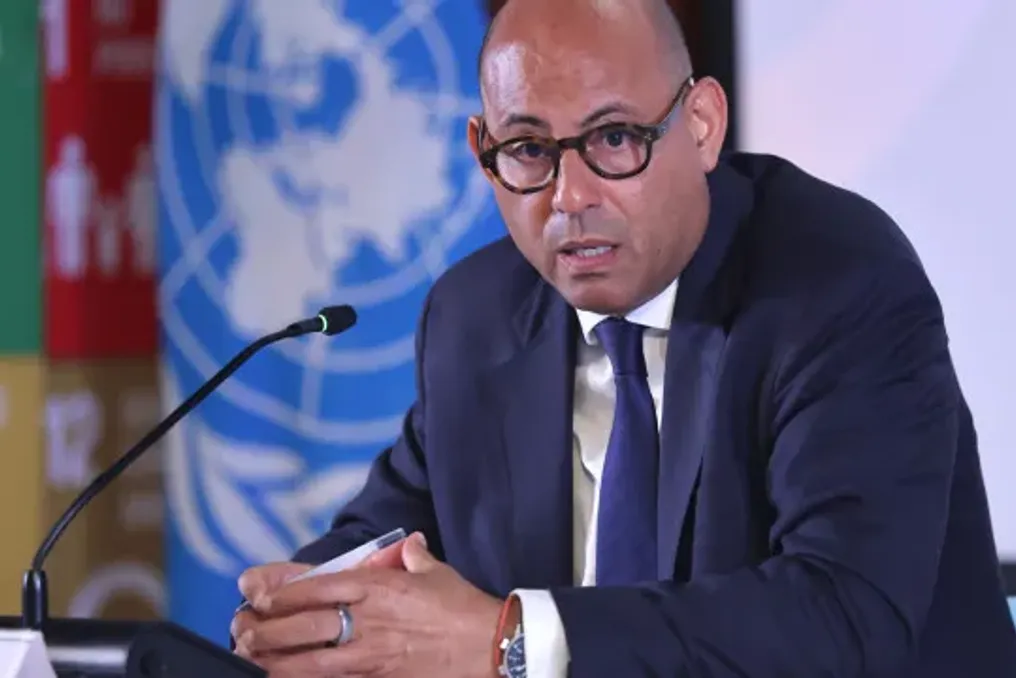
UN calls on tech companies to strengthen commitments in the fight against climate change
Simon Stiell spoke at the opening of the summit on accelerating industrialization in New York, which is part of the Industrial Transition Accelerator initiative launched at the UN Climate Summit (COP28) in Dubai. The goal of this initiative is to stimulate the decarbonization of the world's largest polluters.
He emphasized that artificial intelligence (AI) increases pollution caused by coal, oil, and gas, which warm the planet, and also raises energy costs for households and businesses.
Stiell stated that AI sector leaders are in a 'precarious position' as they are 'losing public support.' He added that 'tech giants must start demonstrating why the benefits of AI outweigh its exorbitant costs.'
Simon Stiell appealed to technology companies to take greater responsibility for climate action. He noted that 'if artificial intelligence can solve a mathematical problem in 90 years in just a few days, it can do much more to solve major climate problems.'
In particular, he highlighted the use of AI to enhance efforts to improve early warning systems for climate disasters or to accelerate grid efficiency.
Furthermore, the speaker stressed the importance of renewable energy, which allows avoiding millions in fossil fuel expenses. He recalled that last year, added renewable capacity reached a record high of 693 gigawatts.
He stated that any leader serious about fighting inflation, building a strong economy, and protecting their citizens must seriously address the reduction of fossil fuel use, which warms the planet and contributes to the climate crisis, and promote sustainability.
Recalling the global goal of limiting temperature rise to 1.5°C above pre-industrial levels, Simon Stiell warned that this goal will not be achieved. He noted: 'It is already clear that this limit will be exceeded, at least temporarily.'
Nevertheless, he stressed that 'UN-stimulated cooperation and national efforts' have lowered the projected global temperature rise from over 4 degrees to 2.6 degrees. He expressed regret, calling it 'undeniable, though insufficient progress to prevent catastrophe.'
Simon Stiell highly praised Turkey's chairmanship of the next UN Climate Summit, Conference of the Parties (COP31), which will take place in Turkey. He noted that a goal has been set to achieve 35% of global energy consumption from electricity by 2035. COP31 will be held from November 9 to 20 in Antalya.
noticiasaominuto.comSeptember 21, 19:37
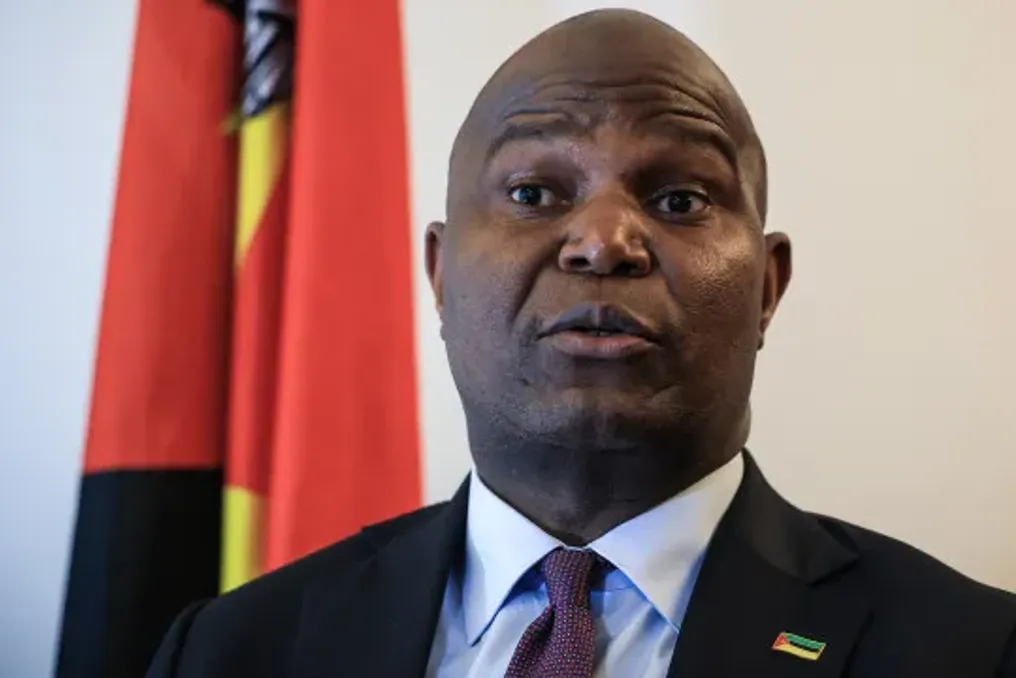
Daniel Chapo presented Mozambique's new energy phase in Brazil, focused on industrialization and investment
During his speech at the opening of the Rio Oil and Gas Forum 2026, Daniel Chapo highlighted investment opportunities in Mozambique and invited Brazilian companies to engage in the expansion of the country's energy industry and respective value chains.
The Head of State argued that the use of energy resources must go beyond simple exportation. He emphasized the need to invest in electricity generation, fertilizer and petrochemical production, in addition to boosting agricultural development and job creation.
Chapo stated: 'We want to produce and export energy, but above all, we want to use it to industrialize Mozambique, increase national production, develop agriculture and agribusiness, produce fertilizers, feed new industries, and create jobs.'
Additionally, he advocated for an energy transition that respects African development needs, arguing that the continent requires energy to industrialize, provide electricity to households, operate factories, and produce fertilizers. The president warned that 'the energy transition cannot mean a transition without energy,' as a just change will only occur if clean energy is accessible to all, avoiding energy poverty.
Natural gas was considered by Chapo as part of a 'pragmatic and responsible' transition, reinforcing that environmental sustainability and developmental progress must go hand in hand. In his presentation, he announced a new stage of making areas available for hydrocarbon research and exploration, supported by more solid geological data and an updated regulatory framework.
The President also mentioned the recently approved Petroleum Law, sanctioned in June, which aims to guarantee fiscal stability, legal predictability, regulatory transparency, and legal protection for investors. According to Chapo, this new legislation stipulates a minimum quota of 25% of oil and gas for domestic consumption and industrialization, aiming to meet the demand for electricity, fertilizers, petrochemicals, and feeding new industries.
He underlined the relevance of local content to foster Mozambican companies, promote technology transfer, and raise national participation in supply chains associated with large energy projects. Chapo reiterated that 'for Mozambique, exporting gas is part of the result, not the complete result,' arguing that the value of resources must also be measured by the electricity generated, the factories served, the jobs created, and the growth of local businesses.
The Mozambican leader directed special attention to Brazil, praising the country's experience in areas such as deep water, subsea systems, large-scale engineering, manufacturing, offshore logistics, maintenance, and supplier development. He stated: 'We are not just looking for suppliers. We are looking for partners,' encouraging partnerships, consortia, and associations between Mozambican and Brazilian companies that combine local knowledge with international experience.
In this scenario, Chapo welcomed the Memorandum of Understanding signed between the Brazilian state company Petrobras and the National Hydrocarbons Company (ENH), seeing it as a possible path for greater presence of the Brazilian oil company in Mozambique. Finally, he informed that ongoing energy projects amount to approximately 50 billion dollars (43.6 billion euros), and argued that Mozambique must convert its resources into industry, knowledge, jobs, and opportunities.