The Redmi Note 17 Pro 5G was launched in Brazil with a renewed design, a large capacity battery, and high resistance to impacts and water. This model succeeds the Redmi Note 15 Pro, released in January 2026, as Xiaomi opted to omit the 16 series.
The Redmi Note 17 Pro 5G was launched in Brazil with a renewed design, a large capacity battery, and high resistance to impacts and water. This model succeeds the Redmi Note 15 Pro, released in January 2026, as Xiaomi opted to omit the 16 series.
Although it features visual improvements and greater autonomy, the device has a less powerful processor than its predecessor and has seen reductions in both screen and camera quality. The reviewer assessed whether the new look, long battery life, and protections justify the more modest specifications and the price.
Tecnoblog, an independent journalistic outlet since 2005, provided the device loaned by Xiaomi for testing, without any advertising intent.
Upon unboxing the Redmi Note 17 Pro 5G, one finds the smartphone, a SIM tray ejector tool, a gray case (charcoal tone), a USB-C to USB-A cable, the 67W HyperCharge power adapter, and various manuals. The unboxing content follows Xiaomi's standard of providing all necessary accessories for immediate use.
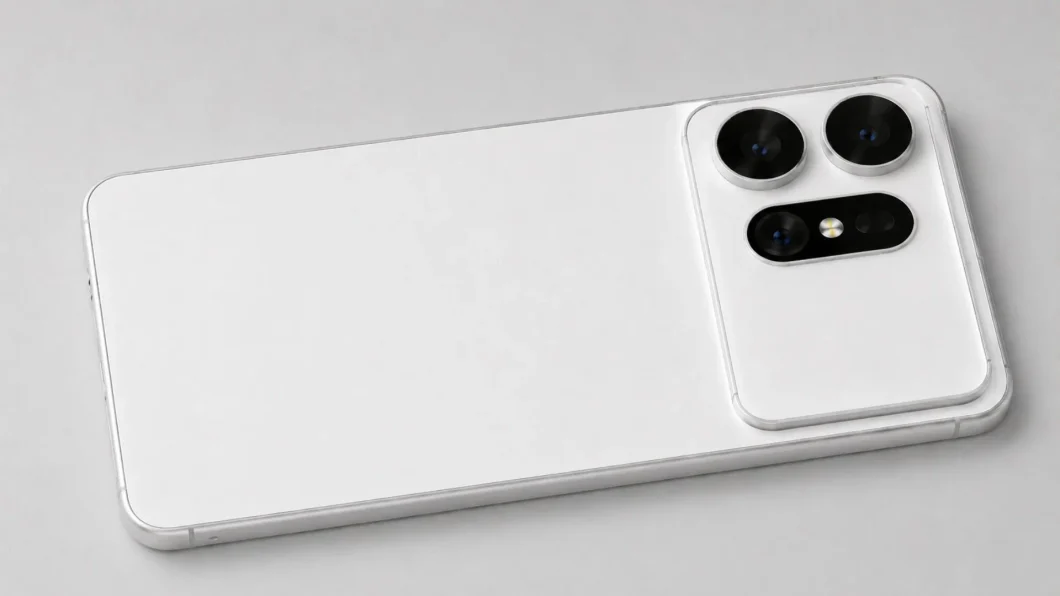
In line with the strategy to elevate the Redmi Note line to a more premium level, Xiaomi redesigned the rear camera module of the Redmi Note 17 series. This is a significant change from the previous model. The assembly, which previously had a glass-like frame and metallic rails, is now smaller and positioned further to the left, giving the phone a cleaner and more sophisticated appearance.
Despite the back and frame being made of plastic, the device features rounded corners for a more refined finish. It is slightly larger and heavier than the Redmi Note 15 Pro, which is attributed to its reinforced construction and large battery.
The global version received in purple, although attractive, will not be available in Brazil; local models will be available in black, sky blue, or satin orange, with these last options notable for their visual details on the casing.
Maintaining the durability tradition of the line, the Redmi Titan structure offers internal and external multi-layer protection. The motherboard was built with high resistance, and the design aims to absorb shocks. The Redmi Note 17 Pro 5G and its Pro Max variant are industry pioneers in obtaining the TÜV SÜD 5-star Titan Quality certification, which attests to reliability against drops, water, and battery performance.
Practical tests confirmed this robustness: the smartphone was dropped multiple times to validate the SGS certification against drops of up to three meters, without damage to the casing or the screen with Gorilla Glass Victus 2 and pre-applied film. Furthermore, it resisted IP66, IP68, IP69, and IP69K protection challenges, being subjected to beach sand, moderate rain, and immersion in a water container, maintaining full functionality.
The display is a 6.83-inch AMOLED screen, with 1.5K resolution (2772 x 1280 pixels) and a 120 Hz refresh rate. Although the specifications are identical to the previous model, the brightness has been increased to 3,500 nits (an increase of 500 nits), providing excellent visibility under direct sunlight or in indoor environments.
The overall user experience was positive, with the 120 Hz refresh rate ensuring smooth navigation. The combination of the DCI-P3 gamut with 12-bit color depth results in vibrant colors. However, a negative point is the absence of support for HDR10+ and Dolby Vision, features that optimize contrast and brightness and were present in the previous generation, only reaching the Pro Max variant in the new line.
Conversely, the screen incorporates certifications against blue light emission and flickering, which is beneficial for eye health during prolonged screen use.
The audio system presents contrasts. Stereo speakers located on the top and bottom edges offer better sound balance compared to devices with ear-piece speakers. However, the bass is subtle, making it less suitable for genres like hip-hop or funk. Highs can sound shrill at very high volumes but perform well around 70%.
The overall volume is loud; at 100%, the sound is audible in distant rooms. There is a feature that amplifies the volume by 300%, although this level causes sound distortion, which may be useful in noisy environments.
The main camera setup includes a 50MP wide-angle lens (f/1.8) and an 8MP ultrawide lens (f/2.2). The front camera has a 16MP wide-angle lens (f/2.4). This latter point represents the second downgrade of the Redmi Note 17 Pro, as the wide-angle has a smaller sensor, fewer megapixels, and a reduced aperture, which hinders light capture, especially at night. The selfie camera also has fewer MP and a smaller aperture than the previous version.
In good lighting conditions, photos are honest, displaying good color reproduction and skin tones, while preserving shadow details and textures. HDR contributes to a good exposure balance. Without a telephoto lens, the digital zoom up to 10x is not ideal, and it is recommended to photograph nearby objects. Indoor and night photos suffer from loss of sharpness and excessive noise processing.
A disappointing aspect was the limitation to Full HD at 30 fps recording, given that the Redmi Note 15 Pro records in 4K. Although the videos are acceptable, they would be better at 60 fps. Optical Image Stabilization (OIS) provides good stability during recording. The underwater mode and dual recording modes are positive differentiators.
The smartphone operates with the Snapdragon 6s Gen 4 (4 nm) processor. Available configurations include 6 GB of RAM with 256 GB of storage or 8 GB of RAM with 512 GB of storage, both using LPDDR4X RAM and UFS 3.1 storage. The tested model was global, with 6 GB of RAM (LPDDR4X) and 128 GB of internal memory (UFS 2.2).
Performance surprisingly impressed, handling games like Call of Duty: Mobile and Genshin Impact well at maximum graphics, and basic editing in CapCut. Even with 6 GB of RAM, the device did not freeze when multiple applications were open. However, the specifications show a drop in firepower: while the Redmi Note 15 Pro reaches up to 2.6 GHz with the MediaTek Dimensity 7400-Ultra, the Redmi Note 17 Pro reaches only 2.4 GHz with the Snapdragon 6s Gen 4.
Geekbench 7 tests placed the device on the same level as the Redmi Note 13 Pro and Pro+, launched three years ago. Therefore, the Redmi Note 17 Pro 5G is recommended for less demanding activities, such as browsing, streaming, and light gaming. The 8 GB variant is recommended to prevent multitasking issues.
The factory operating system is HyperOS 3, based on Android 16. Although it contains several unwanted pre-installed applications, the system is intuitive and fluid. The AI tools work reasonably, focusing on image editing (such as AI Erase Pro and AI Image Expansion), lacking simpler features like audio transcription and automatic translation. HyperIsland, a proprietary version of the iPhone's Dynamic Island, is a useful addition for quick commands.
Xiaomi guarantees up to six years of security updates for the phone, protecting it until 2032. A major strong point is the 8,340 mAh silicon-carbon battery, representing an increase of approximately 26% over the previous model. In the author's experience, the battery lasted about 46 hours between full charges, with 7 hours and 30 minutes of screen-on time in mixed use. In continuous video playback (brightness at 70%, volume at 40%), the duration reached an impressive 26 hours and 50 minutes.
The recharging time with the 67W HyperCharge adapter was 1 hour and 20 minutes. Additionally, the phone functions as a power bank, supporting reverse charging up to 22.5W.
It has become evident that Samsung is preparing a new device for the Galaxy S line next year, and several details suggest promising improvements. The Galaxy S27 Pro was identified in filings by the Chinese regulatory body 3C (China Compulsory Certificate) with a battery capacity exceeding the 5,000 mAh of the current Galaxy S26 Ultra. According to GSMArena, this certification also attests to support for 60W fast charging.
Although the Galaxy S27 Pro has not been officially launched, this filing adds information to the knowledge about the probable device, which should occupy a lower position than next year's Ultra model. The nominal capacity registered in the 3C is 5,087 mAh, but, following common practice among mobile phone manufacturers, it is expected that Samsung will advertise this component as a 5,200 mAh battery.
This value represents an increase of 200 mAh compared to the Galaxy S26 Ultra, which has a 5,000 mAh battery, despite being positioned as a smaller version.
The Galaxy S27 Ultra also appeared in the 3C filings. This model was listed with a nominal capacity of 5,534 mAh, potentially marketed in the range of 5,700 mAh. If this is confirmed, there will be an increase of 700 mAh compared to the previous generation.
Despite the increase in battery capacity, Samsung is unlikely to make significant changes to charging speed. The filings indicate that both the Galaxy S27 Pro and the S27 Ultra will maintain support for 60W wired charging, which is the same maximum power seen in the Galaxy S26 Ultra.
Before obtaining certification, the Galaxy S27 Pro had already emerged in representations based on CAD files. These images show a device with dimensions of 154.06 x 73.77 x 7.95 mm and an estimated screen size of 6.6 inches. This means the smartphone would be about 9 mm thinner and 5 mm narrower than the S27 Ultra.
The most notable change lies in the camera arrangement. Instead of the narrow, elevated vertical module, the company may opt for a design similar to the iPhone 17 Pro, which occupies almost the entire upper area, reminiscent of the solution adopted by the Xiaomi 17 Pro.
Regarding the cameras, leaks suggest that the Galaxy S27 Pro may share part of the setup with the S27 Ultra, including the 200MP main camera and the 50MP ultrawide. The distinction would be in the telephoto lens, which would have a 12MP sensor with 3x optical zoom, in contrast to the more advanced periscope system of the Ultra.
Leaked information points to the use of the Snapdragon 8 Elite Gen 6 Pro processor. Samsung may also implement the Exynos 2700 in certain markets, but this regional division has not yet been confirmed. The device is expected to come equipped with between 12 GB and 16 GB of RAM.