Uzbekistan's Cultural Heritage Agency Responds to Alisher Kadyrov's Criticism on Preserving Historical Sites
Read more
Podrobno.uz [uz]
podrobno.uz

Uzbekistan's Cultural Heritage Agency Responds to Alisher Kadyrov's Criticism on Preserving Historical Sites

The Cultural Heritage Agency of Uzbekistan has provided an official response to statements made by Alisher Kadyrov, the leader of the 'Milliy Tiklanish' party, concerning the preservation of historical monuments and the allocation of state financial resources.

Kadyrov previously expressed the opinion that the state should adopt a differentiated approach to cultural heritage sites, giving primary attention to preserving national heritage. He also expressed doubt about the significance of one of Tashkent's ancient buildings, calling it a residence of a Russian artist, and compared its value to the Shah-i-Zinda monument.

Representatives of the Agency stated their readiness to accept criticism and participate in parliamentary oversight, but emphasized the need to verify public statements based on factual data and documentation.

According to the agency, 4.2 billion soums were allocated from the state budget for the Sarmyshsay site. These funds allowed for the creation of two entry points and information centers, the development of a 2.5-kilometer trail to the petroglyphs, the installation of five shelters, the organization of parking, a lighting system, and video surveillance. Additionally, 1.2 billion soums from the Agency's Fund were directed towards building a visitor center and a control point.

In response to remarks about the condition of Shah-i-Zinda, the Agency reported that repeated measurements did not reveal the appearance of new serious deformations in the entrance portal. The previously recorded deviation from the vertical axis, which was 46 centimeters on one side and 31 on the other, decreased by 4 and about 8 millimeters respectively after re-inspection.

According to the Ministry of State Tourism and Spiritual Development (Mingtеpe), some land decisions regarding the monument were made before it was included in the National List in 2019. 1.2 billion soums are allocated for its protection and museumification during 2024–2025.

Furthermore, the Agency clarified that the Quran manuscript located in Bukhara is stored in the archive of the 'Bukhara' museum-reserve on the first floor of the Ark fortress, which complies with established requirements for storing museum collections. International experts are planned to be involved in the conservation and restoration of this manuscript.

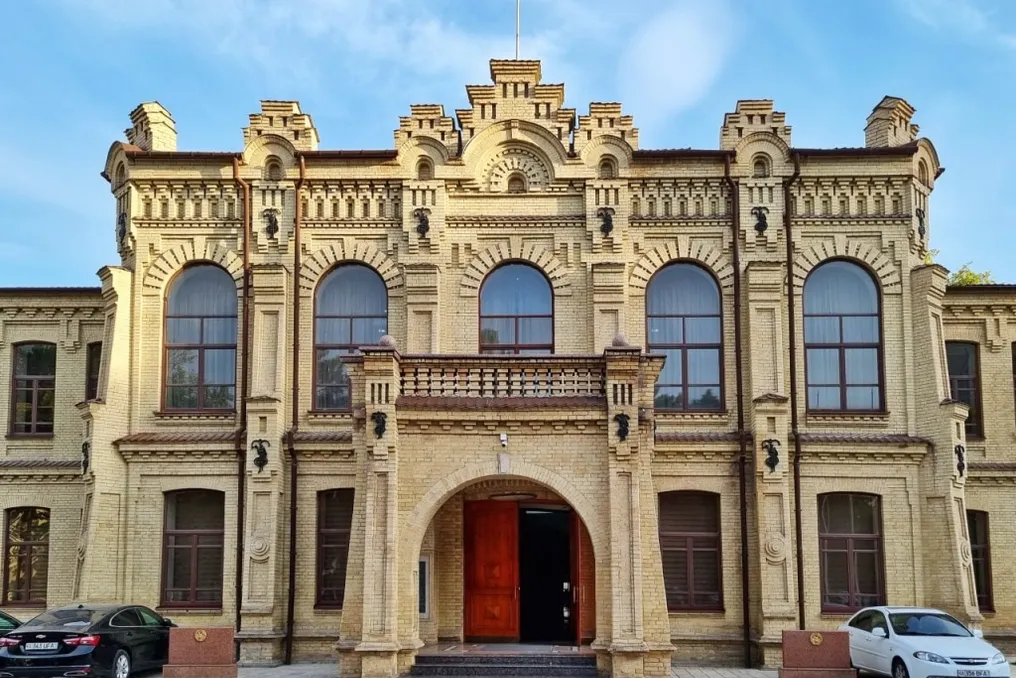
The building at Babura Street, 7, was also separately reviewed. According to the Agency's data, this structure was built in 1935 and is associated with architect Alexey Shchusev. In 2020, it was included in the National List of Cultural Heritage Sites, and in 2021, the proposal to exclude this object from the list was rejected.

Nevertheless, the Agency noted that funds from the republican budget for this object have not been received to date. On September 8, the agency sent a request to the Prosecutor General's Office asking for a legal assessment of the circumstances related to this building.

In the first half of 2026, 79.4 billion soums were allocated for archaeological research, restoration, repair, and reconstruction of cultural heritage sites. Of this amount, 77.6 billion has been utilized, accounting for 97.7%, with contracts concluded for 60 different sites.

The Agency assures that it is ready to provide the public and parliament with all necessary information regarding the legal status of the sites, the results of expert examinations, funding volumes, and completed works.
Similar stories

Islam Kaparzo refutes the thesis of Uzbek culture's priority over the heritage of other peoples
Read more
podrobno.uz

Islam Kaparzo refutes the thesis of Uzbek culture's priority over the heritage of other peoples

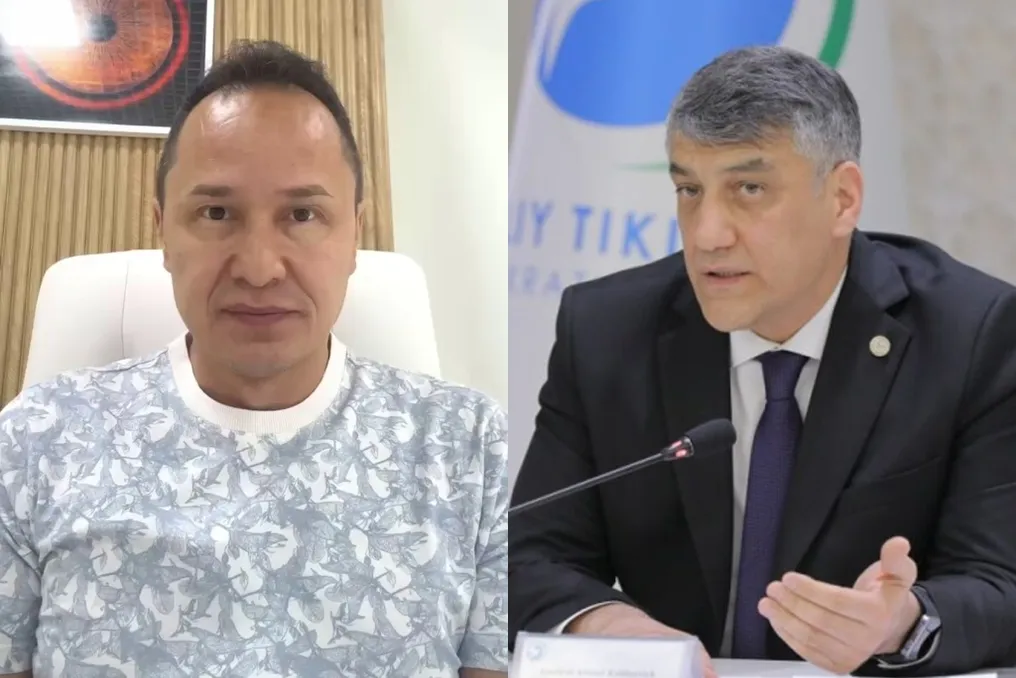
Blogger and public figure Islam Kaparzo issued an ironic comment in response to a statement by Alisher Kadyrov, leader of the 'Milliy Tiklanish' party. Kadyrov expressed doubts about the value of preserving a certain object, which he called the 'house of a Russian artist,' as an element of cultural heritage.

Kaparzo suggested that if one follows Kadyrov's logic and applies it to all historical buildings in Tashkent, there would be a need to check the nationality of everyone who ever created something on Uzbek territory—including architects, engineers, composers, and artists.

Examples from Tashkent's History

As an illustration, Kaparzo cited the State Academic Grand Theatre named after Alisher Navoi in Tashkent, which was built according to the design of architect Alexey Shchusev. The blogger questioned whether this theatre should be demolished or if it remains part of the heritage.

He also recalled numerous other historical buildings in the capital created by specialists of various origins. He paid special attention to the period of the city's reconstruction after the 1966 earthquake, when specialists from different Soviet republics participated in construction. Kaparzo emphasized that constant control over the origin of building creators would lead to absurdity: 'Walking through the city with a notebook and finding out: this house was built by an Uzbek—we keep it; this was designed by a Russian—it's questionable; an Armenian worked here—we need to think about it; a Ukrainian is here—we form a special commission.'

In Kaparzo's opinion, defining cultural heritage should not be based solely on the nationality of its creator. He stated: 'Culture is not DNA analysis. Uzbek culture is everything that was created on this land, became part of its history, and influenced the people who lived here.'

The Discussion Surrounding Yesenin House-Museum

The blogger used the Sergei Yesenin House-Museum in Tashkent as an example, which is currently the subject of public debate due to extensive renovations. Kaparzo argued that the museum of the Russian writer is not part of 'foreign culture' because Yesenin's fate was closely linked to Tashkent. He explained: 'If a person lived, wrote, or worked here, or interacted with local people, if their fate was connected to Tashkent, it is already part of Tashkent's history.'

It is reported that the Yesenin House-Museum was closed for major repairs in autumn 2025. Although completion was initially expected by the end of December, the museum has not yet reopened. Previously, residents of Tashkent appealed to Saida Mirziyoyeva to intervene in this situation.

Kaparzo also stressed that preserving Uzbek culture does not preclude recognizing the heritage of other peoples. He noted that 'to love Navoi, it is not necessary at all to hate Pushkin. To be proud of Uzbek culture, it is not necessary at all to erase Russian or any other.'

Context of Kadyrov's Statement

Kaparzo's reaction followed criticism of Alisher Kadyrov's approach to protecting certain cultural heritage sites. The politician stated that an old building in the center of Tashkent, in his opinion, does not possess sufficient significance for society, despite official protection. Kadyrov referred to this structure as 'some house of a Russian artist' and expressed incomprehension about its value to Uzbekistan, saying: 'It needs to be removed. Why do we need it? What value does it represent to us as a cultural heritage object?'

The reason for this video was Kadyrov's speech, in which he called on the Agency for Cultural Heritage to make differentiated decisions regarding objects and, first and foremost, direct budget funds towards preserving national culture. However, Kadyrov did not specify which building he was referring to.

Popular