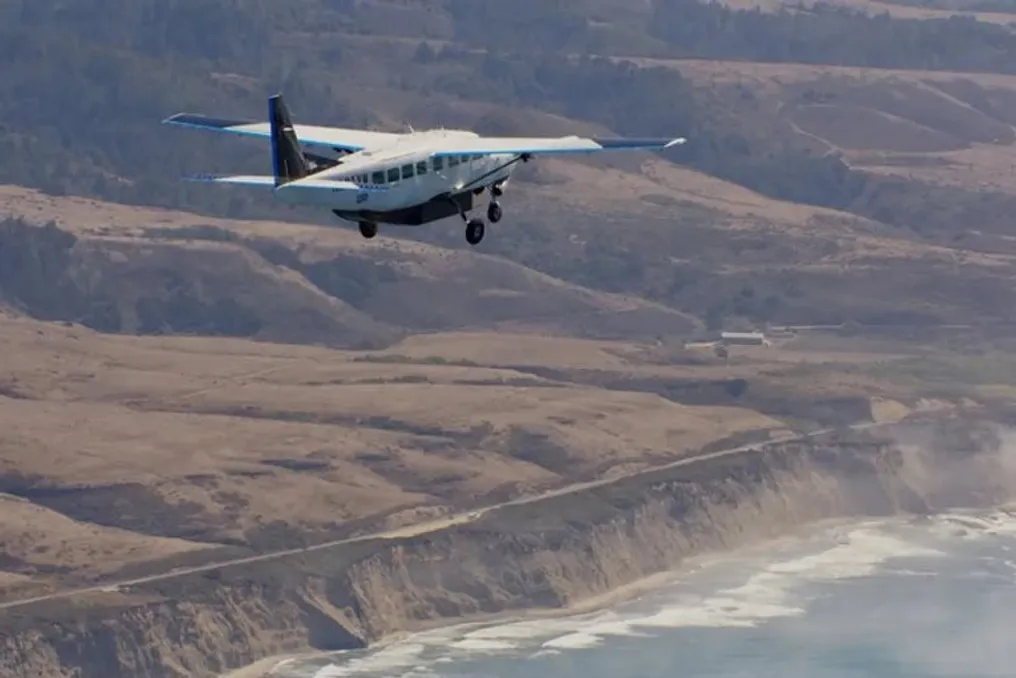
The aircraft, equipped with autonomy technology from Joby Aviation, traveled over 3,100 miles (about 5,000 km) across the United States without the need for pilot intervention. This test flight was conducted on a modified Cessna Caravan and was remotely monitored in California and South Carolina.
The demonstration showed that the company's technology can be applied not only in the field of electric air taxis. According to Joby's statements, the system can also be used for medical transport, disaster response, defense logistics, and commercial cargo transport.
During the flight, the Cessna Caravan was modified to integrate Joby's autonomy system. The aircraft independently completed all stages of the route, including taxiing, takeoff, navigation, and landing. Although a pilot was on board to comply with certification requirements, they never took control.
The operation was controlled remotely by a Joby team in California and at Shaw Air Force Base in South Carolina. The company called this trip the 'first coast-to-coast flight across the United States.'
The aircraft is planned to make the return journey to the West Coast within the next two weeks, with stops in cities such as Louisville, Kentucky, and Salt Lake City. The technology is designed to be installed on various traditional aircraft. Joby intends to first bring to market a regional aircraft equipped with this system, which could potentially be used in defense missions and for commercial cargo transport.
The flight also demonstrated the autonomous system's ability to operate in various conditions and perform different tasks. Joby is primarily known for developing electric vertical take-off and landing (eVTOL) aircraft designed to transport passengers on short urban routes. Furthermore, the company maintains long-standing relationships with the U.S. Department of Defense and is expanding its activities in this sector.
The development of the autonomous system includes a $17 million contract (about 87 million Brazilian reais) from the U.S. Air Force through the AFWERX program. Joby plans to use this technology on a regional aircraft that can also serve commercial cargo transport. In August, Joby acquired Resonant Sciences for $500 million (about 2.56 billion Brazilian reais) in cash and stock. The company, based in Ohio, develops radio frequency and sensor systems and has integrated them into Joby's defense division.
This division combines projects involving hybrid electric aircraft powered by turbines, hydrogen fuel models, and autonomy systems. Last year, Joby entered into an agreement with L3Harris Technologies to 'study the capabilities' of developing a new class of aircraft for defense needs. The proposal includes a hybrid VTOL model powered by a gas turbine capable of flying autonomously.
The cross-country flight across the United States elevates Joby's autonomy technology to a larger operational level while the company continues to develop its electric air taxis. This material was originally published in Olhar Digital.