
Nothing will not sell CMF, turning it into an Indian company with a majority of Indian shareholders
Read more
Business Standard
business-standard.com

Nothing will not sell CMF, turning it into an Indian company with a majority of Indian shareholders

Co-founder and CEO of Nothing, Carl Pei, stated on social media on Monday that the Nothing company will not spin off CMF into an independent structure based in India.

The new organization will be controlled by Indian shareholders and will have its own team and research and development operations in India. However, Nothing will retain its stake and remain a partner in this company.

Carl Pei emphasized that CMF will cease to be merely a product line within the London company and will become an independent corporation registered and managed in India, with control held by the majority of Indian shareholders.

CMF was initially launched by Nothing as a more affordable consumer electronics brand. According to Pei, CMF relied on engineering and product developments created by Nothing itself and became the fastest-growing smartphone sub-brand in India in 2025.

The long-term goal for CMF, according to Pei, is to create a business capable of releasing 100 million phones annually. He noted that such a scale would allow the company to influence the electronics supply chain. '100 million a year is the boundary between a brand and a platform. Below that, you are a consumer of the supply chain. Above that, you are the reason for its existence,' he stated.

This move comes as India becomes the second-largest global hub for smartphone manufacturing. The company aims to create a consumer electronics brand that develops products and intellectual property directly in the country (India), rather than manufacturing goods designed elsewhere.

Pei added that the new company will bring engineering capabilities, an operating system, supplier relationships, and global branding experience from Nothing. In turn, India will provide the manufacturing base, talent pool, and domestic market. 'Being a partner means the company is Indian: owned in India, managed from India, designed in India,' he clarified.

Over the last decade, India has significantly expanded its electronics manufacturing capacity, especially in the smartphone segment. According to government and industry data cited by Pei, about 99 percent of smartphones sold in India are now manufactured domestically, whereas ten years ago there were almost none.

Nevertheless, Pei believes that the next stage of India's electronics industry development must go beyond mere assembly and manufacturing, moving towards product development and R&D. 'Manufacturing is the first step. The second step is R&D: the ability to set more complex tasks for suppliers and attract the entire value chain to the country,' he noted.

India has a domestic market that absorbs over 150 million smartphones annually and is increasingly positioning itself as an electronics export base. Pei reported that the country possesses the necessary manufacturing infrastructure and talent to support the next phase of the industry, but it lacks a major domestic consumer electronics brand around which a broader engineering ecosystem could develop.

Similar stories

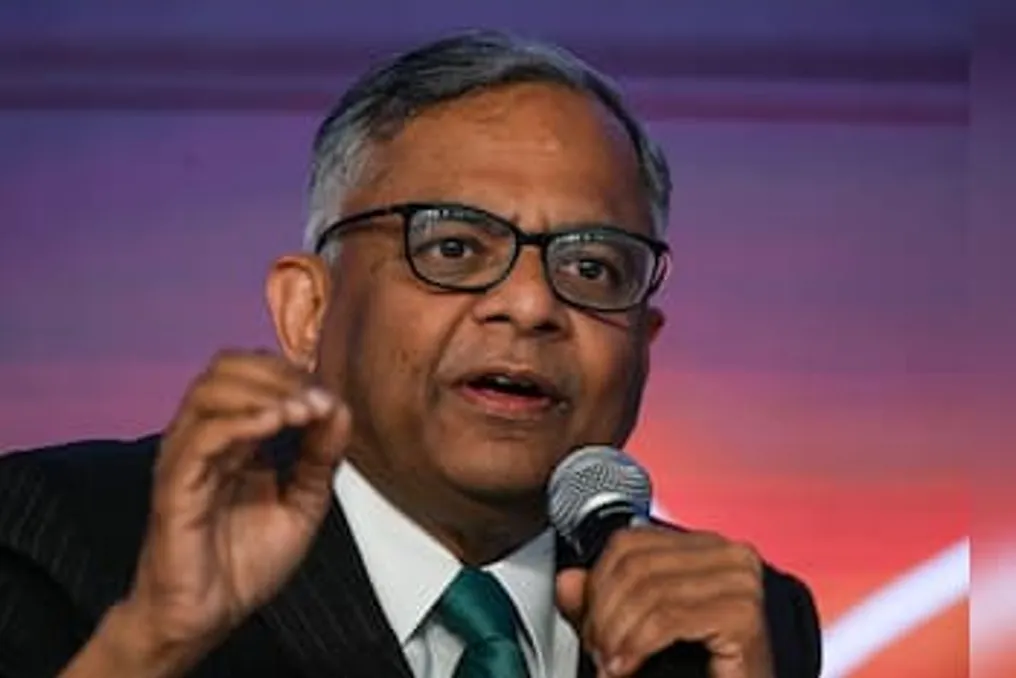
Tata Sons Board to Consider Retaining Natarajan Chandrasekaran Amid Reserve Bank of India's IPO Demand
Read more
business-standard.com

Tata Sons Board to Consider Retaining Natarajan Chandrasekaran Amid Reserve Bank of India's IPO Demand

The board of the Tata Group holding company plans to hold a meeting on Thursday to discuss how to respond to the requirement put forward by the central bank of India regarding listing. Among the issues to be considered will be the possibility of asking the incumbent chairman, Natarajan Chandrasekaran, to remain in his post.

According to informed sources, the discussion of the Nomination and Remuneration Committee's recommendations has been suddenly added to the agenda. This committee is expected to propose a review of Chandrasekaran's resignation decision, according to anonymous individuals discussing internal affairs.

The Reserve Bank of India's (RBI) refusal to relax listing rules for Tata Sons Pvt has turned a routine board meeting into a discussion about the strategic future of the company.

Chandra, as he is often called, announced last month his plans to step down at the end of his term in February, which forced the group to prepare for a change in leadership. His planned departure followed months of disagreements with Tata Trusts chairman Noel Tata over the issue of listing and capital distribution within the vast corporation.

A representative of Tata Sons did not immediately respond to requests for comment.

Previously, Tata Sons had requested an exemption from the listing requirement to avoid closer regulatory scrutiny and expanded public disclosure. A public float could require the holding company to disclose a much larger volume of data on the finances and management of its diverse enterprises—from steel and automobiles to software, aviation, and consumer goods—and could weaken the influence of Tata Trusts, the group of charitable organizations controlling the company.

After rejecting Tata Sons' request for exemption from the initial public offering, the RBI also filed a caveat in the Bombay High Court to ensure that its position would be heard before any decision is made if Tata Sons seeks legal recourse, as reported by The Economic Times. This newspaper first reported the possibility that the NRC might ask Chandraraj to reconsider his decision on Sunday.

InGovern Research, a proxy voting consultant, stated in a September 16 report: 'Tata Sons and Tata Trusts should work on the Tata Sons IPO, not continue protracted litigation or seek alternative structures aimed at maintaining non-listed status.' It also noted: 'The RBI demonstrated its persistence by filing a caveat in the Bombay High Court.'

Tata Group values its current ownership structure, asserting that it allows the business to look at its portfolio in the long term without pressure from the public market. The group, with revenues of $185 billion, controls more than two dozen listed companies and plays a key role in India's high-tech ambitions, having committed to manufacturing the first indigenous semiconductor chips.

The RBI's demand for a public float aligns with long-standing requests from the Shapoorji Pallonji Group, the largest minority shareholder of Tata Sons, who is facing financial difficulties and has insisted on listing to unlock the value of their 18.4% stake.

Besides providing liquidity for the SP Group and other listed Tata companies holding stakes in Tata Sons, listing will provide flexibility in raising capital and 'subject Tata Trusts' special rights to closer scrutiny,' according to InGovern Research.

Indian firm to acquire 73-year-old African company for 13,000 crore rupees; stock impact expected
Read more
www.aajtak.in

Indian firm to acquire 73-year-old African company for 13,000 crore rupees; stock impact expected

Although the stock market is closed on Monday, attention will be focused on Solar Industries' shares on Tuesday when trading resumes on Sensex-Nifty. This is due to a major deal in which the company plans to acquire a South African firm. The transaction is valued at approximately 13,000 crore rupees, and its impact may be reflected in the company's share price.

Solar Industries has a significant presence in the domestic market. This Indian company manufactures industrial explosives for the mining and infrastructure sectors, as well as supplies products related to the defense sector. Information about the new deal was published by Solar Industries on Monday. According to the announcement, the parent company, Solar SA Investments Proprietary Limited, intends to acquire all indebted shares of Omnia Holdings Limited, a South African company specializing in industrial explosives and fertilizers, pending necessary regulatory approvals.

Solar Industries specified that the acquisition of Omnia will be made entirely in cash for approximately 1.355 billion US dollars (equivalent to about 12,951 crore rupees).

Omnia Holdings Limited is headquartered in South Africa and is listed on the Johannesburg Stock Exchange (JSE). Omnia's operations began 73 years ago. The company possesses specializations and solutions in the mining and agricultural sectors. Omnia operates in 23 countries worldwide, providing services through more than 70 centers in key international markets, including Southern and West Africa, Australia, the United States of America, Canada, Brazil, and Indonesia.

In the last fiscal year, Omnia's revenue was approximately 1.41 billion US dollars (about 13,307 crore rupees). Meanwhile, Solar Industries' net profit in the first quarter of the current fiscal year increased by 93%, reaching 653 crore rupees.

Generally, when any company enters into a major deal or related news emerges, it often leads to changes in its stock value. Consequently, Solar Industries' shares involved in the 12,951 crore rupee deal are under close scrutiny, and it is expected that some change will occur on Tuesday when the stock market opens.

Previously, on Friday when the Solar Industries stock market closed, the price was 22,350 rupees. During intraday trading, this asset started moving from 22,300 rupees, rising to 22,500 rupees. The current market capitalization of this company is 2.02 lakh crore rupees, and the five-year price high reached 22,625 rupees.

Solar Industries stock is listed among the country's expensive stocks and provides consistent returns to its investors. This is evidenced by the return rate achieved by investors who invested in Solar Industries Shares. Over the past five years, this asset has grown by 1029%, and the stock price has increased from 1,979 rupees to 22,350 rupees. Furthermore, there has been strong growth in the stock price over the last six months by 59%, and in one month, it provided investors with a return of 12%.

Popular