
Parivartini Ekadashi 2026: Date of Celebration, Worship Time, and Fast Completion Time
Read more
Aaj Tak
www.aajtak.in

Parivartini Ekadashi 2026: Date of Celebration, Worship Time, and Fast Completion Time

Parivartini Ekadashi is observed in the month of Bhadrapada, during Shukla Paksha, as Ekadashi. This festival is also known as Padma Ekadashi and Jayanti Ekadashi. According to religious beliefs, observing this fast helps rid oneself of sins committed intentionally or unintentionally. On this day, worship is performed to Vamana, an incarnation of Lord Vishnu. Special significance is given to worshipping Lord Ganesha and Shrihari during Ganesh Mahotsava.

The date of Ekadashi in Shukla Paksha of the month of Bhadrapada will begin on the evening of September 21st at 20:01 and last until 21:43 on September 22nd. According to the rising date, the Parivartini Ekadashi fast will be observed on Tuesday, September 22nd. It is believed that honoring Vamana, an incarnation of Lord Vishnu, on this day brings special merits. This fast is also considered beneficial for those who desire progeny and financial well-being.

On this day, Brahma Muhurta will start at 4:35 AM and last until 5:22 AM, during which one can bathe and decide whether to observe the fast. The auspicious time for worshipping Lord Shrihari is set from 9:11 AM to 1:45 PM. The completion of the fast is scheduled for the next day, September 23, 2026. Fasting individuals can break the fast anytime between 6:10 AM and 8:35 AM after performing all rituals.

It is necessary to take a bath early in the morning and offer water to the Sun god. Then, dressed in yellow clothes, one should worship the gods Ganesha and Vishnu. First, Modak and Durva are offered to Ganesha. After that, yellow flowers, Panchamrit, and Tulsi leaves are offered to Lord Shrihari. During worship, mantras should be recited first to Ganesha, and then to Vishnu. On this day, it is also recommended to donate to needy people according to one's means—water, grains, clothing, footwear, or umbrellas. During the fast, consuming solid food is prohibited; traditionally, the fast is observed on fruits or water.

Special practices exist to achieve different goals. If a person desires progeny, they can offer Modak to Ganesha in a quantity equal to their age on Parivartini Ekadashi, and also recite Shantan Ganapati. Additionally, one can repeat the mantra 'Om Umaputray Namah'. To attract financial success, it is recommended to offer a mouse made of clay or metal to Ganesha, and also offer yellow flowers and yellow prasad. After this, one must repeat the mantra 'Om Shrim Saumyai Saubhagyay Gam Ganapataye Namah' 108 times, and then place the mouse in the money storage area.

To achieve business success, one should create a small statue of Ganesha from turmeric. Then, Modak, Durva, and Belapatra are offered to Ganesha. Upon completion of the ritual, this turmeric statue is placed in the place of business. It is believed that this promotes success in trade.
Similar stories

Information on the auspicious time to celebrate Hartalika Teej in 2026, including times for worship and fasting completion
Read more
www.aajtak.in

Information on the auspicious time to celebrate Hartalika Teej in 2026, including times for worship and fasting completion

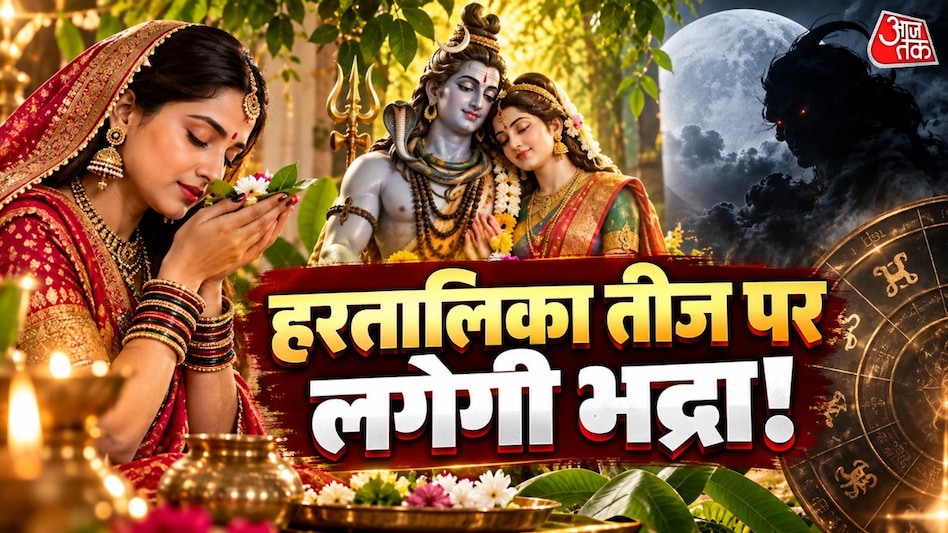
In 2026, the Hartalika Teej fast will be observed on September 14. This significant fast falls on a rare confluence of circumstances as it occurs on a Monday, which is Lord Shiva's favorite day. Additionally, Ganesha Chaturthi is celebrated on this day. It is important to note that the influence of Bhadra will also be present during this period.

According to the Hindu Panchang, the date of Bhado Shukla Tritiya this year will begin on September 13 at 7:08 AM and conclude on September 14 at 7:06 AM. Based on the rising date, the Hartalika Teej fast will be observed on September 14, a Monday.

This year, the influence of Bhadra will be active during the Hartalika Teej fast. According to the Dik Panchang, Bhadra Kala will commence on September 14 at 7:20 PM and end on the following day, September 15, at 6:06 AM.

Some people are concerned that Bhadra Kala will be active during evening rituals and at the completion of the fast the next day. However, astrologers assert that this Bhadra will not be on the Earth's surface, so it will have no effect on the Hartalika Teej fast. Therefore, worship of the deities can be performed during Pradosha Kala on the evening of September 14, and the fast can be concluded during Abhijit Muhurta the following morning.

There are several auspicious time intervals for performing rituals: Brahma Muhurta—from 4:32 to 5:19 AM; Highest Muhurta—from 6:05 to 7:06 AM; Daytime Worship Muhurta—from 11:52 AM to 12:41 PM; and Evening Worship Muhurta—from 6:28 PM to 7:37 PM. The time for completing the fast is set from the sunrise on September 15 until 7:44 AM.

At the beginning of the day, after bathing, one should take the vow of fasting and worship. Proper worship of Lord Shiva and Mother Parvati must be performed. Throughout the day, one should listen to mantras, participate in worship, and listen to stories. In the evening, using clay to create figures of Shiva and Parvati, and cow dung to create a figure of Ganesha, they should be worshipped during Pradosha Kala. On this day, married women should adorn themselves with sixteen types of ornaments and also bring ornaments for Mother Parvati. During the worship, new clothes, bamboo and Dlia baskets, ornaments, incense, lamps, offerings, fruits, and white sweets should be used. After this, Aarti should be performed for Lord Shiva and Mother Parvati, the story of Hartalika Teej should be listened to, and the deities' mantras should be chanted.

फिल्ड:
Ganesh Chaturthi 2026 Date and Time: Information on Auspicious Installation Time and Devotional Rituals
Read more
www.aajtak.in

Ganesh Chaturthi 2026 Date and Time: Information on Auspicious Installation Time and Devotional Rituals

Every year, the Ganesh Chaturthi festival begins on the fourth day of the lunar month Bhadrapada and concludes on Anant Chaturdashi. Typically, this festival lasts for about ten days, but due to date changes, there may sometimes be a difference of one or two days.

During the celebration, followers worship Lord Ganesha, praying for peace, prosperity, affluence, and deliverance from life's difficulties. People install a statue of Ganesha at home for a period ranging from three to five, seven, or a full ten days, according to their faith and convenience, after which they perform the immersion ritual (Visarjan) of the statue according to established rules.

If you plan to install Ganesha in your home this year, Pandit Pravin Mishra has provided information regarding what the statue should look like, what time is auspicious for installation, what materials are needed for worship, and what to pay attention to during the installation.

When will Ganesh Utsav begin?

This time, Ganesh Utsav will start on September 14, 2026, and conclude on September 25, 2026, on the day of Anant Chaturdashi, when the statues of Ganesha will be immersed.

Auspicious Time for Installing Ganesha

The time for installing Ganesha is considered very important. The auspicious moment for installing the Ganesha statue on September 14, 2026, falls between 11:03 AM and 1:31 PM. During this time, the installation and worship of Lord Ganesha can be performed according to all rituals.

What to note if bringing Ganesha home for the first time

If you are bringing Ganesha into your home for the first time, you must first thoroughly clean the premises. Special attention should be paid to the place where the Ganesha statue will be installed. After that, the house can be decorated with flowers, leaves, and torans to welcome Ganesha. It is also considered auspicious to draw a Swastika symbol at the main entrance of the house.

For the installation of Ganesha, a clean platform should be prepared and covered with a new red or yellow cloth. This is the platform upon which the Ganesha statue is placed.

What should the Ganesha statue look like?

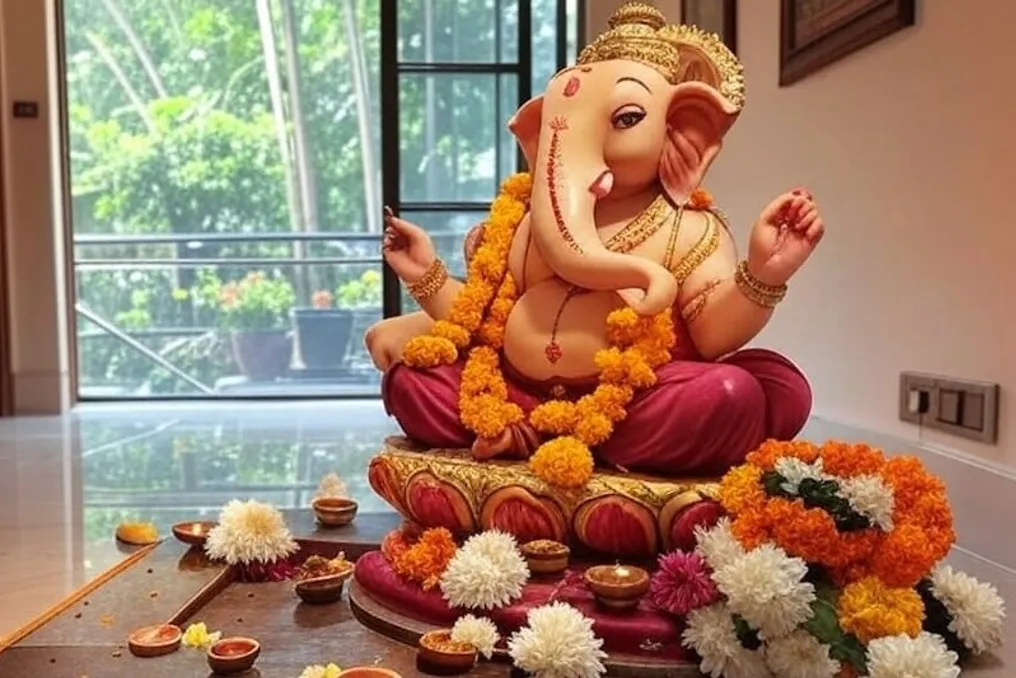
When purchasing a Ganesha statue, several points should be considered. According to religious beliefs, statues made of clay are considered auspicious, so it is recommended to choose a clay statue. Furthermore, it is considered auspicious to have a seated Ganesha statue. It is also important that the trunk of the statue is turned to the left. Such a statue can be installed at home and worshipped according to rituals.

The northeast direction, known as Ishan Kona, is considered auspicious for installing the statue in the home. Therefore, if possible, the installation of Ganesha should be done in this direction.

Necessary materials for worshipping Ganesha

Before installing Ganesha, all materials for worship must be prepared. This requires a platform, a red or yellow cloth, a Kalash, mango leaves, twigs, Akshat, flowers, fruits, coconut, Modak or Laddu, incense, sandalwood, and a ghee lamp. Durva grass must be used during worship, as it is especially loved by Ganesha. A garland of Durva can also be offered to Ganesha.

After this, various fruits and sweets can be offered to Ganesha. The offering of Modak is particularly significant. Additionally, Laddu made from chickpea flour can also be offered.

How to perform the installation and worship of Ganesha

First, a platform is placed in the spot where the Ganesha statue will be installed and covered with a red or yellow cloth. Then, the Ganesha statue is placed on the platform. After this, the statue is purified with a Ghajal. Next, Tilak is applied to Ganesha, and flowers and Akshat are offered. Incense and the lamp are lit, performing Aarti to Ganesha. Following this, fruits, Modaks, or Laddus are presented. During worship, one should offer their wishes at Ganesha's feet and pray for peace and freedom from life's problems.

Chanting the Ganesha Mantra

It is also considered auspicious during worship to repeat the Ganesha mantra. You can repeat any Ganesha mantra according to your belief. The simplest mantra sounds like: 'Om Gam Ganapataye Namah'. This mantra should be repeated with sincere faith, praying to Ganesha for the resolution of life's problems and the fulfillment of desires. After worship, the Prasad should be distributed to as many people as possible. There is a religious belief that by worshipping Ganesha with faith and devotion during Ganesh Utsav, one can receive his grace, leading to happiness and prosperity in life.

How many days to keep Ganesha?

The duration for keeping Ganesha at home depends on your faith and convenience. You can install Ganesha for 3, 5, 7, or 10 days. The number of days Ganesha stays at home should be the number of days you worship him with faith and devotion. After this, the immersion ritual of the Ganesha statue should be performed at an auspicious time according to all rules, and he should be asked to return next year.

Popular