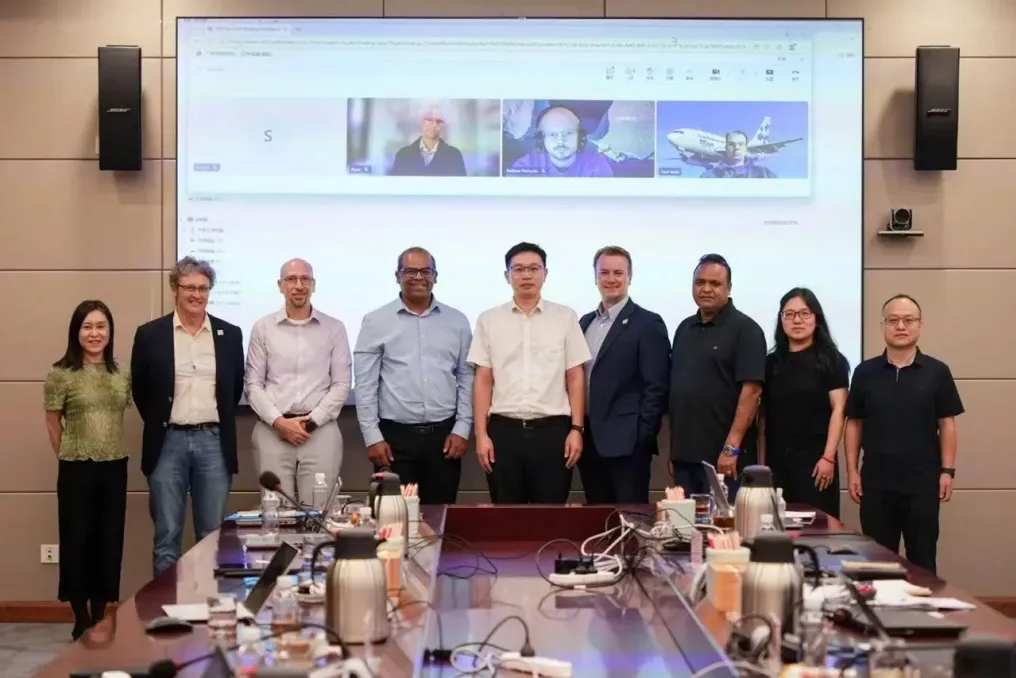
Allied Biofuels held a Front-End Engineering Design (FEED) meeting in Ningbo with key partners involved in its project to produce sustainable aviation fuel (SAF and e-SAF) worth 6.1 billion US dollars in Uzbekistan.
Allied Biofuels held a Front-End Engineering Design (FEED) meeting in Ningbo with key partners involved in its project to produce sustainable aviation fuel (SAF and e-SAF) worth 6.1 billion US dollars in Uzbekistan.
All attendees expressed confidence that they will be able to make the final Investment Decision (FID) in the first quarter of 2027. The event took place at the Sinopec office.
Representatives from China's Sinopec Engineering Group, Denmark's Topsoe A/S, South Africa's Sasol, and the US's Plug Power participated in the meeting. The parties agreed on the distribution of engineering tasks, technological interfaces, and a coordinated implementation program.
Sinopec Engineering Group is responsible for system integration, detailed design, and developing a cost estimate in an open-book format, after which the transition to the design, procurement, and construction (EPC) stage will begin.
Topsoe and Sasol provide licenses for key e-SAF production technologies—the SynCOR™ technology and the Fischer-Tropsch process, respectively. Plug Power provides electrolyzer systems with a total capacity of up to 2.4 GW for green hydrogen production.
This project involves creating the first integrated industrial complex for aviation biofuel production in Central Asia. Its implementation is supported by the President of Uzbekistan and combines renewable energy generation, green hydrogen production, and advanced fuel technologies.
The expansion of SAI Group into key sectors of Africa, according to founder and CEO Yushen Naidu, was based on practical execution and daily discipline rather than abstract vision, despite narratives about growth often overlooking early operational difficulties.
Today, SAI Group operates in industries such as automotive, healthcare, mining, technology, and sports. However, the platform's structure reflects a leader who was shaped from an early age by commercial pressures, customer service demands, and family responsibilities.
Naidu grew up in a family involved in financial services and insurance, which allowed him to master the fundamentals of running a business early on. This environment taught him principles of consumer choice, financial obligations, and fulfilling service promises.
At the age of seventeen, Naidu began his career in the commercial sector through Healthcare Solutions, a company operating in medical brokerage. Working irregular hours with direct interaction with clients and medical institutions gave him early experience in customer service and operational reliability under high risk.
By nineteen, this company achieved significant commercial success. For Naidu, the key realization was that business operations must directly deliver value to the client—a principle that now guides SAI Group's strategy.
SAI Group was founded in 2013 and operates in several sectors, including automotive, medical, mining, technology, and sports, according to company information. Instead of positioning the group as a single-sector firm, Naidu developed a multi-industry platform adapted to various operational functions.
Within this platform, SAIFLEET provided access to over 15,000 vehicles. Furthermore, the group offers services aimed at improving the accessibility and efficiency of healthcare delivery. The group also has interests in mining and technology, while SAI Sport focuses on developing commercial and cultural platforms.
Naidu's approach to corporate leadership was tested during periods of personal and economic turmoil, including the loss of his father in 2020 during the COVID-19 pandemic. This experience reinforced his emphasis on corporate governance, continuity, and internal resilience amid general market stress.
As SAI Group expands, Naidu emphasizes that long-term value stems from institutional utility—creating systems, jobs, and market access that go beyond individual branding. Naidu attributes the group's expansion to operational discipline and customer service quality.
For those looking for good opportunities in technology, a selection of offers on popular products has been compiled. Six featured promotions were identified, with price reductions reaching up to 70% discount, covering items such as the S11 mini drone at its lowest recorded price, the GCZ portable projector, the Lilac Samsung Galaxy A57 5G, the Acer Aspire 5 notebook with Ryzen 5, the 6.2L Philips Walita Airfryer, and the 27-inch AOC gaming monitor with a 120Hz refresh rate. The options presented cater to different consumer profiles, with starting prices from R$ 104.99.
Below, the best deals of the day are detailed, including values, discount percentages, and main features of each model.
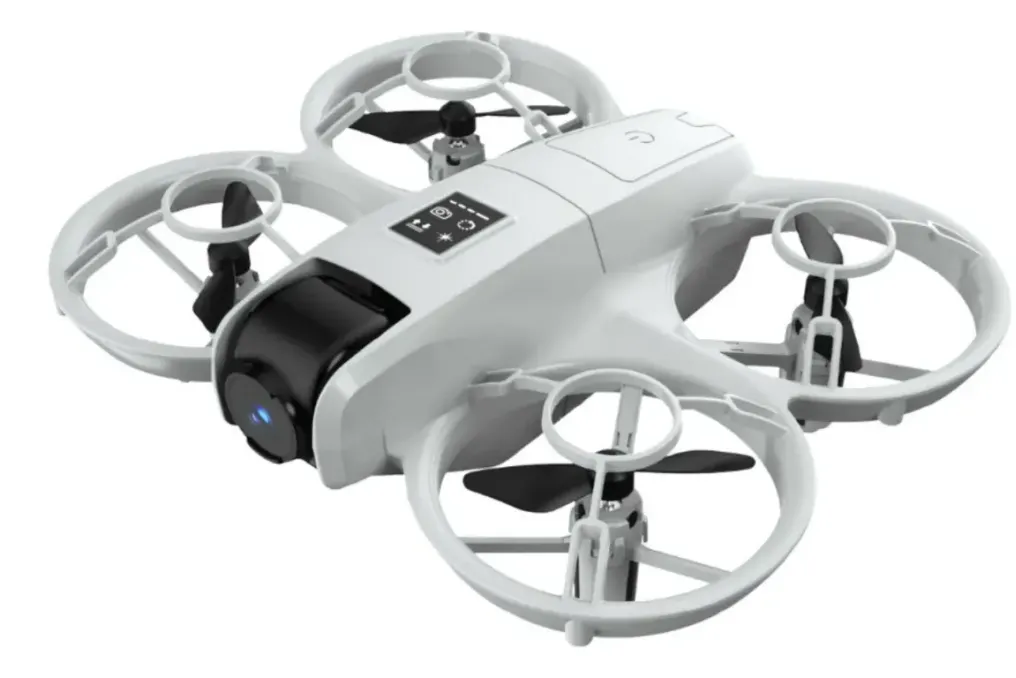
The S11 Mini Drone is a compact quadcopter equipped with an integrated camera to capture aerial videos and photos, and it also features pre-programmed 360-degree maneuvers (such as looping and flips) and an included remote control. It is ideal for drone beginners, serving as an accessible entry point to the hobby. This model presents the largest percentage discount on the list, reaching 70%, and is available for R$ 104.99, the lowest price ever seen, surpassing previous values by more than R$ 165.
The GCZ portable projector is a mini projector that incorporates an Android system, allowing direct installation of streaming applications. It features Wi-Fi 5G (on the 5GHz band, offering greater stability in areas with many devices) and has a compact design that facilitates transport. With a 53% discount, it can be purchased for R$ 611.
The Samsung Galaxy A57 5G is positioned as a high-end mid-range device within Samsung's A line, offering specifications that compete with premium models at a significantly lower cost. Its features include 5G connectivity, 128GB storage, 8GB of RAM, a 50MP main camera with Optical Image Stabilization (OIS), a 12MP video HDR selfie, IP68 certification for submersion resistance, a 6.7-inch Super AMOLED screen, NFC for contactless payments, Samsung AI features, and the advantage of up to 6 years of Android and security updates. This device, in lilac color, has a 53% discount, priced under R$ 1,710.
The Acer Aspire 5 A515-45-R2A3 notebook is a complete mid-range computer, equipped with an AMD Ryzen 5 processor, 8GB of RAM, a 512GB SSD, and a 15.6-inch Full HD screen, already coming with Windows 11 Home installed at no additional license cost. It is considered an excellent alternative for those who need tools for professional work, studies, multitasking productivity, and intensive home use. This model offers a 43% discount, costing R$ 3,329.
The Philips Walita Series 1000 XL Airfryer is an oil-free fryer manufactured by the pioneering brand in this format, Philips. It has a generous capacity of 6.2 liters, suitable for families of 3 to 5 people, and uses patented hot air circulation technology. The controls are simple and consolidate Philips' presence in small appliances in Brazil. The appliance operates on 110V (it is recommended to check the residential voltage before purchase) and is black. With a 37% discount, it can be bought for less than R$ 345.
Finally, the 27-inch AOC 27B35H gaming monitor is suitable for both productivity and gaming. It features a 120Hz refresh rate (offering superior fluidity compared to standard 60Hz), a 1ms response time (eliminating ghosting effect in fast scenes), an IPS panel (ensuring accurate colors and wide viewing angles, superior to common TN in gaming monitors), and Adaptive-Sync (synchronization with the graphics card to prevent screen tearing, compatible with FreeSync and G-Sync). With a 34% discount, the monitor is below R$ 540.
The six offers cover quite diverse categories, and the final choice will depend on the consumer's needs. For those who want to start in the world of drones with minimal investment, the S11 Mini Drone, with the lowest price ever seen, represents the largest percentage reduction on the list, making it a rare opportunity. For casual projections in dark environments, the GCZ mini projector is an affordable option, although it is important to pay attention to its brightness and actual resolution limitations. Those looking for a high-end Samsung mid-range smartphone with a professional camera (OIS), large AMOLED screen, and 6-year support, the Lilac Galaxy A57 5G, priced under R$ 1,710, constitutes an exceptional opportunity in the A line.
For professional activities requiring multitasking with native Windows 11, the Acer Aspire 5 with Ryzen 5 provides robust performance. In terms of cooking, the Philips Walita Series 1000 XL, with its 6.2L capacity, combines the tradition of the pioneering brand in Airfryers with quality, making it ideal for families. For those looking to start or complement a gaming setup with a 27-inch 120Hz IPS monitor, the AOC 27B35H offers one of the best cost-benefit ratios in its category.
There are three distinct positioning levels in the Galaxy A line. The Galaxy A07 serves as the basic entry option, focused on minimum price and meeting simple domestic uses. The Galaxy A37 5G is classified as mid-range, bringing 5G, 6GB of RAM, and a 50MP camera, recommended for social and domestic use with good configuration. The Galaxy A57 5G (in this promotion) is the high-end mid-range, as it includes features typically found in flagship devices: camera with OIS (optical stabilization), IP68 water resistance, up to 6 years of update support, and AI features, in addition to the 6.7-inch Super AMOLED screen. For users who demand intensive professional use, frequent photography, and device longevity, the A57 justifies the additional investment compared to the A37 and A07.
OIS (Optical Image Stabilization) is a notable differentiator because it is a physical component that corrects manual tremors in real-time, a feature usually restricted to flagship smartphones (like Galaxy S and iPhone Pro). Visible benefits include much sharper photos in low-light conditions (allowing longer exposure times without blur), more stable videos without the need for a gimbal, and photography with optical zoom without shaking. Finding OIS in a Samsung mid-ranger at this price point is uncommon, which reinforces the value of this A57 offer.
The choice between fryers depends on family size and mode of use. The Philips Walita 6.2L Airfryer (in this offer) represents Philips' tradition in oil-free fryers, being the globally pioneering brand in the format, with precise temperature control and capacity suitable for families of 3 to 5 people, maintaining the traditional drawer format. In contrast, the Philco 12L Airfryer Oven has an oven-like format and doubles the capacity, making it ideal for serving families of five or more or for preparing complete meals, such as whole chicken or pizzas. For medium-sized families with daily use, Philips is comfortable; however, for larger families or those seeking versatility to replace an oven, the 12L Philco may be worth the extra investment.
The decision about the monitor should also be based on the primary use. 24 to 25-inch monitors (such as the previously mentioned AOC Destiny and AGON G50) are references for competitive FPS gaming, as the total field of view naturally fits the eye angle. On the other hand, 27-inch monitors, like the AOC 27B35H, are ideal for mixed use, combining gaming, productivity, and streaming, offering a larger screen to facilitate multitasking and browsing. For competitive gamers focused only on FPS, the preference leans towards 24.5-inch screens with a refresh rate of 144Hz or higher; while for hybrid use (casual gaming, work, and study), a 27-inch monitor with 120Hz is an excellent option. The AOC's IPS panel guarantees much superior colors compared to the TN panel, often found in gaming monitors.
Adaptive-Sync is an open standard (VESA) that encompasses FreeSync (from AMD) and G-Sync Compatible (from NVIDIA). Its function is to synchronize the monitor's refresh rate with the graphics card's frame rate in real time, completely eliminating horizontal image tearing during fast action moments and reducing stuttering during abrupt FPS variations. This feature, once exclusive to high-end monitors, is now available in accessible models like the AOC 27B35H in this offer, making it essential for those who game on PCs equipped with AMD Radeon or NVIDIA GeForce cards.
For experimentation purposes, the price of R$ 104.99 on the S11 Mini Drone is remarkable, given that it was previously sold for R$ 272.99 on previous occasions. At this price, the drone becomes a low-risk experience: in case of accident or loss of control (common situations for beginner drones), the financial loss is minimal. It is perfect for learning to fly and understanding wind control, allowing testing interest before investing in professional models like DJI or Autel, which start from R$ 3,000. Although the S11 has limitations for professional aerial video or commercial use, it is difficult to find a better opportunity to try the hobby.
It is important to remember that product prices and availability are subject to constant change, so it is recommended to access the links and compare models to take advantage of discounts while they are active.
Toyota announced that the Hilux equipped with a hydrogen fuel cell will begin production in 2028. This model is intended for fleets and commercial customers in Europe. The announcement was made during the IAA Transportation 2026 event, held in Hanover, Germany, positioning the Japanese manufacturer at the forefront of the medium pickup competition with this technology available on the continent.
The automaker's objectives include a range exceeding 400 km in the WLTP cycle and a towing capacity of 2,500 kg, in addition to an estimated refueling time between three and five minutes. It is important to note that Toyota itself considers these values as development goals, not as already approved data; the company also did not disclose information regarding tank capacity, power, or payload.
The comparison with the fully electric Hilux illustrates the reason for this technological choice. The battery variant has a WLTP range ranging from 240 km to 260 km, depending on the configuration and market, can tow up to 2,000 kg, and requires approximately 30 minutes on a fast charger to go from 10% to 80% charge. This difference becomes significant for fleets operating all day.
The propulsion system uses technology derived from the Mirai sedan, generating electricity internally through the reaction between hydrogen and atmospheric oxygen, resulting only in water vapor as an exhaust byproduct. The first prototype of this technology was presented in 2022.
In 2024, Toyota developed ten test units in the United Kingdom. These vehicles featured three tanks integrated into the ladder chassis, a lithium-ion battery located under the bed, a rear electric motor with 182 hp and 30.6 kgfm, and a declared range of 600 km. Although the series version promises 400 km, the brand has not clarified the discrepancy between the figures.
According to a survey by the European Hydrogen Observatory in May of this year, there are only 179 public hydrogen stations in Europe, 160 of which have dispensers compatible with 700 bar vehicles. In contrast, the charging infrastructure for electric vehicles is much more extensive, and fuel cell vehicles tend to have a higher cost than equivalent battery or combustion models.
The pickup enters a scenario of operational expansion in Europe: Toyota's light utility sales on the continent have more than doubled in the last five years and are projected to exceed 165,000 units in 2026, representing over 7% market share. The future goal is to reach 200,000 annual units and 8% share by 2030.
There are no launch plans for markets outside of Europe. In Brazil, the ninth generation of the Hilux is scheduled for early 2027, manufactured in Zárate, Argentina. This version will include a 204 hp 2.8 turbodiesel engine and an electric option of 196 hp with a range of up to 380 km. Hydrogen technology is not part of the regional planning, and the country still lacks a public supply network.