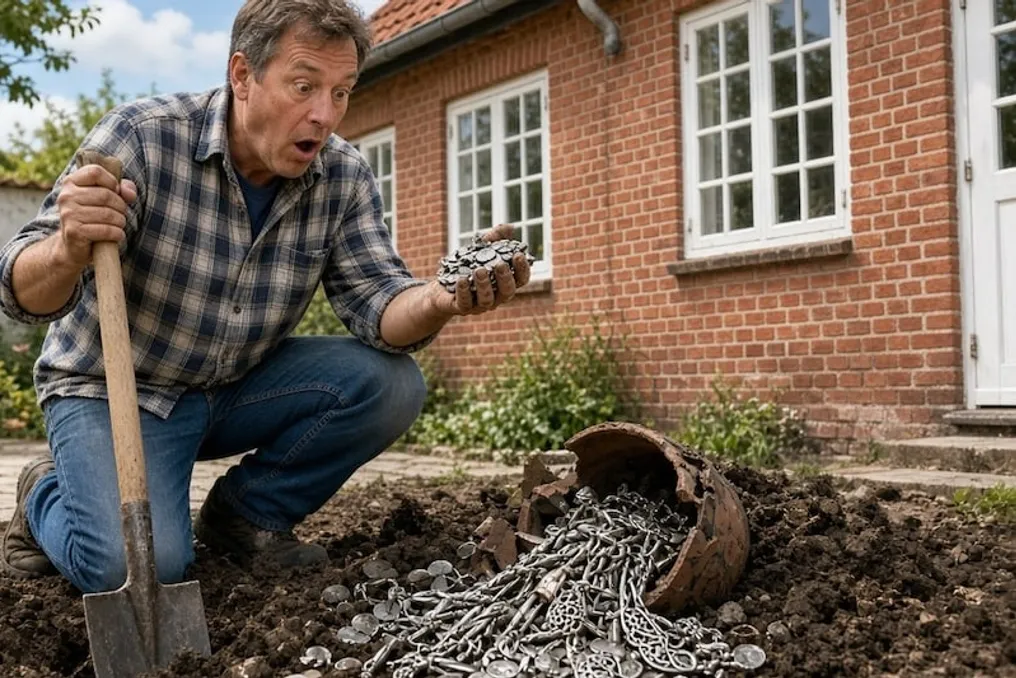
During the process of installing new tiles in the yard of a private house in the Ribbyld area of Denmark, one person was digging in their garden. Initially, the work was only to remove grass, stones, and gravel, and did not require much effort. However, after about half an hour of work, a shovel or another tool struck something underground, making a strange sound.
At first, it was assumed that it might be an old iron object or a wire. But when he started clearing the earth by hand, metallic objects began appearing one after another. It soon became clear that this was not just trash, but silver jewelry, coins, and silver rods.
The most surprising thing was that these were not items from the recent past; a Viking-era treasure, estimated to be about 1000 years old, was hidden underground. Approximately 700 priceless antique items and fragments were found. All finds were silver, and the total mass of silver is about 18.5 kilograms. This treasure is considered the largest known silver hoard of Vikings in Denmark, significantly increasing its value.
According to a report by the New York Post, this astonishing discovery took place on the grounds of a private home in the Ribbyld area, Denmark. The homeowner planned to create an area with new tiles, so he was preparing the ground. His initial goal was to remove grass, stones, and gravel within a few hours.
However, after approximately half an hour of digging, he heard a sound of striking something underground. Initially, he thought it might be old iron or fencing wire. Fragments of old pottery were also noticed in the soil.
But as he removed the earth by hand, metallic objects started coming up. He then realized that he was holding something more than ordinary things—jewelry, coins, and silver rods. At that moment, he probably had no idea that he was standing over one of the largest Viking hoards in Denmark.
Archaeologists believe that this hoard was buried underground around the 9th century. Most of the silver was inside an earthenware vessel. About 320 items weighing approximately 6.4 kilograms were found in the original vessel. The remaining items were scattered around this vessel in the ground.
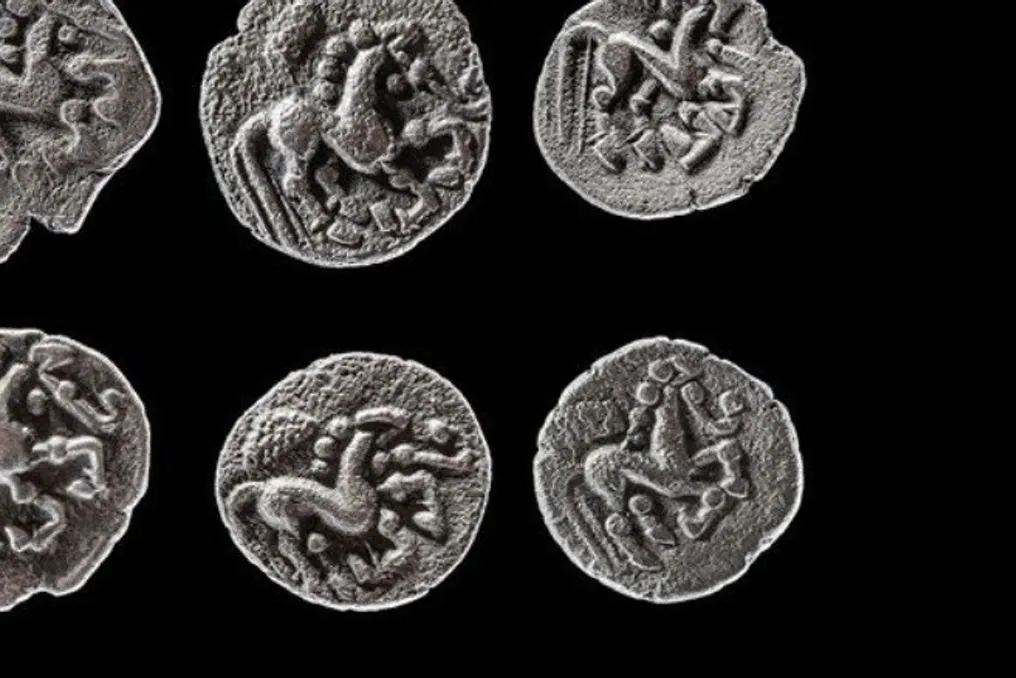
The entire collection includes about 700 items and their fragments. Among them are silver rods, bracelets, coins, cut silver pieces, and a small Thor's hammer. This indicates that a thousand years ago, someone hid their great wealth underground, and perhaps could not return for it.
Coins from Arabia and England were found in the hoard. This suggests that Denmark's contacts during the Viking Age were very distant. At that time, silver was used not only for making jewelry but also as a form of property and payment by weight, which is why the hoard contained both silver rods and small cut pieces.
One of the silver rods has mysterious runic inscriptions. According to museum data, it can be read as 'hutu'. This could be a person's name, an owner's identifier, or another important sign, although the exact meaning has not yet been established. Thus, this thousand-year-old hoard provides information not only about wealth but also about the life and trade of people of that era.
A small Thor's hammer was also discovered in the hoard, which is highly significant. In Viking culture, Thor was the chief deity, and his hammer served as a symbol of his identity. This find demonstrates the presence of various types of silver items in the hoard alongside religious symbols, coins, and jewelry.
The biggest question is who owned this 18.5-kilogram silver. Archaeologists believe that the owner was likely a very wealthy person of high social standing. Possessing such a large amount of silver indicates that he had access to extensive trade networks. However, the identity of this person is now lost along with history, and it is unknown why he decided to hide such a huge fortune in the ground.
Archaeologists have no definitive answer as to whether the owner returned for his property. Usually, during the Viking Age, people hid valuable things underground to preserve them during unstable or difficult times. Perhaps the owner went on a journey and did not return, or was killed during some foreign expedition. But these are just suppositions; no one knows what actually happened. One thing is clear: the person who hid this treasure never came back for it.
It is worth noting that this area has previously been a site of Viking finds. In 2026, Viking-era gold bracelets were found in this area.