On Monday, school bells rang out across the country again, and children's voices filled the classrooms. Students resumed their studies after the war between the US and Israel last year led to damage to many educational institutions.
However, behind the celebration lie classrooms affected by military actions and painful memories of students and teachers whose lives were cut short as a result of attacks on educational centers. For many, the start of the new academic year signifies not just a return to school, but a symbol of hope, resilience, and the determination to rebuild the country.
President Masoud Pezeshkian participated in the opening ceremony at a girls' primary school in Tehran, where he struck the bell marking the start of the new academic year. This ceremony took place after schools nationwide returned to classrooms following months during which the education system had to cope with the consequences of the war, damaged infrastructure, and the loss of members of the school community.
The return to school has taken on a significance that goes beyond the traditional start of the academic year. For students and teachers, the new school year begins with the memory of comrades and colleagues who will not return to their classrooms.
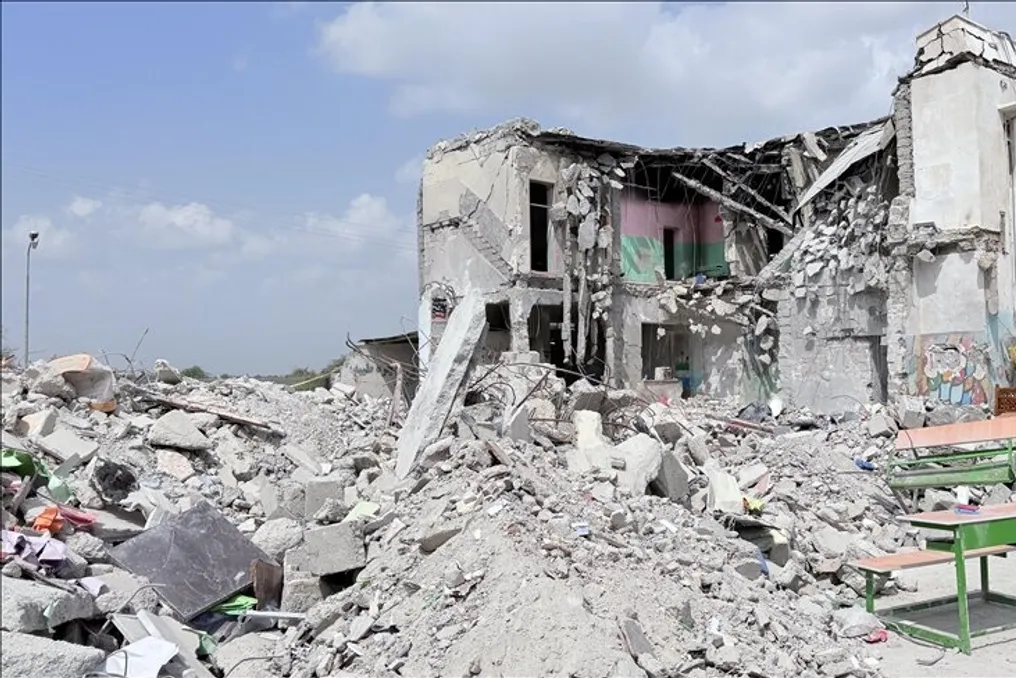
During the US and Israeli military strikes on Iran, which began on February 28, schools and other civilian facilities became targets of attacks. According to data from the Organization for School Repair, Development, and Equipment, 1288 schools across the country were damaged, including 16 facilities that sustained direct hits and required large-scale restoration or rehabilitation.
Officials reported that reconstruction efforts were accelerated in the months following the conflict. By the start of the new academic year, 1272 damaged schools had been restored and returned to the education system, allowing them to reopen their doors to students.
Nevertheless, in the city of Minab, located in the southern province of Hormozgan, the return to school carries a much heavier meaning. On February 28, the 'Shajareh Tayebeh' school in Minab was attacked during school hours. This strike killed over 150 people, including about 120 children. The school was hit while classes were in session, turning a place intended for learning and safety into one of the deadliest attacks on civilians.
This tragic incident was classified as a war crime—an indiscriminate attack on children and civilians that destroyed the dreams of 168 families amidst smoke and debris.
The new school year in the city has always been accompanied by excitement, bustling streets, bright uniforms and backpacks, the smell of new books, notebooks, and pencils, and parents seeing off children to school. However, this year the atmosphere in the schools feels different.
This year, which marks the beginning of autumn in the Iranian calendar—Mehr—begins with a heavy heart, as the voices of many innocent students are absent from classrooms following their deaths in the aggressors' attacks.
The enemies deliberately targeted not only the fragile bodies of students in Minab but an entire generation that could have helped build a brighter future for the country.
This academic year, school bells ring out, echoing a heartbreaking sorrow for grieving families, the city, and the entire nation. But this sound also resonates with an eternal promise that goes beyond mere mourning.
School bells must ring so that society remains dynamic, alive, and informed. To avoid a corroded society, school bells must constantly ring without ceasing.
Schools will operate, providing every person and every talent the opportunity to flourish and develop. Schools will become sanctuaries, resilient and protected from harm and crises. They will serve as centers for comprehensive personal development in moral, scientific, social, biological, artistic, and technological aspects.
Schools will be the voice of innocent children, protecting the rights of students and punishing aggressors, affirming that the banner of awareness, knowledge, and the pursuit of justice will be raised.