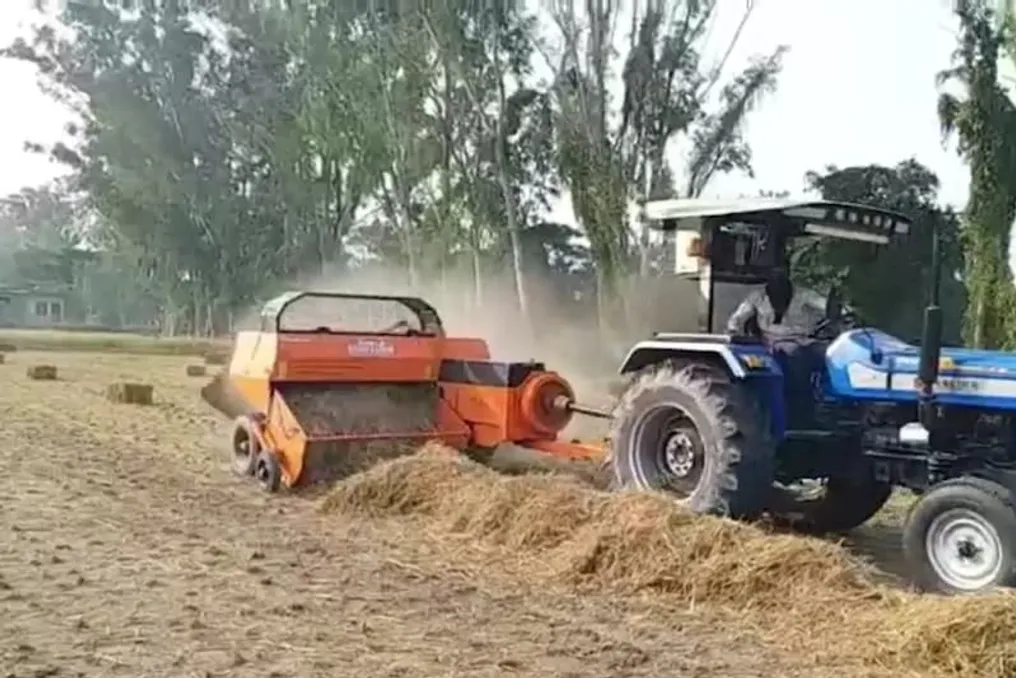
The administration and agricultural department of Karnal district in Haryana are on high alert regarding crop residue management issues. 750 employees from various departments are working on the ground to prevent stubble burning in fields. These employees not only inform farmers about the harm caused by burning but are also prepared to file cases against violators.
An agricultural official reported that 23 cases of stubble burning were registered last year. The goal for the current year is to reduce this number to zero. He specified that the agricultural department has all the necessary equipment, including balers and machinery. The government will provide a subsidy of 1200 rupees per acre to farmers who manage crop residues, and the department is conducting awareness campaigns among farmers about various management systems.
The official warned that farmers who continue to burn stubble after being informed by the agricultural department and the district administration will be held accountable and assigned a 'red status.' This will restrict their ability to sell crops in the market for two seasons.
He emphasized that all efforts are aimed at achieving zero instances of stubble burning in the district. To this end, various competitions, such as speech and slogan contests, are being held in schools and colleges to educate farmers about crop residue management methods.
Approximately 450,000 acres of rice have been sown in the district, and about 10% of the harvest has already been collected. It is expected that the rice harvest will generate 9 million metric tons of residue. The department asserts that there is sufficient machinery in the district to manage these residues. He advised farmers to use in situ or ex situ methods, noting that the government pays 1200 rupees per acre for managing such residues.
The agricultural official added that municipal councils are involved in awareness campaigns to prevent isolated incidents of stubble burning. This is because burning degrades the environment and negatively affects human health, exposing people to disease risks. Satellite imagery will be used in conjunction with field staff to monitor stubble burning cases.
He appealed to farmers to deliver harvested crops to markets completely dried and to manage post-harvest residues. This will benefit and not harm the environment. All farmers are recommended to adopt crop residue management methods, and if problems arise with this process, they should contact the nearest agricultural department office.