Uzbekistan's largest private logistics group, Centrum Holding, is currently engaged in discussions with Citigroup and JPMorgan Chase & Co. regarding the arrangements for an initial public offering (IPO) on the London Stock Exchange.
Uzbekistan's largest private logistics group, Centrum Holding, is currently engaged in discussions with Citigroup and JPMorgan Chase & Co. regarding the arrangements for an initial public offering (IPO) on the London Stock Exchange.
According to reports from Bloomberg, which cited individuals familiar with the situation, this offering might occur as early as the following year. The sources involved in these discussions requested anonymity due to the private nature of the IPO talks.
Centrum's operations are unified under a holding structure that is registered within the Dubai International Financial Centre (DIFC). Previously, the company's co-founder and CEO, Abdulaziz Abdurakhmanov, stated on Uzbek state television that this holding entity is appraised at approximately US$2 billion.
Earlier, in February, there was a report that the US investment firm Oppenheimer and Citibank had agreed to provide advisory services for Centrum Holding's IPO. At that point, the company's estimated worth was also around US$2 billion, and the intended capital raise was projected to be about US$600 million through the divestment of roughly 30% of its shares.
The prospective debut of Centrum Holding in global capital markets coincides with Uzbekistan's continuous initiatives aimed at fostering privatization and advancing market mechanisms. Besides Centrum, other entities such as the fintech company Uzum and the retail chain Korzinka have previously indicated potential IPO plans.
Furthermore, Uzbekistan has already conducted a listing on the London Stock Exchange this year. Shares belonging to the Uzbekistan National Investment Fund (UzNIF), which is overseen by Franklin Templeton, were successfully placed for US$674 million, utilizing the full exercise of the greenshoe option for the supplementary offering.
The new regulation serves to reduce excessive bureaucratic obstacles in foreign trade. Currently, the development of entrepreneurship should not be limited only to providing financial opportunities or benefits.
In some cases, the biggest obstacle to business development can be excessive paperwork, repetitive requirements, and time-consuming administrative procedures. Therefore, special attention is being paid in the country in the coming years to simplifying relations between entrepreneurs and the state, reducing excessive demands, and further improving the business environment.
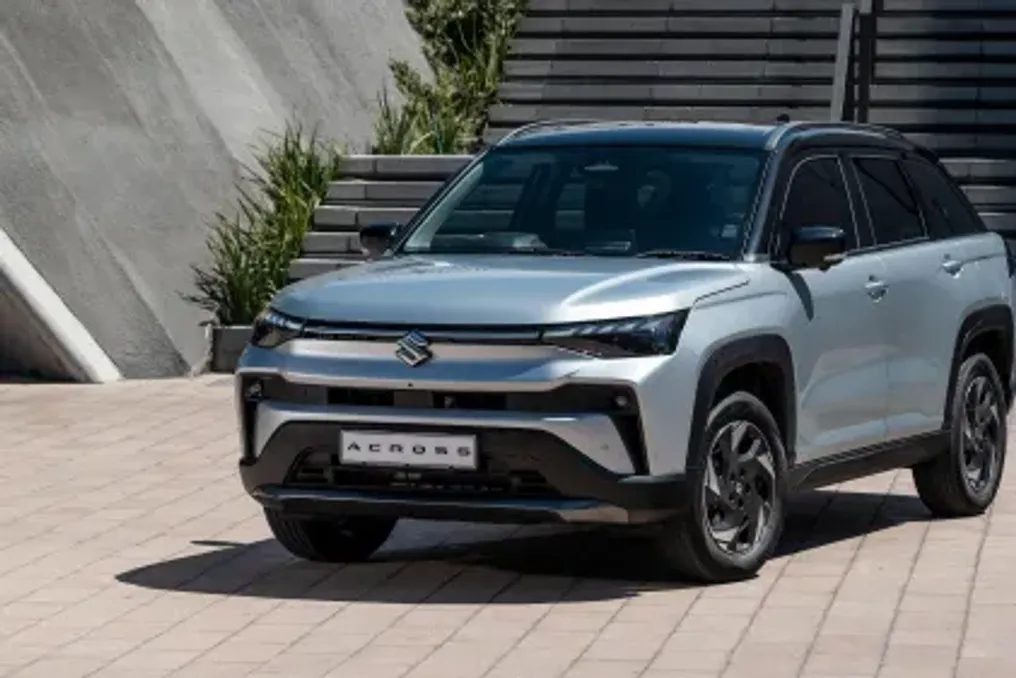
The new Suzuki Across presents an interesting option in the Suzuki SUV lineup. Although the name Across is used on foreign markets for the rebadged Toyota RAV4, the version for South Africa is essentially a renamed model of the Victoris, manufactured in India.
At first glance, this product appears to be an attempt to move the brand into a higher price segment, as it looks quite elegant and more car-like compared to the bulkier Grand Vitara. Despite having the same 2600 mm wheelbase and 210 mm ground clearance as its counterparts, the Across is 15 mm longer. It is also equipped with mild-hybrid technology and replaces the familiar four-speed gearbox with a more modern six-speed automatic transmission.
Nevertheless, it is R9,000 cheaper than the equivalent base GL Grand Vitara, starting from R349,900; however, the richly equipped Across GLX version costs R11,000 more at R464,900. In any case, it continues Suzuki's tradition of producing a reliable product at a very competitive price.
Upon entering the cabin, it looks more modern and premium than previously expected from the brand. It features soft-touch surfaces with stitching on the dashboard and a decent 10.1-inch multimedia touchscreen supporting wireless Apple CarPlay and Android Auto. Furthermore, the Across is fitted with a 10.25-inch digital instrument cluster.
However, it is not overly digitized, as Suzuki has also provided 'piano-style' controls beneath it for basic climate control functions, and there is a real volume knob nearby. That is, in 2026, there is still a real volume adjustment button!
The Across offers usability in the typical Suzuki manner: you sit down and continue your business without many irritating distractions or quirks inherent in many modern cars. The Across has a more modern cabin with digital instruments, a 10.1-inch touchscreen, and physical climate controls.
Practicality presents a mixed picture. The boot seems more spacious than its 347-liter capacity suggests, and the rear legroom is adequate, although there wasn't much room for leg extension behind my usual seating position. However, the headroom in the back was slightly cramped.
The tested GLX model is equipped with numerous features, including synthetic leather seats, a 360-degree camera, a Harman Infinity sound system, 64-color ambient lighting, a panoramic glass roof, and several driver assistance systems such as adaptive cruise control, autonomous emergency braking, and lane keeping assist.
On the road, the car provides a refined experience: it is well-insulated and drives comfortably, and the handling feels safe and neutral. But, unfortunately, the Across is too large and heavy for the engine that powers it. Weighing in at a useless 1200 to 1250 kg, making it slightly heavier than the Grand Vitara, its 76 kW mild-hybrid powertrain and 137 Nm of torque seem to be constantly fighting a losing battle.
The Across offers a comfortable, refined ride, although its 1.5-liter engine can sometimes feel underpowered. While suitable for leisurely city driving, it even struggled climbing a steep suburban hill in my area, and overtaking on rural roads will require patience from the driver of this vehicle.
On the positive side, the six-speed gearbox is a big improvement over the four-speed installed on the Grand Vitara models, and thanks to the wider gear range, it provides a smoother driving experience, requiring less 'searching'.
In conclusion, the Suzuki Across is a stylish, well-made, well-equipped, and refined product, but it needs a more powerful (or turbocharged) engine to gain a competitive edge in this tough compact SUV segment.
Soach Global plans to partially exit the National Stock Exchange of India (NSE) by selling 20% of its stake, which was acquired ten years ago. This partial sale could yield approximately 280–295 crore rupees. The fund will retain the remaining 80% of its shareholding, which was initially purchased in 2016 and has significantly appreciated due to corporate actions.
The offering is a sell-side offering, meaning existing shareholders are realizing their assets, and the NSE itself is not raising new capital. As of September 21, the subscription for the issue reached 5.7 times, and the listing is scheduled for September 24.
Soach's investments began in January 2016 when the fund acquired 1.5 lakh shares of NSE from IFCI for 59.25 crore rupees. Subsequent corporate actions increased the ownership volume to 82.5 lakh shares without additional investment, lowering the adjusted acquisition cost to approximately 71.8 rupees per share.
At the IPO price range, the entire stake is valued at approximately 1,403–1,473 crore rupees, representing about 24–25 times the initial outlay. However, only the partial sale is valued at approximately 4.7–5 times the initial investment.
Anubhav Dayal, founder and director of Soach Global Opportunities Fund, explained the sale, partly citing the expansion of the shareholder base. He noted that 'India is a fast-growing economy with a large young population eager for growth, who quickly absorb the risks and rewards of participating in capital markets.'
Dayal stated that the fund wishes more retail investors to own NSE either directly or through mutual funds. It is reported that the registered investor base of NSE exceeded 13 crore by April 2026, compared to 12 crore in September 2025.
Arguments for retaining the remaining stake are also linked to the breadth of NSE's activities and operational model. Dayal emphasized that 'as a multi-active trading platform, NSE will register revenue growth while operating at constant costs, most of which have already been incurred. It is a high-tech platform that executes trades in nanoseconds.'
NSE began electronic stock trading in 1994 and has since expanded its operations beyond stocks and debt to include equity derivatives, currency, interest rates, and commodities, as well as indices, data, and clearing services.
Nevertheless, there are important industry counterarguments. Although derivatives have become central to the exchange's operations in India, trading has recently come under closer regulatory scrutiny. Reuters reported that the average daily turnover for derivatives stocks fell by 27.1% in July 2026 to 1,70,000 crore rupees, the lowest level since November 2023.
SEBI is also reviewing the closed auction session and the settlement methodology for derivatives following volatility related to end-of-day pricing. Competition and product expansion are developing parallel to these regulatory changes. Competitor BSE is attracting increasing attention as a rival in the derivatives space, while commodity exchange MCX has expanded its range, adding Silver 100 futures in June and Rapeseed oil futures in August.