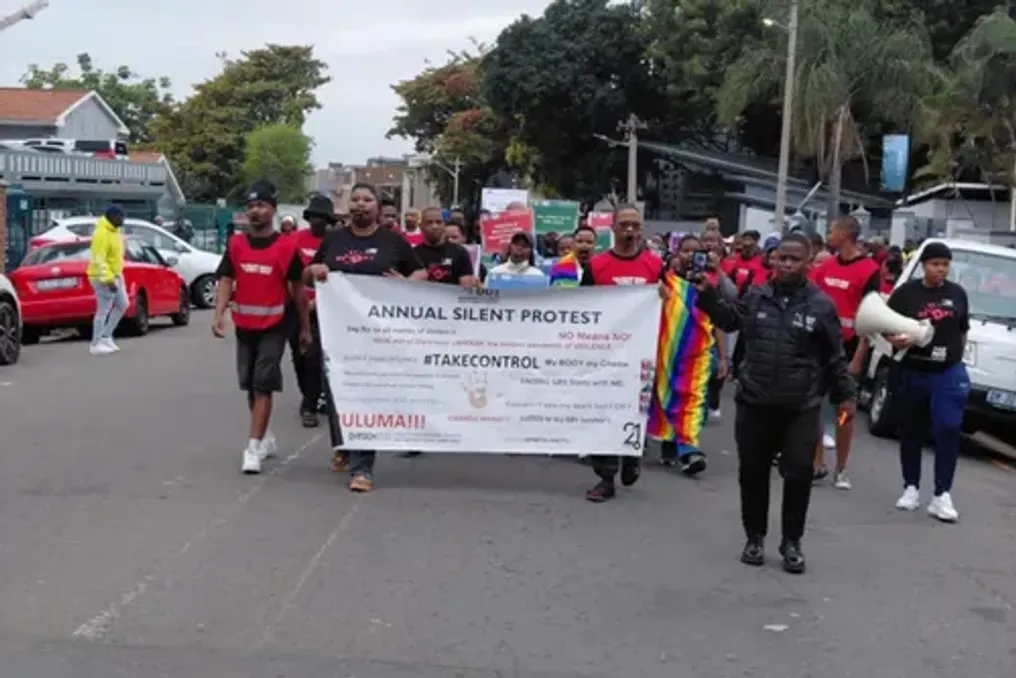
After President Cyril Ramaphosa declared gender-based violence and femicide a national catastrophe on November 20, 2025, the event was perceived as a historic moment. This declaration, confirmed by state agencies in 2026, allowed the Disaster Management Act to be used as a basis for a coordinated national response. For many activists, human rights defenders, and legal experts, this represented a long-awaited recognition of the scale of violence afflicting the country.
However, the recognition itself is only the beginning. The true test lies in implementation, and it is here that the state fails women. To understand the significance of this declaration, one must examine the provisions of the Disaster Management Act. When an issue is classified as a national catastrophe, the state is legally obliged to mobilize resources, establish coordination structures, and take urgent measures to prevent further harm. This is not merely a symbolic gesture.
What the declaration actually requires
The declaration creates legitimate expectations among citizens that the government will act with the same urgency as during a flood, pandemic, or fire. Citizens have the right to expect visible strengthening of measures, rapid deployment of resources, and accountability mechanisms. Any deviation from this undermines the very purpose of the Act. Nevertheless, despite the existence of this framework, real life remains unchanged. A pattern of killings had long been observed in Kempton Park before the tragic death of Elizabeth Moselakgomo. The question arises: why were three or four bodies required before escalation occurred? Why are there nine female bodies in Ekurhuleni this week, with the latest found by the roadside in Kwathembe, Thembis, and another near Boxburg?
These cases are not isolated incidents; they represent a disturbing continuity of violence against women, and the state's slow reaction is unjustifiable. The gap between policy and lived experience is vast. We have legal recognition, we have a framework, we have a declaration, but we lack effectiveness, resources, or urgency. The Disaster Management Act is intended to prevent this complacency. It demands coordination between police, health, social development, and justice, as well as monitoring, reporting, and intervention. Yet, women continue to be victims, being killed while authorities appear paralyzed.
Why inaction can be illegal, not just unacceptable
As a lawyer, I cannot ignore the principle of legitimate expectations. When the government declares a national catastrophe, it gives citizens a legally binding promise. Women and children in South Africa have the right to expect protection, swift action, and systemic change. Failure to meet these obligations is not only a moral betrayal but also a legal one. According to the Promotion of Administrative Justice Act, untimely and unsatisfactory inaction can be challenged in court. The declaration of a catastrophe is not a political gesture but an administrative act that triggers statutory duties. When these duties are ignored, the public has the right to question whether the inaction is illegal. Courts have long recognized that administrative actions include the failure to make decisions when such a duty exists. In this context, the duty is clear, the expectation is lawful, and the delay is unjustified.
More than the story of one woman
Elizabeth Moselakgomo's story is not just about one woman. It speaks of a nation that has acknowledged the scale of gender-based violence but continues to fail in its duty. It concerns mothers, daughters, and sisters whose lives are cut short while the state apparatus hesitates. It is a call to condemn violent crimes and demand accountability from a government that has already declared this crisis a catastrophe. The time for symbolic gestures is over. The law demands more. People demand more. And Elizabeth's memory, along with eight other women in Ekurhuleni and countless others, deserves more.
Nkololazi Nomvulo is a legal director at a South African corporation and an attorney admitted to the High Court. She actively writes and speaks on issues of systemic accountability, gender justice, and the urgent need for reform.