Communication methods in the office are rapidly changing. If previously most interaction took place in person or via email, now office chats occupy a significant share. In this environment, even a small word or just an exclamation mark (!) can change the meaning and tone of a message.
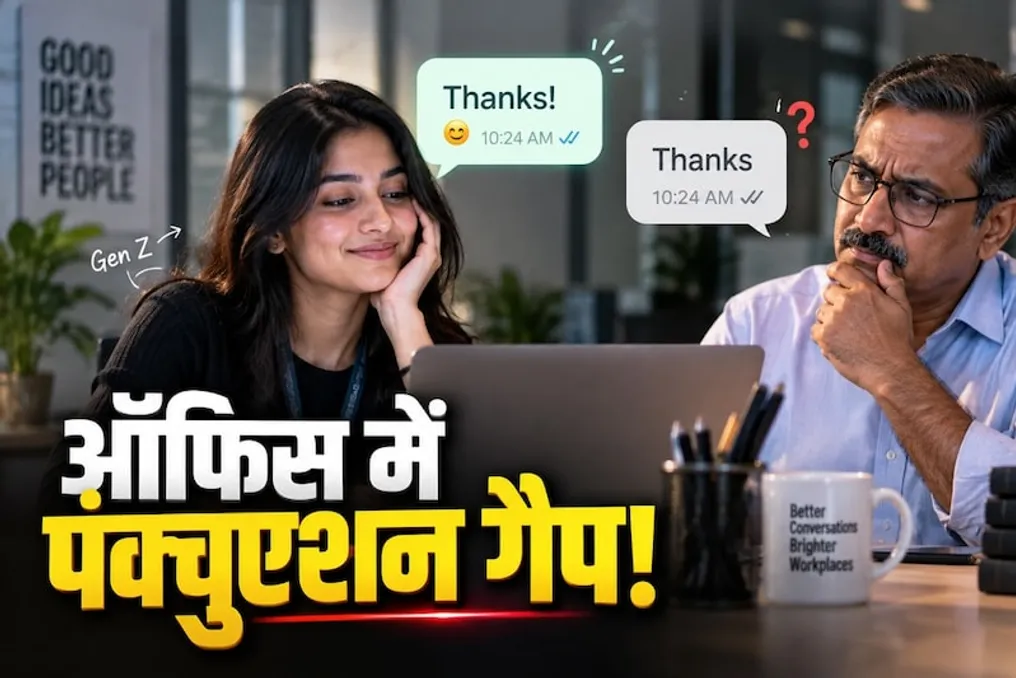
For example, if a manager writes in an office chat: 'Please send the notes from today's meeting,' and the reply is 'OK,' this is a completely standard response. However, if the reply sounds like 'OK, thanks!', this message might seem friendlier and more positive. Thus, in digital communication, the mood of a message can be changed not only by the words themselves but also by small signs like the exclamation mark.
The difference in office communication manners between Generation Z and older generations is now being documented in studies. In July 2026, Censuswide conducted a survey among 2400 employees in the US to study workplaces. According to this survey, 80% of Gen Z employees stated that differences in language and communication styles between generations create problems at work. The proportion of such statements among baby boomers was 30%.
According to the report, 51% of Gen Z representatives noted that linguistic discrepancies are a constant or frequent challenge in their office environment. Researchers believe that manner of speaking, use of short words, and minor nuances in office vocabulary can affect teamwork, trust, and rapport.
In a study published in the journal 'General of Experimental Social Psychology' in 2025, five different studies attempted to understand how people perceive the exclamation mark and what impact it has on the message's image. The essence of the difference lies not only in the exclamation mark itself but in the overall communication style. For Generation Z, chats and social networks are part of daily communication, so their communication may be more informal. Whereas for other generations, office communication remains more formal.
That is, for a manager, 'thank you' might just be gratitude, whereas for an employee, 'thank you!' sounds friendlier. The words remain the same, but the way they are understood can differ. The main difference lies not so much in punctuation marks as in different habits and expectations in communication. For Generation Z, chats and social media are a daily practice, while for older generations, office dialogue is more formalized. Thus, every small digital detail is not necessarily a sign of attitude; often it is just a reflection of a changing communication style.