The United Nations Children's Fund (UNICEF) released its latest humanitarian report on Mozambique, warning about the persistent security instability in the country's north during July. This period was marked by new population displacements and the expansion of armed group activities into districts located in the south of Cabo Delgado province, resulting in increased humanitarian demands from children and their families.
The northern province faces an armed insurgency that, since 2017, has already caused more than 6,600 deaths. As detailed in the UNICEF document, insecurity remained volatile in northern Mozambique in July. Intensification of military operations in Macomia forced non-state armed groups to disperse to the districts of Quissanga, Meluco, Ancuabe, Chiúre, and Montepuez.
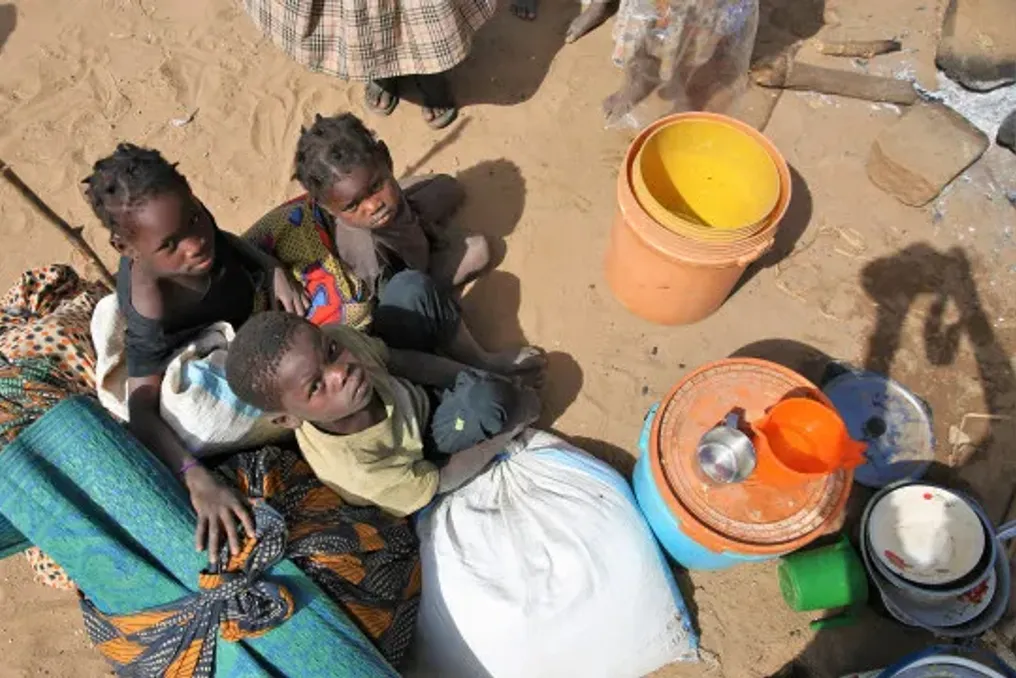
Population movements continued throughout July. The International Organization for Migration's emergency monitoring tool registered 3,729 people in movement in the provinces of Cabo Delgado, Nampula, and Niassa, of whom 1,575 were children. Most of these displacements occurred in Cabo Delgado, driven mainly by violence, although planned returns and fear of new attacks were also recorded.
Data provided by UNICEF indicates that the United Nations Office for the Coordination of Humanitarian Affairs (OCHA) counted 28,163 people displaced due to the conflict as of the end of July, since the beginning of 2026. Women and children represented 65% of this total number of displaced persons.
In a scenario of worsening vulnerabilities, UNICEF reported that, up to July, it had provided community mental health services and psychosocial support to 154,659 children, adolescents, and caregivers in Mozambique. Of these, 146,071 were in the northern provinces affected by the conflict. In July alone, the agency supported 24,603 children, adolescents, and caregivers through these services, including 18,645 children in Cabo Delgado, through recreational, cultural, sports, and community support activities aimed at strengthening protection and psychological well-being.
The report also highlights that in July, 1,440 children who survived violence received case management services, and 46 unaccompanied or separated children were reunited or referred for alternative care.
In the education sector, severely impacted by violence, UNICEF accounted for 154,608 children with access to formal or non-formal education through the organization's supported programs, which also included pre-school learning. Specifically in Cabo Delgado, 208 teachers in the Palma district received training to operate in crisis contexts and identify child protection risks.
Additionally, UNICEF warns about the projected impact of the El Niño phenomenon during the 2026-2027 rainy and cyclone season. The latest projections suggest a 100% probability of the phenomenon persisting until early 2027, with the potential to intensify food insecurity, especially in the southern and central regions of the country.
Despite the maintenance of humanitarian actions, the UN agency points to considerable financial restrictions. UNICEF's humanitarian appeal for Mozambique in 2026 totals 58.8 million dollars (equivalent to 50.4 million euros), but the funding gap remains at 49%, compromising UNICEF's ability to fully meet the needs of children and their guardians.
Finally, the report estimates that one million children currently need humanitarian aid in Mozambique, out of a universe of 1.8 million people in need, which includes more than 506,000 internally displaced persons linked to the conflict and approximately 715,000 returnees to areas of origin.