Thirty-one years ago, on September 21, 1995, an unusual event occurred in India that captured the attention of the entire world. At that time, the internet in India was just beginning to develop, television was predominantly occupied by Doordarshan, and newspapers remained the primary source of daily news.
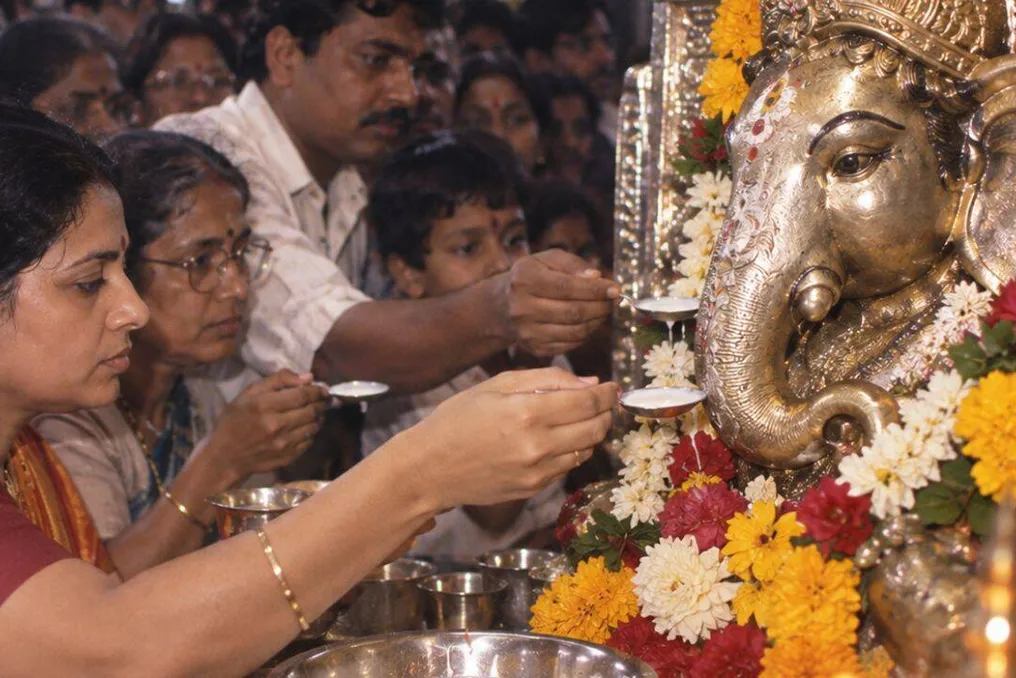
Reports that Ganesha idols were receiving milk offerings quickly spread through temples. According to a Times of India report archived at the Tata Institute of Fundamental Research in Bombay and other parts of India, this news spread 'like a wildfire,' as thousands of devotees rushed to the temples.
Astrologer Jayant Salgaonkar confirmed this, stating, 'I saw it myself.' At that time, the internet penetration in India was only 0.026% of the population, and television coverage was estimated at about 40 million households and 250 million viewers.
By September 23, 1995, the Los Angeles Times reported that millions of Indians had gone to verify this phenomenon, and that milk had 'practically disappeared' in New Delhi by noon.
This fact demonstrates the unique feedback loop created by this phenomenon: people heard that Ganesha was drinking milk, went to buy it, brought it to the temples, and offered it to the idols. This mass reaction itself served as proof of the seriousness of the perception of this story.
The Los Angeles Times also noted that reports of the incident went beyond India and reached Hindu communities in other countries, including the UK and Los Angeles. Hinduism Today later recalled receiving phone calls and facsimile messages from different parts of the world reporting similar experiences. This modern account provides insight into how the international religious community communicated before email, social media, and messengers became commonplace.