iSimangaliso Park is known for its vast golden coastlines, but its most captivating stories unfold away from the sand. Within the northern KwaZulu-Natal region, wetlands, estuaries, lakes, grasslands, coastal forests, and marine habitats coexist, making it one of South Africa's most diverse protected areas.
The park was recognized as South Africa's first UNESCO World Heritage Site in 1999 and stretches along approximately 220 kilometers of coastline. Over 520 bird species are registered here, and its habitats support animals such as hippos, crocodiles, elephants, rhinos, whales, and nesting turtles.
A 48-hour trip allows visitors to experience this diversity without spending all their time on the beach. It is recommended to stay in St Lucia and use this town as a base for exploring the estuary, wetlands, coastal forests, and the wildlife-rich Eastern Shores.
Exploring Lake St Lucia
Begin by familiarizing yourself with the ecosystem that defines this region: Lake St Lucia. This estuary is one of South Africa's most vital wetland complexes, serving as a feeding, resting, or nesting ground for over half of KwaZulu-Natal's waterfowl. The lake also serves as an important fish breeding ground, as 71 out of 155 registered fish species depend on it for spawning.
The simplest way to get acquainted with the lake is by taking a boat cruise from St Lucia. Instead of searching for animals on land, you should observe the water for hippos, crocodiles, and birds along the shoreline. It is advisable to bring binoculars for spotting waterfowl and raptors, and hippos can often be seen in or near the water. The area around the lake also hosts numerous antelopes, including the waterbuck, reedbuck, kudu, nyala, impalas, and duikers.
Lake St Lucia is more than just a backdrop for wildlife viewing; its changing conditions sustain a complex wetland ecosystem, supporting an exceptional diversity of plants. Over 2180 species of flowering plants have been documented around the lake, demonstrating the immense life supported by this aquatic landscape. This underscores that animals are only part of the much larger iSimangaliso system.
Exploring the Forest Area
In the afternoon, visit the western part of Lake St Lucia in False Bay Park, where the landscape transforms from open water to sparse sandy forests. This area contains ancient deposits of fossils and shells, testifying to a completely different past landscape. Today, the forest supports birds, butterflies, and small wildlife, while hippos and crocodiles remain in the surrounding wetlands.
Three self-guided trails, including Mphofomeni, Ingwe, and Dukandlovo, pass through the sandy forest and thickets toward the shores of Lake St Lucia. This is an excellent place to slow down instead of just ticking off large animals. It is worth exploring the forest canopy for forest birds, scanning the vegetation for butterflies, and paying attention to tracks and other signs of wildlife. Swimming in the lake is not recommended due to the presence of hippos and crocodiles, so the shoreline is better suited for walks, boating, birdwatching, and simply enjoying the scenery.
Returning to town, the evening offers a chance to soak up the atmosphere of St Lucia without major organized events. The town is located near the park and serves as a convenient base for exploring the various iSimangaliso habitats. After a day spent by the water, in the forest, and in the wetlands, dinner in town brings one back to civilization before another early start.
Eastern Shores and Cape Vidal
Start early in the morning and head to the Eastern Shores section towards Cape Vidal. This is where the unusual geography of iSimangaliso is particularly evident. The route passes through coastal forest, grasslands, and freshwater ponds before reaching the Indian Ocean. The park describes the Eastern Shores as an area where scrubland, lake, and ocean meet, creating opportunities for both wildlife and bird watching.
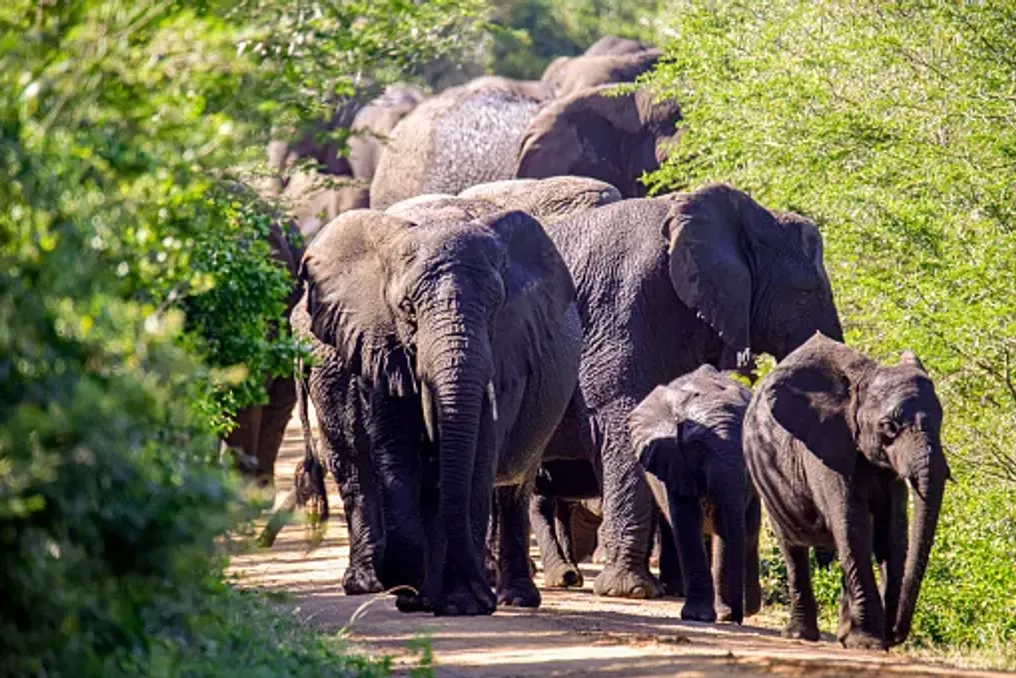
Do not rush along the ring roads, viewing the trip merely as a journey to Cape Vidal. Elephants, rhinos, buffalo, and other wildlife are found in this zone, while the freshwater ponds and forested areas attract various bird species. The Eastern Shores are especially valuable if one moves away from the idea of safari as a hunt for large mammals. The park's diverse habitats support species such as the Livingstone's Turaco, pygmy bitter, red-breasted cormorant, and southern striped eagle.
Over 500 bird species have been recorded throughout iSimangaliso. The changing landscape also offers a chance to see how different habitats support different species. A freshwater pond, a patch of grassland, and a section of coastal forest can offer a completely different wildlife viewing experience within a single morning.
Before proceeding further to Cape Vidal, take time at Mishn Rocks. The rocky shore features tidal pools, coastal views, and fossil deposits, but due to strong currents and powerful tides, it is not a swimming spot. Instead, it is well-suited for stopping, exploring the coast, and observing marine life. Depending on the season, humpback whales can also be seen in the open sea. Whales migrate along the iSimangaliso coast roughly from June to November.
The contrast makes this stop worthwhile: behind you lies a wildlife-rich protected landscape, and ahead is the Indian Ocean. Cape Vidal is where the different sides of iSimangaliso converge most clearly. The coastline borders the forest and wild landscape, and the open waters attract dolphins and migrating whales. During turtle nesting season, loggerhead and leatherback turtles come ashore, usually between November and March.
Instead of making the beach the final destination, consider how the coastal environment connects to everything else you have seen. Forest dunes form a transition between terrestrial and marine environments, and the wider park protects wetlands, grasslands, lakes, estuaries, forests, and marine habitats. UNESCO recognizes this mosaic of ecosystems as one of the defining features of the World Heritage Site.
A weekend in iSimangaliso can easily turn into a beach holiday, but this only shows one part of the park. Within the broader protected area are three main systems of lakes, wetlands, coastal forests, grasslands, estuaries, freshwater bodies, and marine environments. The park is also home to over 500 registered bird species and an exceptional range of terrestrial and marine wildlife.