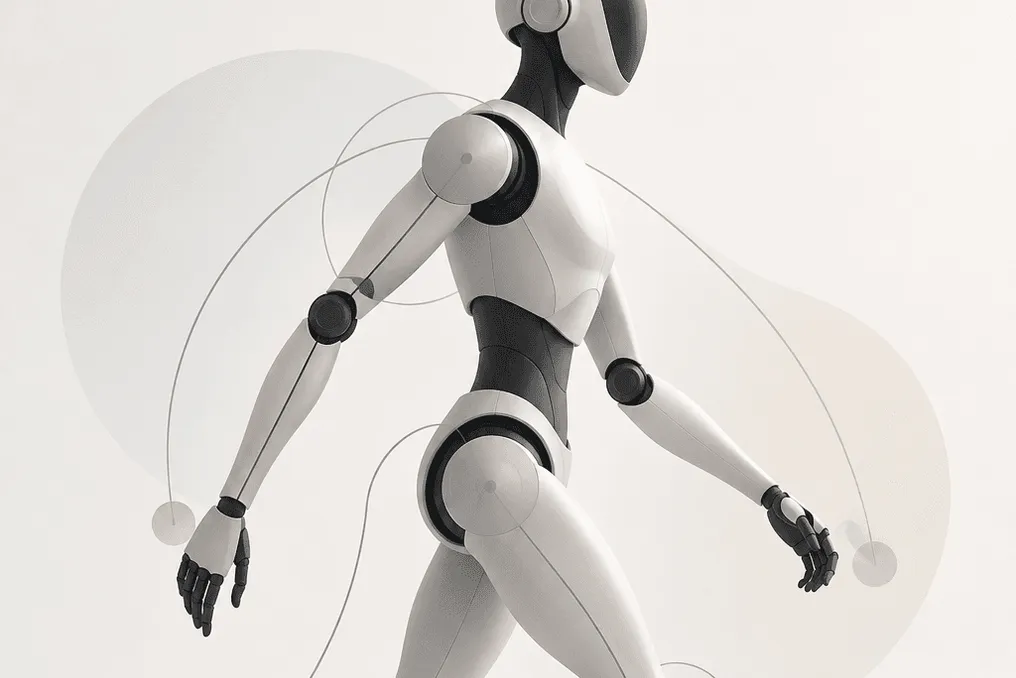
The Shanghai Artificial Intelligence Laboratory has released the Intern W0 physical world model. This stacked system is oriented towards robotics and is designed to transfer the behavior of large models from digital planning to physical, contact-rich operation.
The laboratory emphasizes that W0 was initially developed with the goal of integrating data from vision, force, and touch. This allows the robot to perceive, predict, act, and correct its actions in parallel, instead of following a rigid cycle: first perception, then planning, then movement.
This model differs from the laboratory's previously published collaboration with LUMIA Lab from Shanghai Jiao Tong University, which focuses on predicting next-level concepts rather than force-based physical control.
The release of W0 is defined by two key elements. The first is native sensory perception of force and touch, which integrates contact feedback into the action selection and perception process alongside data from vision and body proprioceptive state. Vision determines approach directions and target points, while force and touch update grip quality and register slippage after contact begins. Proprioceptive state tracks position and movement.
The second principle is duplex interaction, which maintains a continuous flow of multimodal inputs, including language instructions, visual observations, force/touch feedback, and body state. Simultaneously, the model generates semantic understanding, predictions of future states, and motion commands. The asynchronous architecture with a multi-speed mode allows for background updating of long-term planning while high-frequency action updates continue to react to fresh observations, thereby reducing the interval between environmental change and motion correction when vision alone is insufficient.
Researchers note that this combination helps in tasks requiring high precision, such as determining grip stability, correctness of contact settling, or how the next micro-correction should look. Model W0 is already integrated with the Intern InkStone scientific discovery platform—the English product name presented on the lab's portal. It functions jointly with the Intern S2 large science model.
Together, they have provided support for closed loops in both wet and dry laboratory conditions. These loops covered directed evolution of proteins for gene editing, organic synthesis of mepivacaine, and preparation of lipid nanoparticles, including dynamic tuning of process parameters during nanoparticle work, which is mentioned in secondary sources as early evidence of science-oriented physical AI.
For groups involved in chemistry, biology, and materials science, W0 is viewed as a tool for automated experimental cycles, not as a consumer robot demonstration. It remains to be seen how broadly the duplex force and touch control generalizes across different laboratory instruments and wet lab protocols, which will determine whether the Intern stacked set becomes the default layer in Intern InkStone workflows or remains tied to previously demonstrated closed-loop cases. The laboratory presents these cases as the beginning of the path from schematic derivation to instrumental experimentation, not as a ready-made product catalog.