Businesses across South Africa are preparing for the introduction of AI-based security testing services, which will be conducted continuously rather than annually and will be cheaper than current solutions.
Businesses across South Africa are preparing for the introduction of AI-based security testing services, which will be conducted continuously rather than annually and will be cheaper than current solutions.
Two out of three statements regarding this trend are true, but the third requires careful verification before signing a contract.
According to the Cobalt’s AI and Pentesting Pulse Report 2026, published in June, researchers compared two surveys of security specialists conducted with a one-year interval. In 2025, 29% of organizations relied entirely on AI automation for testing. However, by 2026, this figure dropped to 9%.
The study explains this trend by noting that about 78% of respondents reported that fully automated scanning tools failed to detect critical vulnerabilities in their infrastructure. The issue is not an excess of alerts that any team can handle, but that the system provided a clean report when, in reality, the business was at risk.
Martinus Engelbrecht, CEO of NEWORDER, notes: 'When a scanner issues a false alarm, the security team has to spend a week verifying it. It's annoying. But when a scanner stays silent about something real, the business is told everything is safe. They accept the report, stop worrying, and never check that part of the business again. That silence is a costly failure, and no one finds out about it.'
The key difference determining the choice between solutions is not technical; it lies in the distinction between a list and a route. A vulnerability is a fact related to a single system. An 'attack path,' however, is a sequence of actions: it could be a weakness in a vendor portal, an undescribed connection between two systems, or a disabled login leading to the financial system in three steps.
Automation handles the first point well. Every item on the list might be true, but the report can still miss the most important thing because the danger lay not in any single element, but in the order in which they were connected. Creating a chain of discovered issues into an attack path is called Adversary Path Engineering. This is the same work an attacker does, and it is done in the same sequence. No one hacks a company using a severity rating.
Data from direct comparisons confirms this, and the details here are more important than flashy headlines. In a hacking competition organized by Hack The Box in November 2025, teams using AI and teams working without it were asked to solve the same 36 tasks. AI-assisted teams solved them 3.2 times faster. This gap is due to weaker participants. Among the top 5%, the difference narrows to 1.69 times. The best team scored all 36 points, while the best AI-assisted team stopped at 32.
The less qualified the tester, the more automation helps. The higher the tester's qualification, the less difference it makes. The market has already changed: now 47% prefer a hybrid model where automation is used for coverage, and qualified specialists are used for decision-making.
Engelbrecht emphasizes: 'Automation is applied where it is truly better: in breadth and repetition. Then every finding is confirmed by a qualified specialist before it reaches the client. This is Scaled Human Validation, and this is what differentiates a report from a full assessment.'
The proposal for continuous testing without the need for rare specialists is a strong argument, especially in a country where CSIR found that 63% of cybersecurity vacancies are either unfilled or partially filled.
If a test misses a path an attacker could use, no warning is issued. The report comes back empty, which looks exactly like a good result. Nothing raises suspicion until something happens. This is worse than having no testing, which at least makes the business feel appropriate anxiety.
Engelbrecht adds: 'An empty report is the easiest thing in the world to accept. It costs less, it arrives faster, and it tells you nothing is broken. The problem is that a test that found nothing and a test that missed everything produce an absolutely identical document.'
King V Act, applicable to financial years starting January 1, 2026, or later, requires including data, information, and technology governance on the agenda. A company that cannot specify what was tested, by whom, and what remained outside the scope of verification is liable for it.
Most buyers, faced with this issue, look for a certificate or accreditation. A certificate is useful, but it describes the company itself, not the work performed. It says nothing about your specific test: what exactly was done or who did it.
Five elements can provide such an answer, and any good provider can supply all five. This is a detailed description of how the testing was conducted. The name of the person who performed it. The path found in your systems and where it led. Proof that every finding was confirmed by a human, not a tool. And retesting demonstrating the closure of that path.
Engelbrecht shares experience: 'We have been doing this since 2010, and we hold ISO/IEC 27001 certification, which any client can request. But a certificate is not the proof that matters. Ask us to provide these five points. And then ask all other providers you are considering. Those who cannot provide them will explain why they are unnecessary. No one who can provide them will say that. That is how you recognize those selling a document, not the test itself.'
No owner needs to allow a debate about artificial intelligence. They need three written answers:
Engelbrecht concludes: 'If nothing was chained together, the business was given what the automated system considered its environment at the time of launch. Nine percent of this market still operates only on that. And there is a reason why the other ninety-one percent refused, and it is not nostalgia.'
NEWORDER is a tactical cybersecurity management company founded in 2010, operating in Africa, Europe, and the Middle East, and expanding into the UK through its global office on the Isle of Man. The company holds ISO/IEC 27001 and ISO 9001 certifications.
The Redmi Note 17 Pro 5G was launched in Brazil with a renewed design, a large capacity battery, and high resistance to impacts and water. This model succeeds the Redmi Note 15 Pro, released in January 2026, as Xiaomi opted to omit the 16 series.
Although it features visual improvements and greater autonomy, the device has a less powerful processor than its predecessor and has seen reductions in both screen and camera quality. The reviewer assessed whether the new look, long battery life, and protections justify the more modest specifications and the price.
Tecnoblog, an independent journalistic outlet since 2005, provided the device loaned by Xiaomi for testing, without any advertising intent.
Upon unboxing the Redmi Note 17 Pro 5G, one finds the smartphone, a SIM tray ejector tool, a gray case (charcoal tone), a USB-C to USB-A cable, the 67W HyperCharge power adapter, and various manuals. The unboxing content follows Xiaomi's standard of providing all necessary accessories for immediate use.
In line with the strategy to elevate the Redmi Note line to a more premium level, Xiaomi redesigned the rear camera module of the Redmi Note 17 series. This is a significant change from the previous model. The assembly, which previously had a glass-like frame and metallic rails, is now smaller and positioned further to the left, giving the phone a cleaner and more sophisticated appearance.
Despite the back and frame being made of plastic, the device features rounded corners for a more refined finish. It is slightly larger and heavier than the Redmi Note 15 Pro, which is attributed to its reinforced construction and large battery.
The global version received in purple, although attractive, will not be available in Brazil; local models will be available in black, sky blue, or satin orange, with these last options notable for their visual details on the casing.
Maintaining the durability tradition of the line, the Redmi Titan structure offers internal and external multi-layer protection. The motherboard was built with high resistance, and the design aims to absorb shocks. The Redmi Note 17 Pro 5G and its Pro Max variant are industry pioneers in obtaining the TÜV SÜD 5-star Titan Quality certification, which attests to reliability against drops, water, and battery performance.
Practical tests confirmed this robustness: the smartphone was dropped multiple times to validate the SGS certification against drops of up to three meters, without damage to the casing or the screen with Gorilla Glass Victus 2 and pre-applied film. Furthermore, it resisted IP66, IP68, IP69, and IP69K protection challenges, being subjected to beach sand, moderate rain, and immersion in a water container, maintaining full functionality.
The display is a 6.83-inch AMOLED screen, with 1.5K resolution (2772 x 1280 pixels) and a 120 Hz refresh rate. Although the specifications are identical to the previous model, the brightness has been increased to 3,500 nits (an increase of 500 nits), providing excellent visibility under direct sunlight or in indoor environments.
The overall user experience was positive, with the 120 Hz refresh rate ensuring smooth navigation. The combination of the DCI-P3 gamut with 12-bit color depth results in vibrant colors. However, a negative point is the absence of support for HDR10+ and Dolby Vision, features that optimize contrast and brightness and were present in the previous generation, only reaching the Pro Max variant in the new line.
Conversely, the screen incorporates certifications against blue light emission and flickering, which is beneficial for eye health during prolonged screen use.
The audio system presents contrasts. Stereo speakers located on the top and bottom edges offer better sound balance compared to devices with ear-piece speakers. However, the bass is subtle, making it less suitable for genres like hip-hop or funk. Highs can sound shrill at very high volumes but perform well around 70%.
The overall volume is loud; at 100%, the sound is audible in distant rooms. There is a feature that amplifies the volume by 300%, although this level causes sound distortion, which may be useful in noisy environments.
The main camera setup includes a 50MP wide-angle lens (f/1.8) and an 8MP ultrawide lens (f/2.2). The front camera has a 16MP wide-angle lens (f/2.4). This latter point represents the second downgrade of the Redmi Note 17 Pro, as the wide-angle has a smaller sensor, fewer megapixels, and a reduced aperture, which hinders light capture, especially at night. The selfie camera also has fewer MP and a smaller aperture than the previous version.
In good lighting conditions, photos are honest, displaying good color reproduction and skin tones, while preserving shadow details and textures. HDR contributes to a good exposure balance. Without a telephoto lens, the digital zoom up to 10x is not ideal, and it is recommended to photograph nearby objects. Indoor and night photos suffer from loss of sharpness and excessive noise processing.
A disappointing aspect was the limitation to Full HD at 30 fps recording, given that the Redmi Note 15 Pro records in 4K. Although the videos are acceptable, they would be better at 60 fps. Optical Image Stabilization (OIS) provides good stability during recording. The underwater mode and dual recording modes are positive differentiators.
The smartphone operates with the Snapdragon 6s Gen 4 (4 nm) processor. Available configurations include 6 GB of RAM with 256 GB of storage or 8 GB of RAM with 512 GB of storage, both using LPDDR4X RAM and UFS 3.1 storage. The tested model was global, with 6 GB of RAM (LPDDR4X) and 128 GB of internal memory (UFS 2.2).
Performance surprisingly impressed, handling games like Call of Duty: Mobile and Genshin Impact well at maximum graphics, and basic editing in CapCut. Even with 6 GB of RAM, the device did not freeze when multiple applications were open. However, the specifications show a drop in firepower: while the Redmi Note 15 Pro reaches up to 2.6 GHz with the MediaTek Dimensity 7400-Ultra, the Redmi Note 17 Pro reaches only 2.4 GHz with the Snapdragon 6s Gen 4.
Geekbench 7 tests placed the device on the same level as the Redmi Note 13 Pro and Pro+, launched three years ago. Therefore, the Redmi Note 17 Pro 5G is recommended for less demanding activities, such as browsing, streaming, and light gaming. The 8 GB variant is recommended to prevent multitasking issues.
The factory operating system is HyperOS 3, based on Android 16. Although it contains several unwanted pre-installed applications, the system is intuitive and fluid. The AI tools work reasonably, focusing on image editing (such as AI Erase Pro and AI Image Expansion), lacking simpler features like audio transcription and automatic translation. HyperIsland, a proprietary version of the iPhone's Dynamic Island, is a useful addition for quick commands.
Xiaomi guarantees up to six years of security updates for the phone, protecting it until 2032. A major strong point is the 8,340 mAh silicon-carbon battery, representing an increase of approximately 26% over the previous model. In the author's experience, the battery lasted about 46 hours between full charges, with 7 hours and 30 minutes of screen-on time in mixed use. In continuous video playback (brightness at 70%, volume at 40%), the duration reached an impressive 26 hours and 50 minutes.
The recharging time with the 67W HyperCharge adapter was 1 hour and 20 minutes. Additionally, the phone functions as a power bank, supporting reverse charging up to 22.5W.
Microsoft has registered a new mechanism called "ad credits," intended for PCs and consoles, which will allow advertisements to be displayed without causing interruptions during a gaming session. The company's strategy aims to establish a new monetization method for free titles by integrating commercial breaks during moments of inactivity within the game.
According to the details of the registration at the United States Patent and Trademark Office (USPTO), the operation of this technology is more sophisticated than a mere timer. Instead of forcing an ad to play at fixed intervals, such as every ten minutes, the system seeks the ideal and least intrusive moment to present sponsored material. As compensation, players are rewarded with an extended period of ad-free time after watching the content.
This system uses machine learning features to ensure that advertising is shown only at the appropriate instant. If the player is engaged in a fierce battle against a boss or participating in a competitive match, the ad will be disregarded until a subsequent pause occurs or during natural transitions, such as the end of a predetermined cutscene, a mission completion screen, the end of a level, or on usual loading screens.
After the sponsored content is finished, the time credit is reset, providing a new uninterrupted period of gameplay. This new patent indicates the large technology corporation's future plans to increase the profitability of its gaming division, which is in line with other recent company actions aimed at containing operational costs. For example, Xbox Game Pass began imposing restrictions on cloud gaming usage, limiting access to Xbox Cloud Gaming to a maximum of 15 hours per month, even for those who have the Ultimate plan.
If the intention is to replace or buy a new laptop, the current moment presents opportunities. Three suggestions available on Amazon have been gathered, covering needs from basic to intermediate profiles and various budgets.
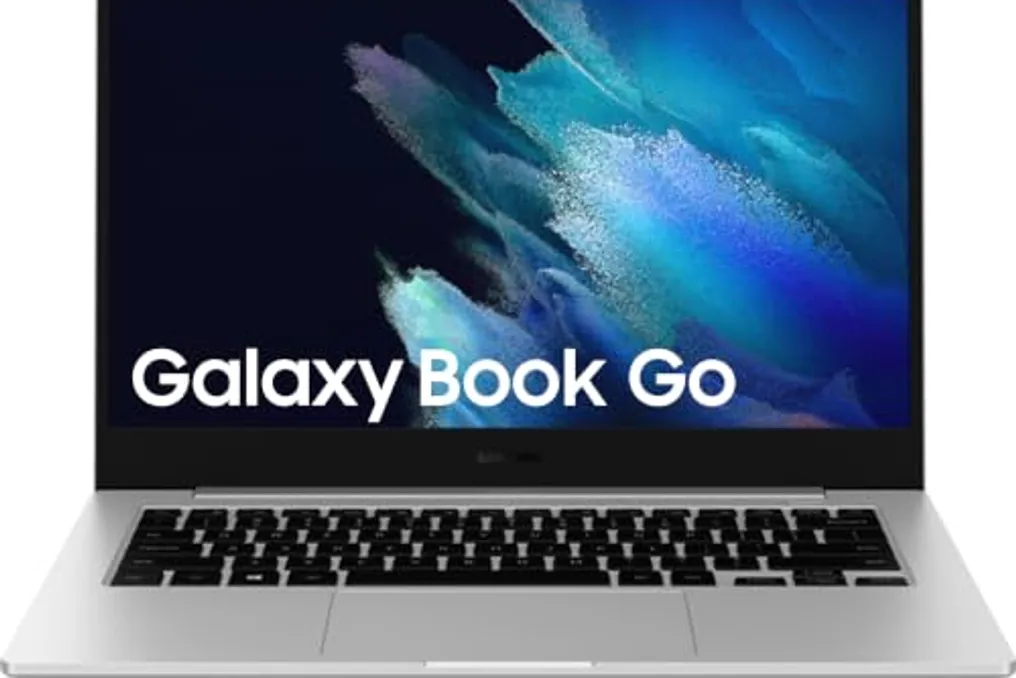
One of the highlighted models is the Samsung Galaxy Book Go, which stands out for using the Snapdragon processor, in contrast to conventional Intel or AMD platforms. This technological decision provides lower energy consumption and longer battery life, making it ideal for users who work while traveling. It already comes equipped with the Windows 11 Home operating system, ensuring compatibility with everyday software.
Another robust option is the ASUS Vivobook 15, designed for those who need good daily performance without sacrificing a modern and discreet look. This notebook features an Intel Core i5 processor, 16 GB of RAM, and 512 GB of SSD storage, offering agility for both office tasks and more complex projects. Its 15.6-inch Full HD screen provides a wide viewing area, and the Quiet Blue version adds a distinct aesthetic touch.
For those who prioritize portability and simple use, the Notebook Ultra UB210 emerges as an economical alternative. With an 11.6-inch screen, Windows 11 Home, Intel Celeron processor, and 128 GB of storage, it is suitable for light tasks such as internet browsing, document editing, and using basic applications. Its compact size also facilitates transport in bags and backpacks.
It is important to note that promotions are subject to change at any time, so it is recommended to access the links immediately to take advantage of the current conditions. Readers are encouraged to select the product that best aligns with their profile.