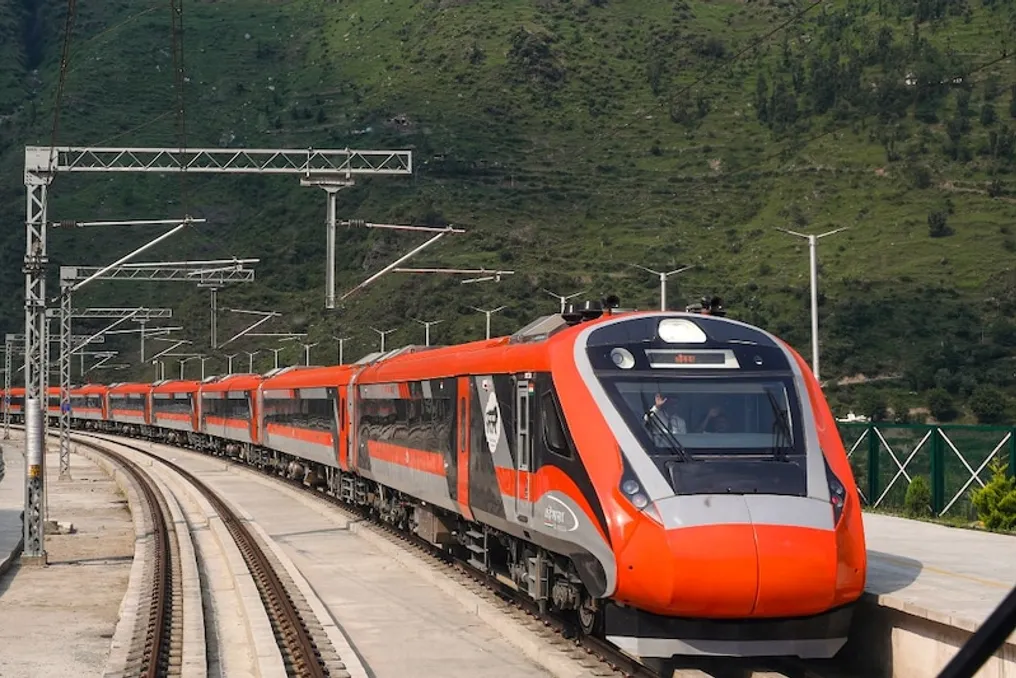
India's first hydrogen train may soon reach Delhi, marking a new chapter in eco-friendly railway transport. According to reports, preparations are underway to expand the hydrogen train service, and Indian Railways is considering establishing a new rail route from Jind.
However, the preparation is currently in its initial stages as officials assess passenger demand, capacity, and operational challenges.
Despite the fact that the country's only hydrogen train can carry up to 2600 passengers, only about 40-60 people currently travel on the existing Jind-Sonipat route, which is 89 kilometers long. Due to this low passenger flow, the railway is forced to look for an alternative path for this train, preparing for its expansion to Delhi.
The hydrogen train may soon start running further than in Haryana. An extension of the route to Azadpur in Delhi, near the wholesale fruit and vegetable market, is being considered. Although officials are already conducting tests, the further development of this plan will depend on ensuring passenger safety and resolving operational issues.
Traveling to Delhi seems simple, but there is a serious complexity. The hydrogen train is equipped with ten carriages, whereas satisfying high passenger traffic on routes in Delhi often requires 18 to 20 carriages. This imbalance in capacity could be the biggest obstacle to the proposed expansion.
According to reports, one full tank of the hydrogen train allows it to cover a distance of 250-300 kilometers, while the distance from Jind to Delhi is approximately 130 kilometers. However, there is a major fuel issue here: hydrogen refueling is currently only available in Jind. This means that before expanding the route to Delhi, efforts must focus on creating refueling infrastructure for the train.
If servicing the train in Delhi proves difficult, this hydrogen train could be repurposed for an 180-kilometer route connecting the stations of Jind, Sonipat, Panipat, and Safidon. There is a possibility of increasing the daily number of passengers in Panipat due to industrial activity, and this backup route could solve the problem forcing the railway to revise its plans.